
To make your meals look gourmet, focus on creating balanced plate layouts with thoughtful color coordination and strategic garnishing. Use small, intentional touches like fresh herbs or citrus slices to add visual interest without overdoing it. Play with height and layering to add dimension, and leave negative space to keep the presentation uncluttered. These simple tips can transform everyday dishes into stunning, restaurant-quality plates—if you want to learn more, keep exploring these easy techniques.
Key Takeaways
- Use food garnishing sparingly with fresh herbs, citrus slices, or spice dustings to add refinement and visual interest.
- Incorporate color coordination by contrasting or harmonizing vibrant and muted tones for a stunning plate.
- Arrange similar ingredients in groups, leaving negative space to create an organized, elegant layout.
- Add height and layering to create visual depth and balance, making the dish more appealing.
- Focus on small details like garnishes and color contrast to elevate simple dishes into gourmet presentations.

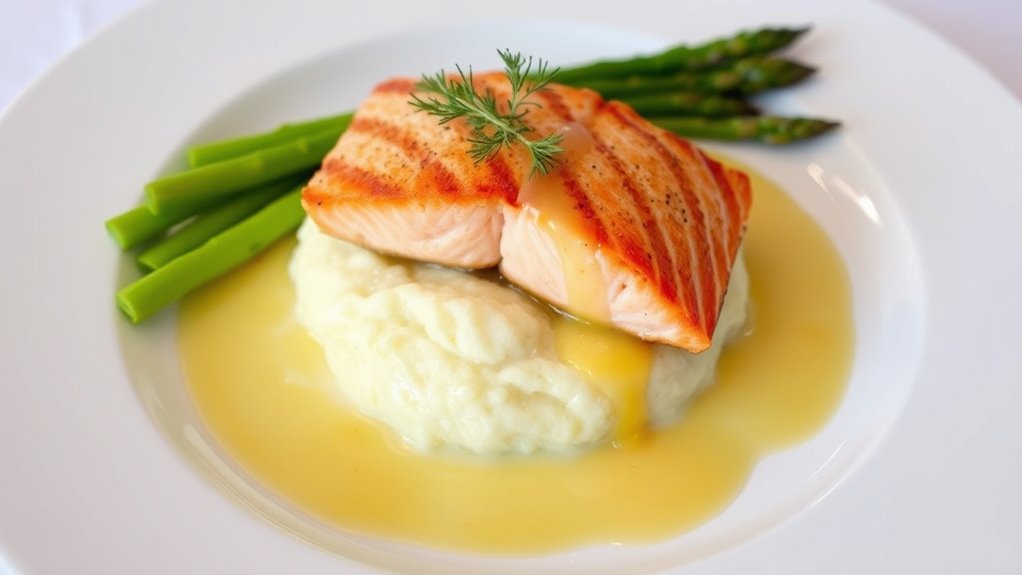
Elevating your meals to a gourmet level doesn’t require professional training—just a few strategic plating tips. One of the easiest ways to elevate your presentation is through thoughtful food garnishing. Adding a sprig of fresh herbs, a slice of citrus, or a dusting of spices can instantly make your dish look more refined. Food garnishing isn’t just about decoration; it enhances the visual appeal and hints at the flavors within. Use garnishes sparingly, placing them intentionally to create balance and draw attention to the main components. For example, a small sprig of basil atop a vibrant pasta dish adds both color and freshness, making the plate more inviting. Remember, garnishes should complement the dish, not overpower it.
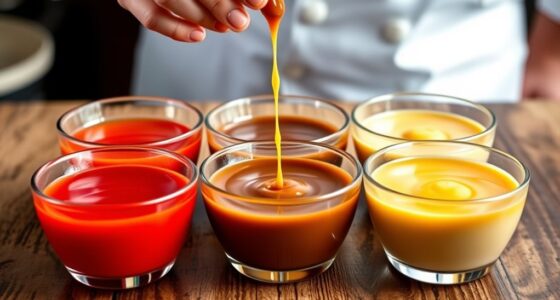
Color coordination plays a *vital* role in creating a visually stunning plate. When you’re arranging your food, pay attention to color contrasts and harmony. Bright reds, greens, and yellows can make a dish pop, while more muted tones can add sophistication. Think of your plate as a canvas—use color to guide the eye and highlight the main ingredients. For instance, placing a vivid cherry tomato next to a neutral-colored protein creates a striking visual contrast. You can also layer different hues to add depth, such as drizzling a colorful sauce over a dish or placing colorful vegetables around the main course. The key is to balance vibrant and subdued tones so that the plate looks lively but not chaotic. If you’re preparing a salad, arrange the ingredients in a way that showcases their natural colors, creating a mosaic effect that entices the senses.
In addition to garnishing and color coordination, consider the overall layout of your plate. Group similar items together, and leave some negative space to prevent overcrowding. Proper use of space creates a clean, elegant look. When you’re serving, think about the height and layering of ingredients—adding height can make the dish more dynamic and appealing. Remember, the goal isn’t just to fill the plate but to craft a visual story that complements the flavors inside. Incorporating natural materials such as wooden or stone serving ware can also enhance the presentation and reinforce the rustic aesthetic. With a little practice, these simple techniques will become second nature, transforming everyday meals into impressive, gourmet-looking presentations. When you focus on food garnishing and color coordination, you’ll find that even simple dishes can look extraordinary, making every meal feel special and restaurant-worthy.
Frequently Asked Questions
How Do I Choose the Right Plate for My Dish?
To choose the right plate for your dish, consider the plate size and shape. Opt for a smaller plate for delicate, refined dishes to avoid overcrowding, while larger plates work well for hearty meals. Round plates are versatile, but rectangular or oval shapes add a modern touch. Match the plate’s style to your dish’s presentation, ensuring it complements without overpowering, and always leave some space around your food for an elegant look.
What Are Common Mistakes to Avoid in Plating?
You should avoid overcrowding your plate and neglecting garnishing techniques, as these can make your dish look cluttered. Be mindful of plating symmetry to create a balanced, visually appealing presentation. Also, don’t forget to keep the focus on the main ingredients and use garnishes sparingly, enhancing the dish without overwhelming it. These mistakes can detract from your meal’s overall aesthetic, so pay attention to detail for a polished look.
How Can I Add Color Contrast Effectively?
To add color contrast effectively, use color blocking by placing vibrant ingredients against neutral backgrounds. Incorporate complementary hues, like orange and blue or red and green, to make each element pop. Keep your plating balanced by distributing these contrasting colors thoughtfully across the plate. This approach creates visual interest, draws the eye, and enhances the overall appeal of your dish, making it look more appetizing and gourmet.
What Tools Are Essential for Professional Plating?
You need essential tools for professional plating, like tweezers, squeeze bottles, and ring molds, which enhance your artistic techniques and improve plating aesthetics. Tweezers allow precise placement of delicate items, while squeeze bottles help control sauces for clean lines. Ring molds shape components uniformly, adding structure. These tools elevate your presentation, making your dishes look polished and gourmet, and help you experiment with creative arrangements effortlessly.
How Do I Plate for Different Cuisines?
You should adapt your plating by exploring fusion techniques and cultural plating styles to suit different cuisines. For Asian dishes, use vibrant colors and minimalist arrangements, while for Mediterranean, focus on layered textures and earthy tones. Incorporate authentic elements like traditional garnishes or serving dishes to enhance visual appeal. Always consider the cuisine’s origins, balancing colors, shapes, and composition to create a visually harmonious and culturally respectful presentation.
Conclusion
So, next time you want to impress, remember that fancy plating isn’t about expensive dishes—it’s about the artful touch you add. Ironically, a little chaos can sometimes elevate the look, proving that elegance is often just a clever illusion. With these simple tips, you’ll turn everyday meals into stunning works of art. After all, who knew that a dash of effort could make your dinner feel like a five-star masterpiece?