🔍 Read the full analysis: Pappardelle Al Cinghiale: Wild Boar Ragù, The Tuscan Autumn Standard on Mad Tasting

Get kitchen staples and gadgets delivered free with Prime
- Fast, free delivery on millions of items
- Prime Video, Amazon Music and more included
- Member-only deals all year
TL;DR
Pappardelle al cinghiale pairs broad pasta ribbons with a slow-braised wild boar ragù closely associated with Tuscany. There is no single required recipe: cooks vary the amount of tomato and red wine, and marinating is optional. Choose inspected meat, braise it until tender, and refrigerate leftovers promptly.
Pappardelle al cinghiale is a Tuscan pasta dish built around wide ribbons and slow-braised wild boar ragù, with recipes differing in their use of tomato, red wine and marinade. A practical approach is to buy inspected meat from a reputable supplier, cook it gently until tender and serve the sauce with pappardelle or another broad pasta.
The dish’s defining pairing is substantial ragù and broad pasta. Pappardelle can hold pieces of meat and thick sauce across its wide surface, so both remain together in each bite. The wild boar, known in Italian as cinghiale, is generally leaner and more strongly flavored than domestic pork. That makes a long, gentle braise a better fit than quick, high-heat cooking.
There is no single required balance of ingredients. Some preparations use tomato and red wine for a rounder, brighter sauce; others lean more heavily on wine and herbs for a darker, more aromatic result. Marinating the meat in wine with vegetables and aromatics is common in some preparations but remains optional. It can contribute fragrance, though it does not replace the cooking needed to make firm meat tender.
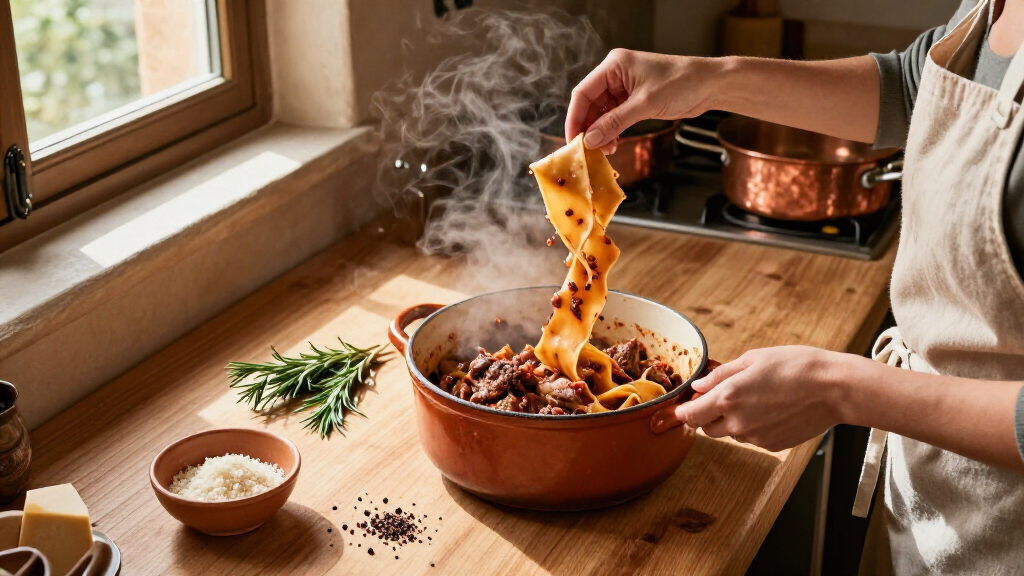
For a dependable result, brown the meat in batches, soften onion, carrot and celery in the same pot, then add wine and scrape up the browned bits. Return the meat, add herbs and tomato, stock or both, and maintain a quiet simmer. The cooking time varies with the cut and size; tenderness, not the clock, is the useful test. When cooked, the meat can be shredded or chopped and stirred back into the sauce.
A Tuscan kitchen field guide · Cold-season table
Pappardelle al Cinghiale: Wild Boar Ragù, the Tuscan Autumn Standard
Wide pasta ribbons meet a slow-braised ragù of cinghiale. The pairing is enduring; the recipe has room to vary. Here is how to understand the dish, choose ingredients and cook it with care.
01 / What makes the dish
A good match of shape and sauce
The name points to a familiar Tuscan pairing, but the balance of ingredients shifts from kitchen to kitchen. The cooking logic stays practical: substantial ragù needs pasta that can carry it.
01 · The ribbon
Pappardelle
Its broad surface holds thick sauce and pieces of meat, keeping both present across the bite.
02 · The meat
Cinghiale
Wild boar is generally leaner and more strongly flavored than domestic pork, with a firm texture.
03 · The method
Gentle braise
Low, steady heat gives the meat time to become tender. Readiness matters more than a fixed clock.
Kitchen cue: Brown meat in batches, soften onion, carrot and celery in the pot, then deglaze with wine. Return the meat with herbs and tomato, stock or both; simmer gently until tender. Shred or chop the meat and stir it back into the sauce.
02 / From pot to plate
A steady path to tender ragù
Brown
Sear the meat in batches for browned edges and flavor.
Build
Soften onion, carrot and celery; add wine and scrape the pot.
Braise
Add meat, herbs and tomato, stock or both. Keep the simmer quiet.
Check
Cook until tender enough to pull apart or chop easily.
Serve
Toss with cooked pappardelle; another broad pasta also works.
One dish, many balances
Recipes differ in tomato, red wine and herbs. Marinating is used in some versions, but it is optional and never replaces the braise.
03 / Place & provenance
A cold-season Tuscan favorite
The dish is especially associated with Tuscany and countryside cooking. Autumn suits its warming character, though there is no fixed calendar date for serving it.
Tradition without one formula
Household and restaurant versions vary. Wild-boar availability and rules depend on place and season; in Italy, hunting and wildlife management are regional matters.
Ask about the meat
The word “cinghiale” does not establish where meat was raised or harvested, how it was handled, or how the kitchen makes its ragù. Ask the restaurant about its sourcing and style.
For home cooks: Ask a reputable supplier about origin, inspection and whether the cut is suited to braising. Cut, size and heat affect cooking time; tenderness is the useful test. No single source, restaurant or regional formula is identified here.
04 / Safe preparation
Care from marinade to leftovers
Keep raw meat and its juices away from ready-to-eat food. A few straightforward handling steps carry through the whole meal.
Keep it cold
Marinate wild boar in a covered container in the refrigerator, never on the counter. Keep raw meat and juices separate from ready-to-eat food.
Handle marinade safely
Discard used marinade, or bring it to a full boil before using it in a sauce. Cook the ragù thoroughly until the meat is tender.
Chill and reheat
Refrigerate leftovers promptly in a covered container and reheat thoroughly before serving. Follow local food-safety guidance for storage limits.
Temperature note: The source material provides no numeric internal temperature, so use no unsupported target here. Judge braised meat by tenderness and follow local food-safety guidance.
05 / Quick answers
Questions at the table
What is pappardelle al cinghiale?
Pappardelle served with wild-boar ragù, a dish especially associated with Tuscany and made by braising the meat until tender.
Is marinating required?
No. Wine, vegetables and aromatics are used in some marinades, but the step is optional and does not replace slow cooking.
Does the ragù always contain tomato?
No. Recipes vary in their use of tomato, red wine and herbs, creating different styles of sauce.
How do I know when the boar is ready?
Cook gently until the meat pulls apart or chops easily. The time depends on the cut, its size and the steadiness of the heat.
How should leftovers be handled?
Refrigerate promptly in a covered container and reheat thoroughly. Keep storage limits aligned with local food-safety guidance.
What should I ask a supplier?
Ask about the meat’s origin, inspection and suitability for braising. A menu name alone cannot answer those sourcing questions.
Trace the plate
From source to satisfying bite
Choose
Inspected meat from a reputable supplier.
Season
Set your own balance of wine, tomato and herbs.
Slow-cook
Let a quiet braise bring the meat to tenderness.
Pair
Coat broad ribbons with meat and thick sauce.
Store
Chill leftovers promptly and reheat thoroughly.
Why Wide Pasta Fits the Ragù
The pairing is practical as well as associated with Tuscan cooking. Pappardelle’s width helps it carry a thick sauce and pieces of meat, while the slow braise suits boar’s comparatively lean, firm texture. For home cooks, those points help guide choices even when a recipe differs from a familiar restaurant version.
The dish also shows why the name alone does not describe every bowl. The proportions of wine, tomato and herbs, along with the meat and its handling, shape the final flavor. Asking a restaurant how its ragù is made or where its meat comes from can clarify what to expect; the menu label itself does not establish the meat’s provenance.
As an affiliate, we earn on qualifying purchases.
A Cold-Season Tuscan Favorite
Pappardelle al cinghiale is especially associated with Tuscany, where wild boar features in countryside cooking and colder-season menus. Its connection to autumn reflects the warming character of a slow-cooked sauce, but the dish has no fixed calendar date and is also suited to other cold-weather meals.
Household and restaurant preparations vary. The available material describes differences in tomato, wine and marinating, rather than a single definitive formula. It also notes that wild-boar availability and rules vary by place and season; in Italy, hunting and wildlife management are regional matters. Those differences make sourcing a reasonable question, particularly for diners comparing versions in different places.
As an affiliate, we earn on qualifying purchases.
Sourcing and Recipe Details Vary
No particular restaurant, supplier, date or regional recipe is identified here, so there is no specific sourcing claim to verify and no one version can be presented as the standard formula. A menu’s use of “cinghiale” does not by itself say where the meat was raised or harvested, how it was handled, or which recipe choices the kitchen makes.
Cooking duration also cannot be fixed from the information provided. Cut, size and heat affect how long the braise takes. Buyers should ask a reputable supplier about the meat’s origin, inspection and suitability for braising; cooks should judge readiness by whether it has become tender, not by an assumed universal time.
As an affiliate, we earn on qualifying purchases.
From Braise to Safe Leftovers
After the meat is tender, finish the sauce to the consistency you prefer and toss it with cooked pappardelle. If the pasta is unavailable, another broad shape can carry the ragù. Serve the pasta hot, with the meat and sauce distributed through the ribbons rather than relying on a thin coating.
For safety, keep raw boar and its juices separate from ready-to-eat food. Marinate it in a covered container in the refrigerator, never on the counter. Discard the used marinade or bring it to a full boil before using it in a sauce. Cook the ragù thoroughly until the meat is tender; the supplied material gives no specific internal temperature, so it does not support a numeric target.
Refrigerate leftovers promptly in a covered container and reheat them thoroughly before serving. Keep any specific storage limits aligned with local food-safety guidance. The immediate next step for cooks is choosing inspected meat and a recipe style; the exact balance of tomato, wine and herbs remains a matter of the cook’s version.
As an affiliate, we earn on qualifying purchases.
Key Questions
What is pappardelle al cinghiale?
It is pappardelle served with wild boar ragù, a dish especially associated with Tuscany. The sauce is typically made by braising the meat until tender.
Is marinating wild boar required?
No. Marinating in red wine with vegetables and aromatics is used in some preparations, but it is optional. It adds fragrance and does not replace a slow braise.
Does the ragù always contain tomato?
No single formula is required. Recipes vary in how much tomato, red wine and herbs they use, which changes the sauce’s flavor.
How can I tell when the boar is ready?
Cook it gently until the meat is tender enough to pull apart or chop easily. The time depends on the cut, its size and the steadiness of the heat.
How should wild-boar marinade and leftovers be handled?
Marinate meat covered in the refrigerator and keep it separate from ready-to-eat food. Discard used marinade or bring it to a full boil before using it in sauce. Refrigerate leftovers promptly in a covered container and reheat thoroughly.
Source: Mad Tasting
Fall Picks
fall essentials
As an affiliate, we earn on qualifying purchases.