TL;DR

Get kitchen staples and gadgets delivered free with Prime
- Fast, free delivery on millions of items
- Prime Video, Amazon Music and more included
- Member-only deals all year
Good Housekeeping food editor describes making a large batch of homemade chicken broth when time allows, then freezing it in portions for later soups. The method offers a convenient way to control ingredients and salt while reducing cooking work on the day soup is needed; safe cooling and storage remain important.
A Good Housekeeping food editor recommends making a large batch of chicken broth ahead of time and freezing it in usable portions, so a bowl of chicken soup can come together with less work when someone is tired or short on time. The approach shifts the time-consuming simmering to a day when it is convenient, while leaving the final soup open to different ingredients and tastes.
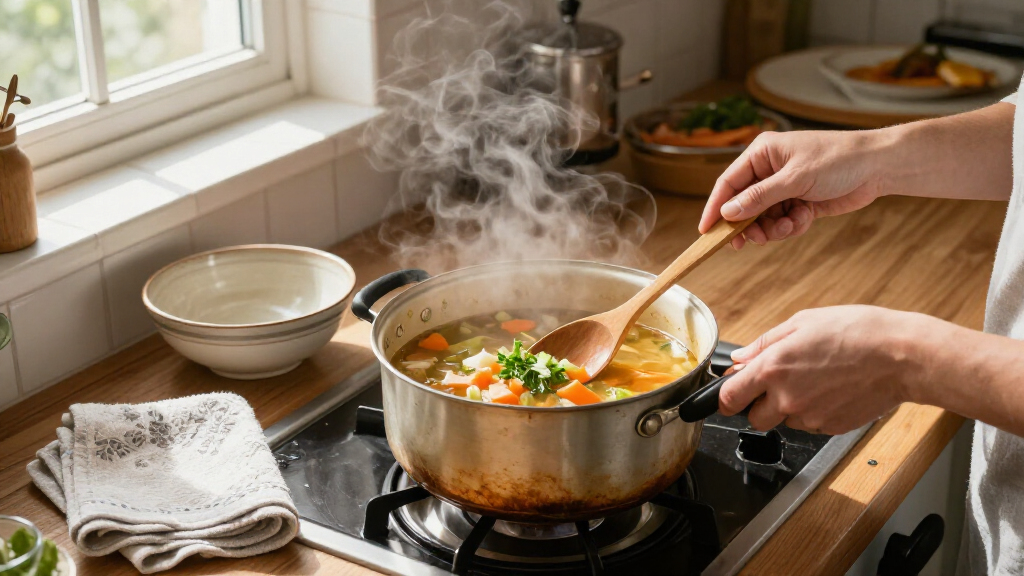
In the report, the editor says homemade broth has a richer, deeper flavor than packaged broth, and that preparing it in advance addresses the main drawback: making broth from scratch takes time and attention. The suggested routine is to set aside a day at home, put a whole chicken and vegetables such as onion, carrots and celery in a stockpot or Dutch oven, cover them with cool water and simmer until the chicken is cooked through and the broth tastes flavorful.
The editor periodically checks the pot and skims material from the surface. Once the chicken is cooked through, it can be removed and shredded. The bones may then be returned to the pot for a longer simmer, according to the report. When the broth is ready, it should be strained through cheesecloth or a fine-mesh strainer. The cooked chicken can go into soup or be saved for another dish.
For storage, the report advises cooling the broth and moving it to freezer-safe containers, including jars or portioning trays. The editor favors freezing several portion sizes, since smaller amounts thaw faster and can be matched to the meal. The report cites USDA guidance that broth kept continuously frozen at 0°F (−18°C) or below remains safe indefinitely, while recommending use within two to three months for best quality.
A Make-Ahead Route to Faster Soup
The method matters because it separates the longest part of soup-making from the moment a meal is needed. Rather than starting with a pot of broth on a low-energy day, a cook can thaw a portion, warm it and add ingredients. The report suggests combinations including chicken, carrots and noodles; tortellini, spinach and pesto; or black beans, frozen corn and canned tomatoes.
Making broth at home also gives cooks more control over salt and ingredients than they may have with a packaged product, the editor says. That is a practical option for people who want to choose the amount of salt or select particular ingredients. The report also describes using saved vegetable scraps, such as onion and garlic peels or carrot and celery ends, in the broth. Those are the editor’s recommendations, not a tested comparison of nutrition, cost or flavor across brands.
The larger point is a planning technique rather than a new recipe: batch-cook a base when time allows, freeze it safely, and finish the meal later. It can make a homemade-style soup more accessible without requiring every part to be prepared on the day it is served.
freezer-safe chicken broth containers
As an affiliate, we earn on qualifying purchases.
As an affiliate, we earn on qualifying purchases.
How the Freezer Fits the Recipe
The original report is a first-person cooking recommendation by a Good Housekeeping food editor, not a clinical study or a formal test of broth products. The editor describes routinely using shortcuts such as rotisserie chicken and prepared ingredients, but treats broth as an exception because of its perceived flavor. The claim that homemade broth tastes better is the editor’s assessment; the report does not provide a blind taste test or numerical comparison.
The editor says a batch can be made on a weekend or another day spent at home, then portioned for future meals. Vegetable scraps can be collected in a freezer bag until broth-making day. For the finished soup, the report notes that cooks need not use the chicken from the broth: rotisserie chicken can be used when assembling a later meal, while the broth supplies the base.
Freezing portions is central to the advice. A large container may require more thawing than a small one, so the editor recommends keeping different sizes on hand. The report names Souper Cubes as one option, but says other freezer-safe containers can also be used. No specific recipe quantities, simmer duration or cooling timetable are included in the supplied report.
“When making chicken noodle soup, homemade chicken broth has a real advantage over anything you’ll find in a carton or can.”
— Good Housekeeping food editor
As an affiliate, we earn on qualifying purchases.
Details the Report Leaves Open
The report does not give a complete recipe with ingredient quantities, a set simmer time or a step-by-step cooling schedule. It also does not compare homemade broth with specific store-bought products on sodium, cost, nutrition or flavor. The claims about greater richness and the editor’s preference are attributed personal judgments.
Its storage guidance distinguishes safety from quality: broth kept continuously at 0°F (−18°C) or colder is described as safe indefinitely under USDA guidance, but the recommended two-to-three-month period is for best quality. The report does not explain how long thawed broth can be kept in a refrigerator or offer detailed instructions for reheating. Readers should follow current food-safety guidance for cooling, thawing and reheating, and avoid leaving cooked broth at room temperature for extended periods.
As an affiliate, we earn on qualifying purchases.
From Frozen Broth to Dinner
The next step is practical rather than a scheduled news development: make broth when time is available, cool it safely, label and freeze it in portions, then thaw only what is needed for a meal. The report’s suggested finishing ingredients range from noodles and carrots to vegetables, beans and tortellini, leaving the final recipe to the cook.
Anyone seeking exact quantities or full cooking instructions will need the complete recipe linked from the original Good Housekeeping report; those details are not present in the supplied material. For safe handling, use freezer-safe containers, leave room for liquid to expand, and follow food-safety guidance when cooling and thawing. The report does not announce a product launch, new research or a forthcoming event.
As an affiliate, we earn on qualifying purchases.
Key Questions
What is the main chicken soup tip?
Make a large batch of homemade chicken broth when you have time, then cool and freeze it in portions for later meals.
How long can frozen chicken broth be stored?
The report cites USDA guidance that broth held continuously at 0°F (−18°C) or below remains safe indefinitely. For best quality, it recommends using it within two to three months.
Do I need to use the chicken cooked in the broth?
No. The editor says the shredded chicken can be used in soup or another dish, and suggests using rotisserie chicken when assembling soup later.
What can I add to the broth for a quick soup?
The report suggests chicken with carrots and noodles, tortellini with spinach and pesto, or black beans with frozen corn and canned tomatoes. These are examples, not required combinations.
Does the report provide a full broth recipe?
The supplied report describes the basic method but does not include ingredient quantities or a fixed simmer time. It directs readers to the original article for full step-by-step instructions.
Source: rss
Fall Picks
fall essentials
As an affiliate, we earn on qualifying purchases.