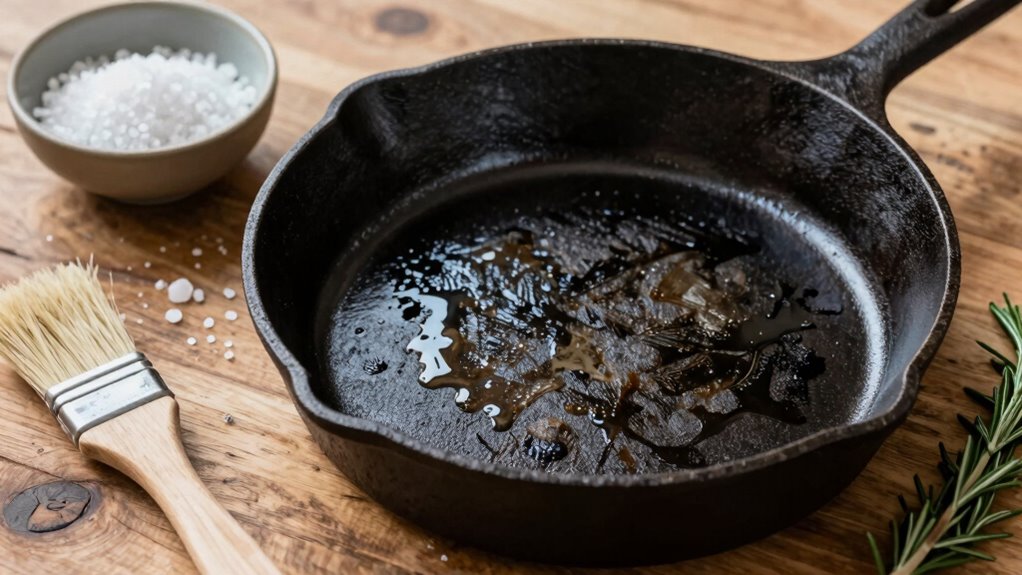

To season your cast iron skillet properly, start by thoroughly cleaning it to remove rust and debris. Apply a thin layer of high-smoke-point oil all over, including the handle and bottom, then wipe away excess. Bake it upside down in a preheated oven at 450°F for about an hour, letting the oil polymerize into a non-stick coating. Once cooled, store it in a dry place. If you keep up this routine, you’ll discover tips to maintain a beautiful, non-stick skillet.
Listen free for 30 days with Audible
Thousands of audiobooks and originals — cancel anytime.
As an affiliate, we earn on qualifying purchases.
Key Takeaways
- Ensure the skillet is thoroughly cleaned and dried to remove rust and debris before seasoning.
- Apply a thin, even layer of high-smoke-point oil all over the skillet, including handles.
- Bake the skillet upside down at 450°F for about one hour, with foil underneath to catch drips.
- Allow the skillet to cool completely in the oven to develop a durable, non-stick surface.
- Regularly clean, dry, and lightly oil the skillet after use to maintain and improve the seasoning.
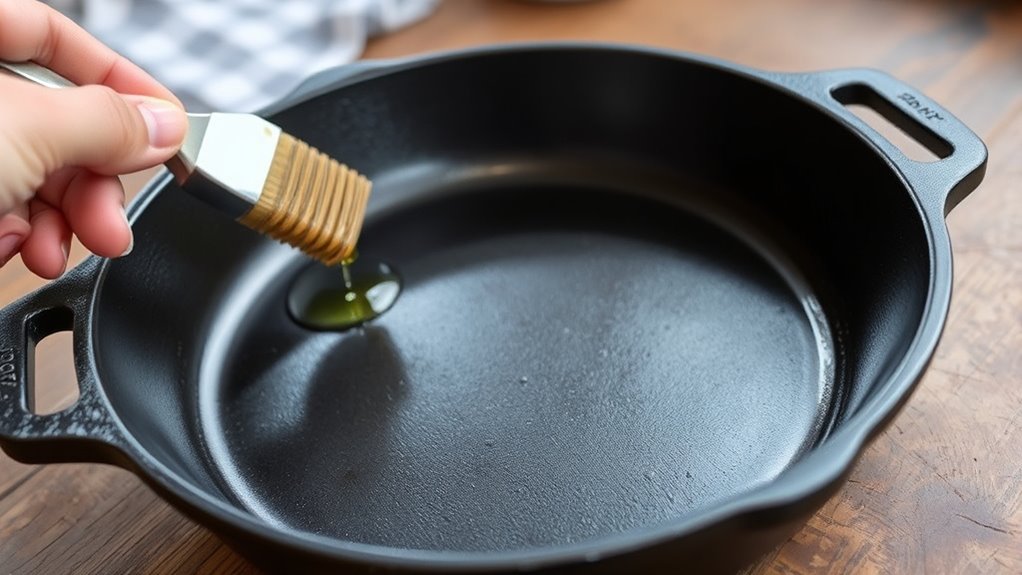
Seasoning your cast iron skillet is vital for creating a natural, non-stick surface and preventing rust. Properly seasoned skillets perform better and last longer, making your cooking experience more enjoyable. To start, you need to confirm your skillet is clean before applying any seasoning. Cleaning techniques matter because they set the foundation for a good seasoning process. If your skillet has rust or stuck-on food, scrub it with coarse salt and a stiff brush, or use a mixture of water and a small amount of dish soap. While traditional advice suggests avoiding soap, a gentle wash now and then won’t harm if you remove any residue thoroughly afterward. After scrubbing, rinse the skillet with hot water and dry it immediately with a clean towel or by heating it on the stove. Moisture is the enemy, so make sure it’s completely dry before proceeding to season. Proper drying ensures the seasoning bonds effectively and prevents rust formation. Using a proper cleaning technique helps ensure your skillet’s surface is free of debris and residues that could interfere with seasoning adhesion. Once your skillet is clean and dry, apply a thin layer of oil all over the surface, including the bottom and handle. Use oils with high smoke points like flaxseed, vegetable, or canola oil for best results. Wipe away excess oil with a paper towel, leaving only a light coating. This step is vital because too much oil can create a sticky buildup rather than a smooth, durable seasoning layer. To build a good seasoning, place the skillet upside down in an oven preheated to around 450°F (232°C). Put a sheet of aluminum foil on the rack below to catch any drips. Bake the skillet for about an hour, then turn off the oven and let it cool completely inside. This process polymerizes the oil, creating the seasoned surface that’s non-stick and rust-resistant. Understanding proper maintenance techniques can help you keep your skillet in optimal condition over time. Additionally, adopting consistent routines can make the seasoning process more effective and easier to maintain. Regular reseasoning can restore and enhance the non-stick surface as needed. Additionally, understanding personality assessment can help you recognize how different techniques or routines might influence your approach to maintenance and care. When storing your cast iron skillet, keep it in a dry place to prevent rust. A good storage tip is to place a paper towel or cloth inside the skillet to absorb any moisture and prevent dust from settling. Avoid stacking heavy objects on top, which can damage the seasoned surface. After each use, clean your skillet using warm water and a brush or non-abrasive scrubber. Avoid soaking it, as prolonged exposure to water can cause rust. Dry it thoroughly and apply a thin layer of oil before storing. Regular cleaning techniques combined with proper storage tips will maintain your skillet’s seasoning and extend its lifespan, ensuring it remains a reliable tool in your kitchen for years to come. Developing a consistent routine and understanding proper care will help maintain its quality over time.
As an affiliate, we earn on qualifying purchases.
Frequently Asked Questions
How Often Should I Reseason My Cast Iron Skillet?
You should reseason your cast iron skillet every few months or when the surface begins to look dull or shows signs of rust. Regular skillet maintenance, like cleaning without soap and applying a thin layer of oil after each use, helps extend its non-stick coating. Keep an eye on the seasoning frequency; if food starts sticking more or the surface looks worn, it’s time to reseason for best performance.
Can I Use Soap When Cleaning a Seasoned Skillet?
Using soap on a seasoned cast iron skillet is like giving a gentle rain to a garden—safe if done sparingly. Dish soap can remove the built-up seasoning if used occasionally, but it’s best to stick with hot water and a brush for regular cleaning. Avoid harsh scrubbing or soaking, which can strip your skillet’s natural non-stick layer. Proper cleaning methods help maintain your skillet’s seasoning and longevity.
What Type of Oil Is Best for Seasoning?
The best oils for seasoning your cast iron skillet are those with high smoke points, like flaxseed oil, vegetable oil, or grapeseed oil. You should apply a thin layer of oil using a cloth or paper towel, spreading it evenly across the entire surface, including the sides. Then, bake the skillet upside down in the oven at high heat to create a durable, non-stick coating.
How Do I Remove Rust From My Cast Iron?
Think of rust as an unwelcome guest overstaying its welcome. To remove it, scrub the rusted areas with steel wool or a stiff brush, applying a bit of dish soap if needed. Rinse thoroughly and dry immediately to prevent further corrosion. To keep rust at bay, regularly season your skillet and store it in a dry place. This simple rust removal and corrosion prevention routine keeps your cast iron in top shape.
Is It Okay to Cook Acidic Foods in a Seasoned Skillet?
Cooking acidic foods in a seasoned skillet is okay, but you should do it sparingly. Acidic foods can break down the seasoning, leading to potential rust and reducing its durability over time. To preserve your skillet’s seasoning, avoid prolonged cooking with highly acidic ingredients like tomatoes or citrus. If you do cook acidic foods, rinse and dry the skillet thoroughly afterward, and consider reseasoning if needed to maintain its non-stick surface.
high smoke point oil for cast iron
As an affiliate, we earn on qualifying purchases.
As an affiliate, we earn on qualifying purchases.
Conclusion
Seasoning your cast iron skillet is essential for a non-stick surface and rust prevention. With proper care, your skillet can last a lifetime and even improve with age. Did you know that a well-seasoned cast iron skillet can last over 100 years and become a family heirloom? So, take the time to season it correctly, use it often, and enjoy cooking with a pan that gets better every time you use it.
cast iron skillet cleaning brush
As an affiliate, we earn on qualifying purchases.
As an affiliate, we earn on qualifying purchases.
oven-safe cast iron skillet cleaner
As an affiliate, we earn on qualifying purchases.
As an affiliate, we earn on qualifying purchases.
NFL season / tailgating Picks
team gear
As an affiliate, we earn on qualifying purchases.