
Accurate measuring of ingredients is vital because it controls the chemical reactions that create your baked goods’ texture, flavor, and structure. Too much flour makes things dense, while too little sugar affects sweetness and rise. Precise measurements ensure the right balance for even heat distribution and proper development. Paying attention to these details turns baking from guesswork into a science. Keep exploring to discover how mastering this balance can improve every batch you make.
Key Takeaways
- Precise ingredient measurements ensure correct ratios, affecting texture, flavor, and overall success of baked goods.
- Accurate measurements prevent issues like density, dryness, or blandness caused by ingredient imbalance.
- Proper measurement allows for consistency, making baking results reliable and reproducible every time.
- Correct ingredient ratios facilitate proper chemical reactions, such as gluten development and caramelization.
- Precise measuring transforms baking into a science, leading to professional-quality, well-structured baked treats.
Have you ever wondered what makes baked goods rise perfectly or turn out just right? The secret lies in understanding the science behind baking, especially how precise measurements can dramatically impact your results. When you measure ingredients correctly, you’re controlling the ingredient ratios—a key factor in determining texture, flavor, and overall success. Too much flour, for example, can make your cake dense and dry, while too little sugar might result in a bland, flat loaf. The balance between these ingredients is delicate; even slight deviations can throw off the entire bake. That’s why paying close attention to ingredient ratios isn’t just about following a recipe—it’s about mastering the science that guarantees consistent, pleasing results every time.
Another vital element that influences your baked goods is oven temperature. It’s tempting to think that a hot oven is enough to bake something well, but precise oven temperature control makes all the difference. When your oven is too hot, your baked item might brown too quickly on the outside while remaining undercooked inside. Conversely, if it’s too cool, your baked goods may not rise properly or develop that desirable golden crust. Knowing the correct oven temperature for each type of baked good helps guarantee even heat distribution, leading to perfect texture and appearance. Many recipes specify exact temperatures because they’re optimized for the chemistry happening inside the oven, like the Maillard reaction or the coagulation of proteins.
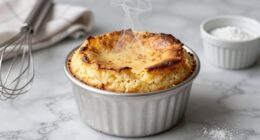
The interplay between ingredient ratios and oven temperature is fundamental. For example, a delicate soufflé relies on the right balance of eggs, sugar, and other ingredients, combined with a precisely set oven to give it lift without collapsing. Similarly, bread dough needs accurate ratios of flour, water, yeast, and salt, and a properly heated oven to develop a crust that’s both crispy and flavorful. When you understand how these factors work together, you can troubleshoot issues like uneven baking, poor rise, or dense texture. This understanding empowers you to adjust measurements and oven settings confidently, turning baking into a precise science rather than just guesswork.
In essence, mastering ingredient ratios and oven temperature isn’t about strict rules; it’s about understanding the science behind each step. When you measure carefully and set your oven correctly, you’re giving your baked goods the best chance to turn out perfect—light, fluffy, moist, and flavorful. It’s this attention to detail that elevates your baking from good to great, helping you consistently produce professional-quality treats that impress every time.
Frequently Asked Questions
How Does Humidity Affect Ingredient Measurements in Baking?
Humidity impact can substantially alter your ingredient measurements, affecting ingredient consistency in baking. When humidity is high, flour and other dry ingredients absorb moisture, making them heavier and more compact, which can lead to using too much. Conversely, low humidity can cause dry ingredients to be less dense, leading you to add more. To maintain accuracy, weigh your ingredients and adjust your recipes based on current humidity levels.
Can I Substitute Ingredients Without Adjusting Measurements?
Substituting ingredients without adjusting measurements can impact your baking, as even a 10% change can alter texture and flavor. Did you know that ingredient substitution often affects measurement accuracy? When you swap ingredients, you might need to tweak measurements to maintain balance. Always consider how different ingredients behave, especially in precise recipes, to make sure your baked goods turn out perfect. Adjusting measurements helps you achieve consistent, delicious results every time.
What Tools Are Best for Precise Ingredient Measurement?
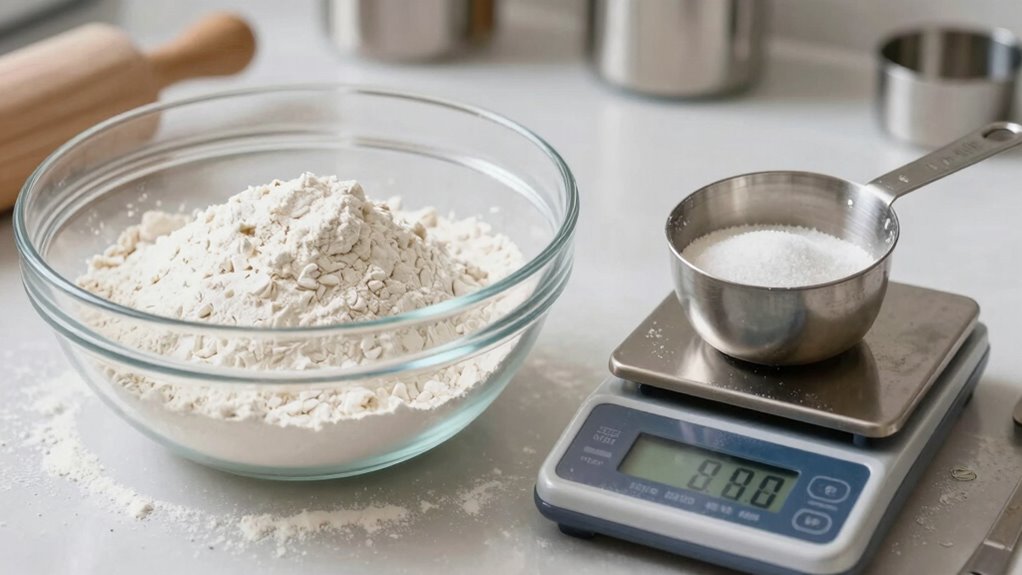
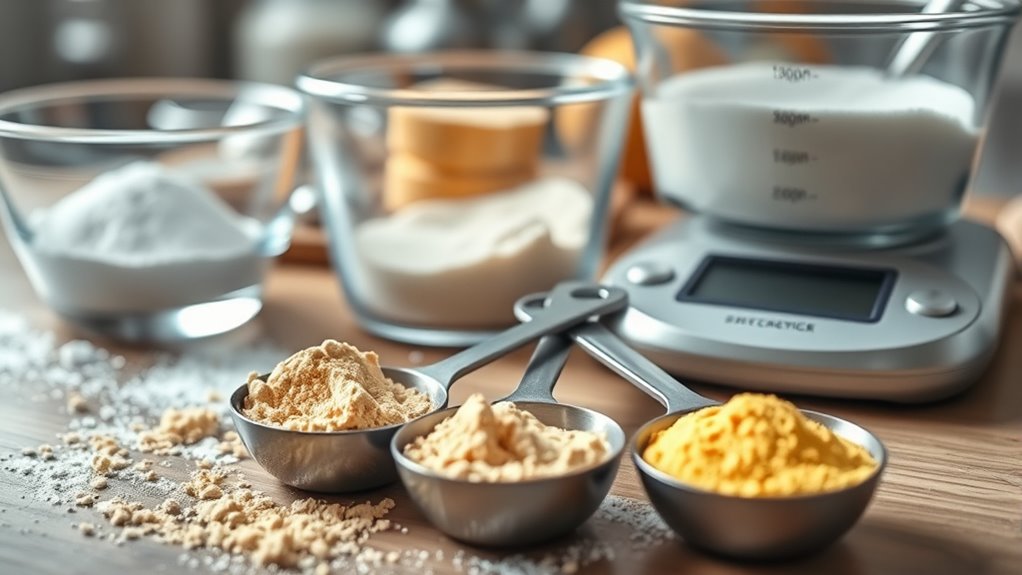
You should use digital scales for the most precise ingredient measurements, especially for flour, sugar, and butter. They provide accurate weight, reducing errors caused by volume variations. Measuring spoons are great for small amounts like spices or baking powder, but always double-check their accuracy. Combining digital scales and measuring spoons guarantees your recipes turn out consistently perfect, giving you confidence in your baking results.
How Does Measuring by Weight Compare to Measuring by Volume?
Measuring by weight is more accurate than measuring by volume because it accounts for density differences between ingredients. You get consistent results since a scale’s calibration accuracy guarantees precise measurements. Volume measurements can vary due to ingredient packing or settling, but weighing eliminates these issues. When baking, using a scale helps you follow recipes precisely, leading to better consistency and successful outcomes every time.
Do Different Brands of the Same Ingredient Require Different Measurements?
Different brands of the same ingredient can require slightly different measurements because of varying brand consistency and measurement accuracy. You should always check the packaging for specific guidance, as some brands might have different densities or moisture content. To guarantee perfect results, it’s best to use the same brand consistently, especially for baking, and rely on precise measurement methods. This helps maintain consistency in your baked goods.
Conclusion
Remember, measuring ingredients accurately is like following a recipe’s secret map—you’ll end up with a delicious masterpiece. When you pay attention to the details, your baked goods turn out just right, fluffy, and flavorful. Don’t underestimate the power of precision; it’s what transforms good baking into great baking. So, grab your tools, stay exact, and enjoy the process. After all, baking is like crafting a sweet symphony—every note (or ingredient) counts.