
To season and use your cast iron skillet, start by applying a thin layer of high-smoke-point oil all over the surface, then bake it upside down in a preheated oven at about 450°F, with foil below to catch drips. After each use, clean, dry thoroughly, and lightly oil to maintain the seasoning. With regular care, your skillet develops a natural non-stick surface and lasts for decades—keep exploring for more tips on perfecting your cast iron skills.
Key Takeaways
- Properly season your skillet by applying a thin oil layer and baking at 450°F for one hour to develop a natural non-stick surface.
- After cooking, clean your cast iron with warm water, dry thoroughly, and lightly oil to maintain seasoning and prevent rust.
- Use high-smoke-point oils like vegetable or flaxseed for seasoning and ongoing maintenance to enhance durability.
- Avoid harsh soaps and abrasive scrubbers to protect the seasoned surface and ensure longevity.
- Regular use and proper care improve the skillet’s non-stick properties and develop a durable, seasoned patina over time.

Have you ever wondered why cast iron cookware has remained popular for centuries? It’s because of its durability, heat retention, and versatility. But to keep your cast iron skillet performing at its best, you need to understand proper cast iron maintenance and seasoning techniques. These steps are essential for building up a natural non-stick surface and preventing rust, ensuring your pan lasts for generations.
Cast iron cookware’s lasting appeal comes from durability, heat retention, and versatile seasoning techniques.
The first thing you should know is that cast iron maintenance isn’t complicated, but it does require consistent care. After each use, wipe out excess food and debris with a paper towel or a brush. For stubborn residue, rinse with warm water and avoid using soap too often, as it can strip away the seasoning. Dry your skillet thoroughly—moisture is the enemy that causes rust. To prevent this, you can place it on low heat for a few minutes or wipe it down with a cloth. Once dry, lightly oil the surface with a high-smoke-point oil like vegetable or flaxseed oil. This thin layer helps protect the skillet from moisture and maintains the seasoning.
Seasoning techniques are the backbone of cast iron cooking. When properly seasoned, your skillet develops a durable, slick surface that improves with use. To season your cast iron, apply a thin layer of oil all over the cookware, including the handle and bottom. Then, place it upside down in an oven preheated to about 450°F (232°C). Put a sheet of aluminum foil on the rack below to catch any drips. Bake it for an hour, turn off the oven, and let the skillet cool inside. This process bonds the oil to the metal, creating that coveted non-stick coating. If your skillet starts to look dull or sticky, repeat the seasoning process to restore its surface.
The key to keeping your cast iron in top shape is regular seasoning, which improves with each use. Cooking greasy foods or frying helps build up the seasoning naturally. Just remember, good cast iron maintenance involves cleaning gently, drying thoroughly, and applying a thin layer of oil after each use. Over time, your skillet will develop a beautiful, dark patina that’s not only attractive but also enhances the cooking surface. With patience and proper care, your cast iron will serve you well for decades, becoming more seasoned and better with every meal you prepare.

CARON & DOUCET – New Ultimate Cast Iron Set: Seasoning Oil, Cleaning Soap & Restoring Scrub | 100% Plant-Based & Best for Cleaning Care, Washing, Restoring & Seasoning Skillets, Pans & Grills!
- Restores and Re-seasons: Removes rust and stuck food
- Cleans Cast Iron: Plant-based, sulfate-free soap
- Season and Condition: Food-grade coconut oil
As an affiliate, we earn on qualifying purchases.
As an affiliate, we earn on qualifying purchases.
Frequently Asked Questions
How Do I Prevent Rust on My Cast Iron Skillet?
To prevent rust on your cast iron skillet, you should regularly maintain its seasoning and keep it dry. After each use, wash it with minimal soap, dry it thoroughly, and apply a thin layer of oil to protect the surface. Store it in a dry place, and consider using rust prevention techniques like placing a paper towel inside to absorb moisture. Proper seasoning maintenance is key to keeping rust at bay.
Can I Use Soap to Clean Cast Iron?
Think of cleaning your cast iron like tending a garden—gentle care keeps it thriving. Yes, you can use soap cleaning now and then, but don’t overdo it, as soap can strip seasoning. After washing, dry thoroughly and apply a light layer of oil to maintain seasoning. This simple routine preserves your skillet’s non-stick surface and prevents rust, ensuring it stays a trusty kitchen companion.
How Often Should I Reseason My Cast Iron Skillet?
You should reseason your cast iron skillet every 6 months or when the surface shows signs of rust or sticking. Regular seasoning helps maintain a non-stick surface and prevents rust. Reseasoning tips include cleaning the skillet thoroughly, applying a thin layer of oil, and baking it upside down in the oven at 450°F for an hour. This keeps your skillet well-seasoned and ready for cooking.
Is It Safe to Cook Acidic Foods in Cast Iron?
You can cook acidic foods in cast iron, but it’s like dancing on a delicate tightrope. Acidic food safety can wear down your skillet’s seasoning over time, revealing bare metal that might cause rust. To protect your cast iron, consider seasoning acidic dishes carefully and avoid prolonged cooking with highly acidic ingredients. A little caution guarantees your skillet remains a trusted partner in your culinary adventures, not a battlefield.
What’s the Best Way to Store Cast Iron to Avoid Damage?
To store your cast iron and prevent rust, make certain it’s thoroughly dry after cleaning. Keep your pan in a dry, well-ventilated area and consider placing a paper towel or cloth inside to absorb moisture. Avoid stacking other cookware directly on top to prevent scratches. Proper pan storage, combined with rust prevention steps, helps maintain your cast iron’s seasoning and longevity.
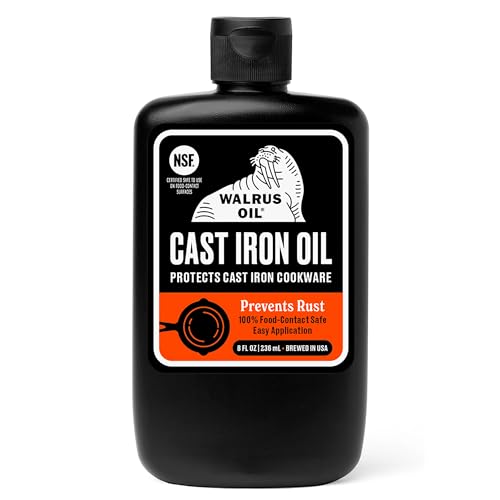
WALRUS OIL – Cast Iron Oil, High Smoke Point Safflower Oil for Seasoning, Maintaining Cast Iron. 100% Natural & Vegan, NSF Certified, 8 oz
- High Smoke Point: 450-500°F for seasoning
- Restores Cast Iron: Maintains cookware quality
- Natural & Vegan: 100% plant-based ingredients
As an affiliate, we earn on qualifying purchases.
As an affiliate, we earn on qualifying purchases.
Conclusion
Now that you know how to season and care for your cast iron skillet, you’re ready to cook with confidence. Embrace the heat, master the seasoning, and enjoy the versatility of cast iron. Keep it seasoned, keep it clean, and keep it handy. With dedication, your skillet will become your trusted kitchen companion, delivering perfect meals every time. So, season it well, use it often, and enjoy the timeless art of cast iron cooking.

OXO Good Grips Cast Iron Brush
- Soap-Free Scrubbing: Preserves seasoning and protects surfaces
- Effective Cleaning Pattern: Cleans flat and ridged cookware efficiently
- Angled Bristles: Provides leverage and reaches grooves
As an affiliate, we earn on qualifying purchases.
As an affiliate, we earn on qualifying purchases.

Lodge Cast Iron Care Kit – 5 Piece Cookware Maintenance Set for Everyday Cast Iron Care – Includes Seasoning Spray, Scrub Brush, Pan Scraper & Silicone Handle Holder
- Complete Cast Iron Care System: All-in-one maintenance set
- Easy Cleanup Tools: Scrub brush and pan scraper included
- Seasoning Spray Included: Vegetable oil seasoning spray
As an affiliate, we earn on qualifying purchases.
As an affiliate, we earn on qualifying purchases.