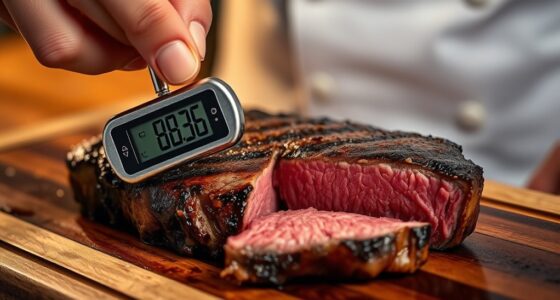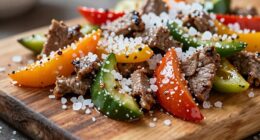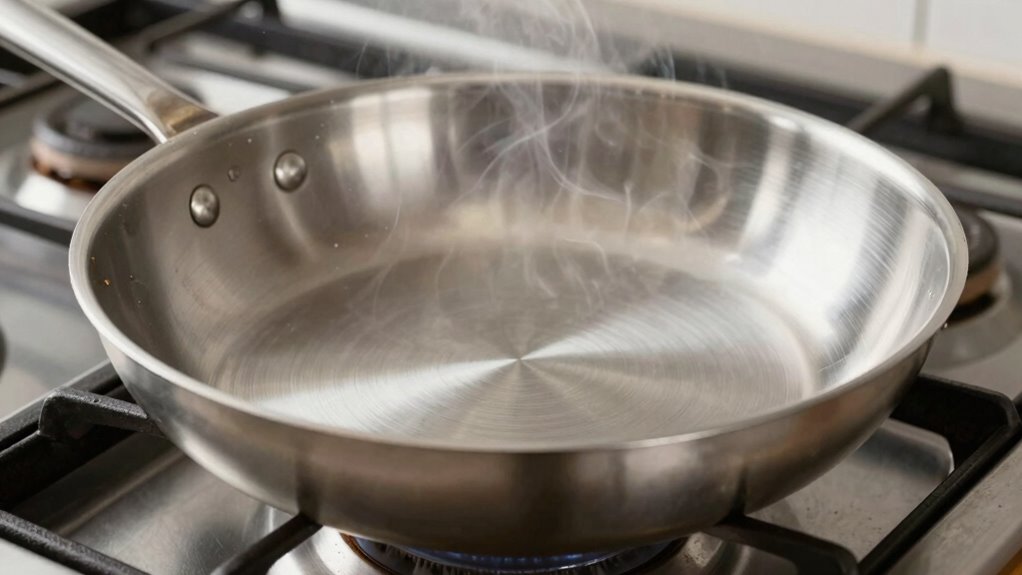

Preheating your pan is essential for a perfect sear because it guarantees even heat distribution and prevents sticking or tearing. When the pan and oil are hot enough, you get that beautiful, caramelized crust by quickly browning the surface, locking in juices. Starting with a hot pan also helps develop richer flavors and prevents dull, steamed results. Keep going to discover how mastering preheating can elevate your cooking to the next level.

Get kitchen staples and gadgets delivered free — and shop member deals
- Fast, free delivery on millions of items
- Access to Prime Big Deal Days deals on October 6–7
- Prime Video, Amazon Music and more included
Key Takeaways
- Preheating ensures even heat distribution, preventing hot spots that cause uneven browning.
- It allows the oil to reach its smoke point, facilitating better Maillard reactions for a flavorful sear.
- A hot pan quickly locks in juices, creating a desirable crust on meats and vegetables.
- Proper preheating enhances pan material performance, improving heat retention and searing efficiency.
- It reduces sticking and tearing, resulting in cleaner, more aesthetically pleasing, and flavorful results.
Have you ever wondered why some steaks turn out perfectly caramelized while others come out bland? The secret often lies in how well you preheat your pan. When you start with a hot pan, you set the stage for a beautiful sear that locks in juices and creates that irresistible crust. But to get there, you need more than just a hot surface—you need to pay attention to oil temperature and pan material.
First, let’s talk about oil temperature. When your pan is hot enough, the oil quickly reaches its smoke point, allowing you to sear the meat effectively. If the oil isn’t hot enough, the meat will sit in the pan and release moisture, leading to steaming rather than searing. This results in a dull, gray exterior instead of a golden-brown crust. Conversely, if the oil is too hot, it can burn, giving your steak a burnt flavor and uneven searing. The key is to heat the oil until it just starts to shimmer, signaling it’s ready. This precise temperature creates a rapid Maillard reaction, turning the surface brown and flavorful without burning.
Heating oil until it shimmers ensures perfect searing without burning.
Now, consider your pan material. Different materials conduct heat differently, affecting how quickly and evenly your pan heats up. Cast iron and carbon steel pans are excellent choices because they heat evenly and retain heat well, making them ideal for searing. Non-stick pans, while great for delicate foods, often don’t reach the high temperatures needed for a good sear and can have uneven heat distribution. Aluminum pans heat quickly but might not retain that heat as well, so preheating becomes even more vital to guarantee consistent searing. When you preheat the pan properly, you help guarantee that heat spreads uniformly across the surface, preventing hot spots that can cause uneven browning or burning.
Preheating your pan is a simple step that makes a noticeable difference. It helps you control the oil temperature, ensuring it’s just right for searing, and allows your pan material to perform at its best. By paying attention to these factors, you set yourself up for perfectly caramelized, flavorful steaks. Skipping this step often results in lackluster, uneven results. So next time you cook, give your pan a few extra minutes to heat up thoroughly—your taste buds will thank you.
Frequently Asked Questions
How Long Should I Preheat My Pan Before Searing?
You should preheat your pan for about 2-3 minutes until it reaches the right pan temperature. This guarantees the surface is hot enough for proper searing, which helps develop a flavorful crust and reduces sticking. Keep an eye on the heat, and avoid rushing. Once the pan is hot, you can start searing, and the ideal searing duration depends on your food, usually around 2-5 minutes per side.
Can I Preheat a Non-Stick Pan for Searing?
Think of preheating a non-stick pan like waiting for a vintage radio to warm up—it’s not ideal. You can preheat it, but be mindful of non-stick limitations and uneven heat distribution. High heat can damage the coating, so keep it medium-high. Preheating helps with better searing, but with non-stick pans, you risk damaging the surface. Always monitor the temperature to prevent warping or coating degradation.
Does the Type of Oil Affect Preheating?
Yes, the type of oil affects preheating because oils with lower smoke points, like extra virgin olive oil, can smoke quickly, ruining pan seasoning and causing unpleasant flavors. You should choose oils with higher smoke points, like avocado or refined oils, to prevent oil smoke during preheating. Properly preheated pans help achieve ideal searing, preserve your pan’s seasoning, and prevent sticking. Always match your oil to your cooking temperature for best results.
Is It Okay to Preheat an Empty Pan?
Think of preheating an empty pan as warming up your engine before a race—you risk damage if you’re not careful. It’s generally safe for short periods, but watch your pan’s safety and avoid overheating. Use temperature indicators like a hand test or a thermometer to gauge when it’s ready. Preheating without food is fine, but don’t leave it empty too long, or you might compromise your pan’s integrity.
How Do I Know When the Pan Is Hot Enough?
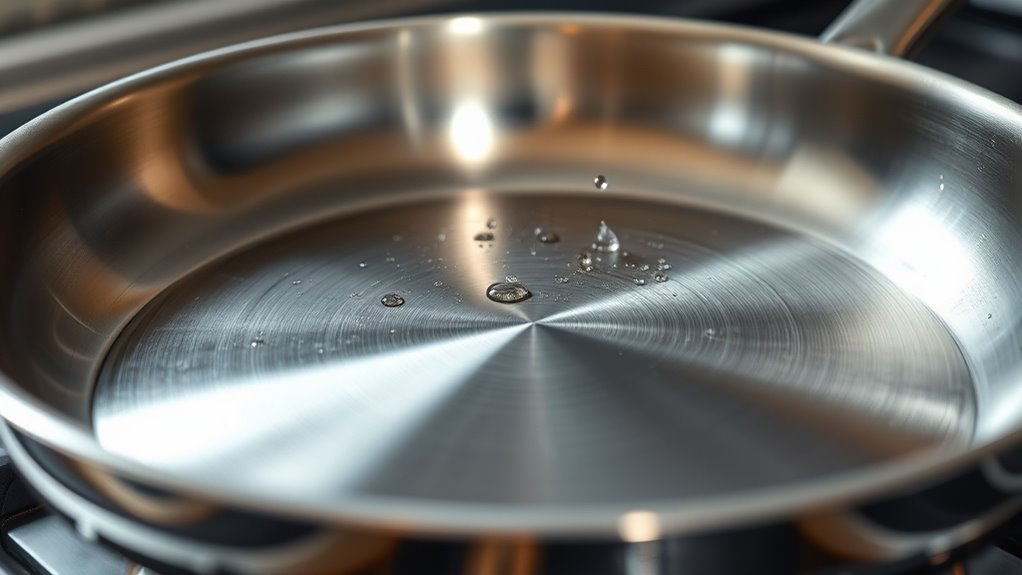
You’ll know your pan is hot enough when it reaches the right temperature indicators, like shimmering surface or slight smoke. Avoid overheating past the smoke point, which can cause food to burn or stick. To test, sprinkle a few drops of water; if they dance and evaporate quickly, your pan is ready. Properly preheated pans guarantee even searing and better results every time.
Conclusion
Preheating your pan isn’t just a step; it’s the secret to perfect searing. When you start with a hot pan, your food gets that beautiful, caramelized crust in less than a minute—saving you time and boosting flavor. Did you know that a properly preheated pan can reduce cooking time by up to 30%? So, next time you cook, remember: a hot pan isn’t just better, it’s essential for achieving restaurant-quality results every time.
NFL season / tailgating Picks
team gear
As an affiliate, we earn on qualifying purchases.