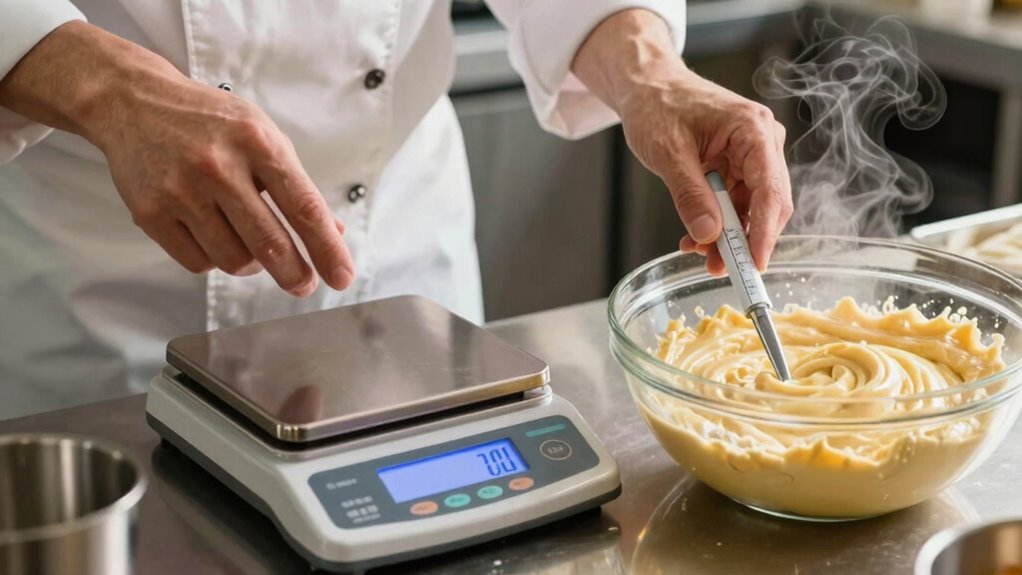

To achieve perfect baked goods, using scales and thermometers is essential. Precise measurement with a scale guarantees the right balance of ingredients, reducing guesswork and improving texture and flavor. Temperature control with an oven thermometer ensures consistent heat, preventing burnt or undercooked spots. Combining these tools helps you understand how ingredient ratios and heat interact, leading to bakery-quality results every time. Keep exploring to master the science behind precision baking and elevate your skills.
Key Takeaways
- Using a digital scale ensures accurate ingredient measurements, leading to consistent texture and flavor in baked goods.
- Thermometers monitor oven temperature, preventing under- or over-baking for ideal results.
- Precise measurement of ingredients minimizes errors caused by volume estimations or fluctuations.
- Consistent use of scales and thermometers helps achieve bakery-quality treats at home.
- Understanding ingredient behavior and heat interactions through tools enhances baking predictability and success.

Have you ever wondered why some baked goods turn out perfect every time? The secret often lies in accuracy—paying close attention to ingredient ratios and temperature control. When you bake, small differences in measurement or oven heat can make the difference between a flaky croissant and a burnt mess. That’s where using scales and thermometers becomes vital. These tools help you achieve consistent results by ensuring your ingredients are just right and your oven stays at the ideal temperature.
Starting with ingredient ratios, using a scale instead of volume measurements makes a big difference. Flour, sugar, butter, and liquids all have specific weights that influence the texture and structure of your baked goods. For instance, too much flour can make a cake dense, while too little can cause it to collapse. When you weigh your ingredients, you eliminate the guesswork, ensuring each batch is true to the recipe. This accuracy leads to better texture, flavor, and appearance because every component is measured accurately. It’s a small change that yields big results, especially when you’re aiming for bakery-quality treats at home.
Using a scale for ingredient measurements ensures bakery-quality results at home.
Temperature control is equally vital. Your oven’s temperature can fluctuate, especially if it’s older or poorly calibrated. Using an oven thermometer allows you to monitor the actual temperature inside, so you know exactly when it hits the ideal baking range. Baking at the proper temperature ensures even heat distribution, which affects how your baked goods rise, cook through, and develop their crust. For example, a too-hot oven can cause a cookie’s edges to burn before the center is baked, while a too-cool oven might produce a pale, undercooked loaf. Adjusting your oven based on the thermometer’s reading guarantees consistent results every time.
In addition to thermometers, digital scales provide precise measurements that are vital for delicate baked items like pastries or soufflés. When you combine accurate ingredient ratios with precise temperature control, you’re setting yourself up for success. You’ll notice that your baked goods become more predictable, with fewer surprises or failures. These tools help you develop a keen understanding of how your ingredients behave and how your oven’s heat affects your baking. Over time, this knowledge allows you to tweak recipes confidently, creating consistently excellent results.
In essence, precision baking isn’t about complicating the process; it’s about respecting the science behind baking. By measuring ingredients carefully and maintaining the right temperature, you harness the full potential of your recipes. The result? Perfect, professional-quality baked goods that look, taste, and feel just right—every single time.
Frequently Asked Questions
How Often Should I Calibrate My Baking Thermometer?
You should calibrate your baking thermometer at least once a year to maintain essential accuracy. If you frequently use it or notice inconsistent readings, consider calibrating it more often. Regular calibration ensures your thermometer’s accuracy, which is vital for perfect baking results. Remember, a well-calibrated thermometer helps you monitor temperatures precisely, so your baked goods turn out just right every time.
What Is the Best Type of Scale for Baking?
Did you know that 85% of professional bakers prefer digital scales for accuracy? For baking, a digital scale offers better precision, making it easier to measure ingredients accurately. While analog scales are reliable and don’t require batteries, digital scales often feature tare functions and precise readings down to 0.1 grams. For consistent results, choose a digital scale with high precision, especially when working with delicate recipes.
Can I Substitute Digital for Analog Thermometers?
Yes, you can substitute digital for analog thermometers, but keep in mind that digital thermometers often provide quicker readings and can be more precise, especially with thermometer accuracy. However, some bakers prefer analog for visual simplicity and durability. When choosing, consider your needs and how the thermometer’s features match your baking style. Both types can deliver excellent results if used correctly, so select the one that best fits your preferences.
How Do Humidity Levels Affect Baking Accuracy?
Humidity effects in baking are like a mischievous puppeteer pulling strings—high humidity can make your dough sticky or cause baked goods to be denser, while low humidity can dry them out and make them crumbly. These fluctuations directly impact baking accuracy, making it tricky to achieve perfect texture and rise. To stay in control, adjust your recipes or use a dehumidifier or humidifier to maintain a stable environment.
Are There Specific Scales for Different Types of Baked Goods?
Yes, there are specific scales designed for different baked goods, helping you measure ingredient ratios precisely. For example, delicate pastries benefit from finer precision scales, while larger scales suit bread baking. Always maintain your scale properly to guarantee accuracy. Using the right scale for each task improves consistency, so you get perfect results every time, whether you’re making cookies, cakes, or bread. Properly calibrated scales make all the difference in baking success.
Conclusion
By now, you see how using scales and thermometers isn’t just a tip—it’s the secret to consistent, perfect baked goods. Many bakers once doubted precision’s impact, but research shows that small measurements markedly improve results. Embracing these tools transforms your baking from guesswork to science, giving you control and confidence. So, trust in precision, and watch your baked creations rise to perfection every time—proving that the right tools truly make all the difference.