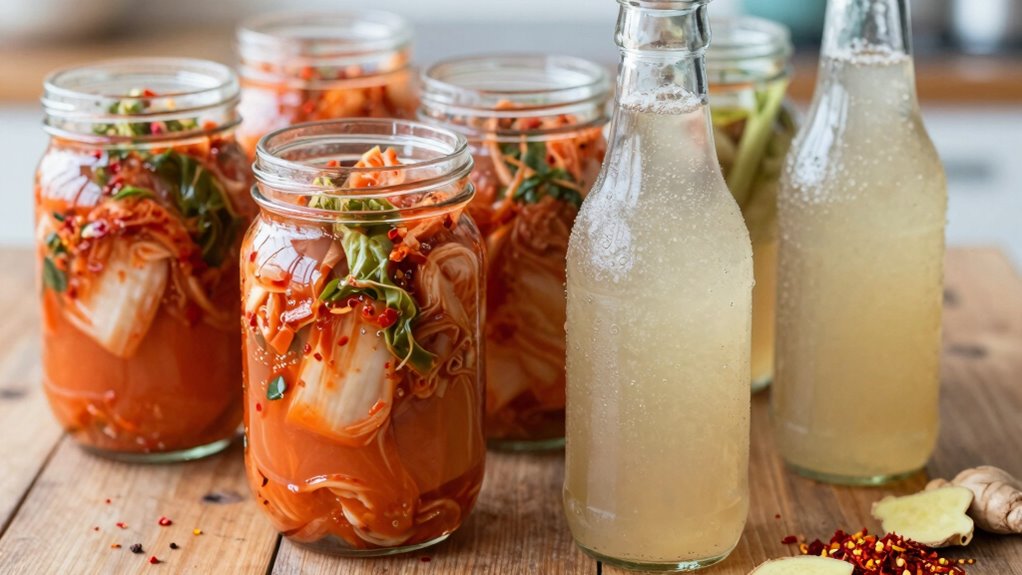

To master fermentation from kimchi to kombucha, focus on cleanliness, temperature control, and understanding the microbial activity driving each product. Keep equipment and hands sanitized, maintain a consistent temperature between 65°F and 75°F, and monitor flavor changes over time. Adjust fermentation duration and conditions to enhance flavor and safety. With careful observation and experimentation, you’ll develop skills to produce delicious, safe fermented foods—continue exploring to reveal more fermentation secrets.

Get kitchen staples and gadgets delivered free — and shop member deals
- Fast, free delivery on millions of items
- Access to Prime Big Deal Days deals on October 6–7
- Prime Video, Amazon Music and more included
Key Takeaways
- Maintain strict sanitation and proper temperature control (65°F-75°F) to ensure safe, uncontaminated fermentation.
- Understand microbial activity and create optimal environmental conditions to promote consistent fermentation progress.
- Monitor flavor development and biochemical changes regularly to determine the ideal harvest point.
- Document processes and experiment with ingredients and conditions to refine techniques and achieve desired flavors.
- Educate yourself on fermentation science to troubleshoot issues, improve results, and safely master a variety of fermented foods.
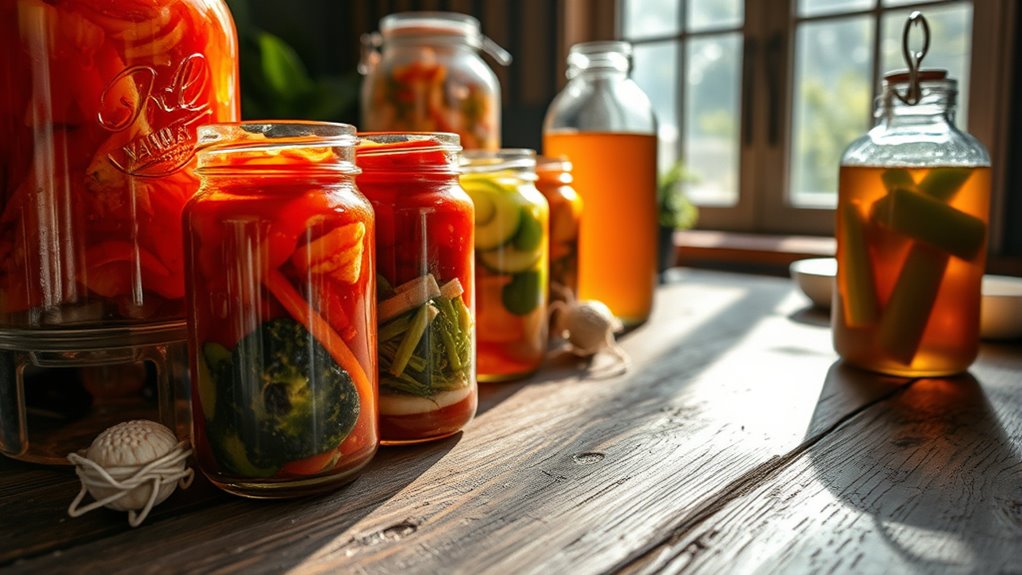
Fermentation is an age-old process that transforms simple ingredients into flavorful and nutritious foods, but mastering it requires understanding the science behind it. When you transition into fermentation, one of your primary concerns should be fermentation safety. Ensuring your starter cultures, ingredients, and equipment are clean helps prevent contamination by harmful bacteria or molds that could spoil your batch or pose health risks. Proper sanitation is essential; wash your hands thoroughly, sterilize jars and utensils, and keep an eye on the environment where fermentation occurs. Temperature control also plays an essential role. Too warm, and unwanted bacteria might thrive; too cold, and fermentation slows down or stops altogether. You want a consistent, moderate temperature—usually between 65°F and 75°F—to promote safe and successful fermentation. Additionally, understanding the role of Free Floating bacteria and yeasts in fermentation can help optimize your process for better flavor and safety. These microorganisms are key players in microbial activity that drive fermentation, making it vital to create an environment conducive to their growth. Creating the right environmental conditions is crucial for controlling microbial activity and ensuring a successful fermentation process. Understanding flavor development is key to mastering fermentation. As your ingredients ferment, they undergo complex biochemical changes that develop depth, tang, and complexity in flavor. The natural yeasts and bacteria consume sugars, producing acids, alcohols, and other compounds that give fermented foods their signature taste. Patience is indispensable here; rushing the process can lead to underdeveloped flavors or imbalanced profiles. Keep tasting your product at different stages to learn how flavors evolve. For example, with kimchi, the initial salty, crunchy profile transitions into a tangy, umami-rich taste over time. Similarly, in kombucha, the balance of sweetness and acidity shifts as fermentation progresses, creating a beverage that’s both invigorating and complex. Monitoring these changes helps you develop a better sense of when your product is ready and how to tweak fermentation conditions to enhance flavor. Adjustments, like changing the fermentation duration or temperature, can influence flavor development remarkably. It is also beneficial to understand the science behind fermentation to troubleshoot issues and improve your results. Different ingredients and starters will produce unique profiles, so experimentation is part of the process. Keep detailed notes so you can replicate successful batches or learn from less successful ones.
Frequently Asked Questions
How to Troubleshoot Common Fermentation Failures?
When troubleshooting fermentation failures, check your fermentation vessel choices to guarantee they’re airtight and suited for your recipe. Maintain ideal temperature ranges—usually between 65-75°F for most ferments—and avoid temperature fluctuations. If fermentation stalls, gently stir or burp your vessel to release excess gases. Guarantee your ingredients are fresh, and avoid contamination by keeping everything clean. Adjusting these factors often helps revive slow or failed fermentation.
Can I Reuse Fermented Starters for Future Batches?
Yes, you can reuse fermented starters for future batches. To guarantee successful fermentation scaling, focus on proper starter preservation by storing it in the refrigerator and maintaining cleanliness. Always check for signs of spoilage before reusing. Reusing starters not only saves time but also helps develop a consistent flavor. Just remember to feed and refresh your starter regularly to keep it active and vibrant for your next fermentation project.
What Safety Precautions Are Essential During Fermentation?
During fermentation, you should prioritize sanitation practices by thoroughly cleaning all equipment and hands to prevent contamination. Always use high-quality, fresh ingredients to guarantee a safe fermentation process. Keep your fermentation environment clean and monitor for any mold or off-odors. Maintain proper temperature and acidity levels, and use fermentation-specific tools when needed. These precautions help safeguard your batch and produce delicious, safe fermented foods and beverages.
How Do Climate and Season Affect Fermentation Results?
Climate impact and seasonal variations considerably influence your fermentation results. Warmer temperatures speed up fermentation, risking over-fermentation or spoilage, while colder weather slows down the process, possibly leading to incomplete fermentation. You should monitor temperature and adjust your environment accordingly, like moving jars indoors or into a controlled space. Understanding these seasonal shifts helps you maintain consistent quality and prevents unwanted microbial growth during different times of the year.
Are There Vegan Alternatives to Traditional Fermentation Ingredients?
Yes, you can use plant-based starters and vegan fermentation agents as alternatives to traditional ingredients. You might try using fermented vegetables like sauerkraut or kimchi as natural starters, or incorporate vegan probiotics to jump-start fermentation. These options help you create delicious, plant-based ferments without animal products. Just guarantee your vegan fermentation agents are active and suited for the specific fermentation process you’re aiming to achieve.
Conclusion
As you master fermentation, remember you’re nurturing a tiny universe within each jar—where microbes become your silent partners, transforming ordinary ingredients into vibrant life. Like a gardener tending delicate seeds, your patience and care cultivate flavors that resonate beyond the surface. Each batch is a symbol of your connection to nature’s timeless dance—balancing chaos and harmony. Embrace the journey, and let your creations remind you that, in fermentation, patience blooms into delicious mastery.
Fall Picks
fall essentials
As an affiliate, we earn on qualifying purchases.