
Molecular gastronomy might seem complex, but you can start with spherification and foams easily by understanding the basics. Spherification turns liquids into small, gel-like spheres, while foams create airy textures from liquids. Both techniques use simple ingredients like calcium solutions and whipping agents, making them perfect for beginners. By mastering these simple steps, you’ll open creative ways to enhance your dishes. If you keep exploring, you’ll discover even more exciting culinary possibilities.

Get kitchen staples and gadgets delivered free — and shop member deals
- Fast, free delivery on millions of items
- Access to Prime Big Deal Days deals on October 6–7
- Prime Video, Amazon Music and more included
Key Takeaways
- Spherification transforms liquids into small gel-like spheres using calcium solutions, ideal for beginners exploring molecular gastronomy.
- Foams are created by whipping liquids with stabilizers, adding airy textures to dishes with simple techniques.
- Start with high-quality, brightly colored ingredients for vibrant, visually appealing spheres and foams.
- Understanding basic science principles helps control texture, consistency, and success in spherification and foam creation.
- Experimenting with different liquids and technique variations broadens your culinary options and enhances creativity.

Molecular gastronomy is an innovative culinary discipline that blends science and cooking to create surprising textures, flavors, and presentations. As a beginner, you might find it exciting to experiment with techniques like spherification and foams, which open new possibilities in your kitchen. These methods allow you to craft dishes with liquid textures and flavor encapsulation, transforming ordinary ingredients into extraordinary culinary experiences. Understanding the science behind these techniques helps you control the process and achieve consistent results.
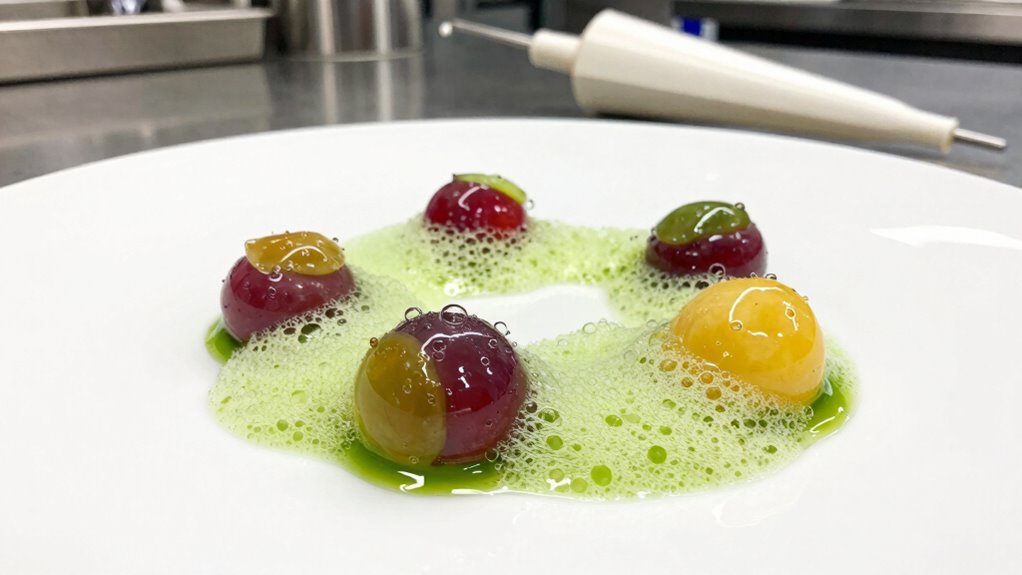
With spherification, you turn liquids into small, gel-like spheres that resemble caviar or pearls. This technique involves adding a calcium solution to a flavored liquid, causing a reaction that forms a thin gel membrane around the liquid, creating a sphere. You can use various liquids—fruit juices, cocktails, or even savory broths—to produce intriguing textures that burst with flavor when you bite into them. The liquid textures created through spherification add a playful element to your dishes, elevating presentation and taste. Flavor encapsulation is the core principle here; it traps the liquid’s flavor inside a delicate gel shell, intensifying the taste experience with each bite. As a beginner, you’ll find that mastering this process requires attention to detail, but the results are truly rewarding. Additionally, understanding the color accuracy of your ingredients and techniques can help you achieve more vibrant and visually appealing spheres, especially when working with colorful liquids. Paying attention to ingredient quality is essential for consistent and impressive results in your culinary creations. Moreover, mastering these techniques can inspire you to explore creative presentation styles that impress and delight your guests. Incorporating knowledge of scientific principles can further enhance your ability to predict and refine your results, leading to more sophisticated dishes. Furthermore, experimenting with different technique variations can help you discover new textures and flavors, expanding your culinary repertoire.
Frequently Asked Questions
What Safety Precautions Should I Take When Handling Spherification Ingredients?
When handling spherification ingredients, you should always prioritize safety. Handle chemicals carefully, avoiding direct skin contact and using gloves if necessary. Make sure to work in a clean environment, practicing proper sanitation to prevent contamination. Keep ingredients labeled and stored properly, and wash your hands thoroughly afterward. Follow any safety instructions provided with the ingredients, and never mix chemicals without understanding their proper use.
Can I Replicate Molecular Gastronomy Techniques at Home Without Specialized Equipment?
Did you know over 60% of home cooks try DIY kitchen experiments? You can definitely replicate molecular gastronomy techniques at home without specialized equipment. Use everyday items like droppers, fine strainers, or silicone molds as equipment alternatives. With a little creativity, you can create spherification and foams using simple kitchen tools, making your culinary adventures exciting and accessible without the need for expensive gadgets.
How Long Do Spherified and Foamed Dishes Typically Last Before Spoilage?
Spherified and foamed dishes usually last 1 to 2 days before spoilage, but it depends on ingredients and storage. For best shelf life, store spherified items in airtight containers in the fridge, and avoid exposing foams to heat or moisture. Always check for changes in texture, smell, or appearance before serving, and consume promptly to enjoy their freshness and safety. Proper storage tips help maximize their lifespan.
Are There Vegetarian or Vegan-Friendly Alternatives for Molecular Gastronomy Ingredients?
Think of your culinary adventure as a journey through a lush garden—there are plenty of veggie-friendly options. Yes, you can use vegan gelatin alternatives like agar-agar or carrageenan for plant-based spherification. These ingredients mimic traditional methods while keeping everything vegan or vegetarian. With these tools, you can craft stunning, plant-based spheres and foams that impress without compromising your ethical choices or flavor.
What Common Mistakes Should Beginners Avoid in Spherification and Foaming Processes?
You should avoid over oxidation, which can ruin the delicate textures, and guarantee your ingredients are fresh to prevent inconsistent textures. Pay attention to the timing of your spherification and foaming steps, as rushing can cause uneven results. Also, measure your ingredients carefully and follow the recipe precisely. Don’t rush the process, and keep your workspace clean to maintain consistency and achieve smooth, professional-looking spheres and foams.
Conclusion
Now that you’ve explored spherification and foams, you’re ready to elevate your culinary game with a touch of molecular magic. Don’t be afraid to experiment and blend old-school techniques with modern science—think of it as the culinary equivalent of the Renaissance meets the digital age. With a bit of patience and curiosity, you’ll surprise your guests and turn everyday ingredients into extraordinary creations. Embrace the adventure, and remember, even Da Vinci would be amazed by your newfound skills!
Fall Picks
fall essentials
As an affiliate, we earn on qualifying purchases.