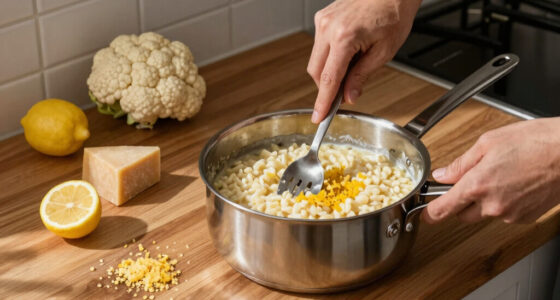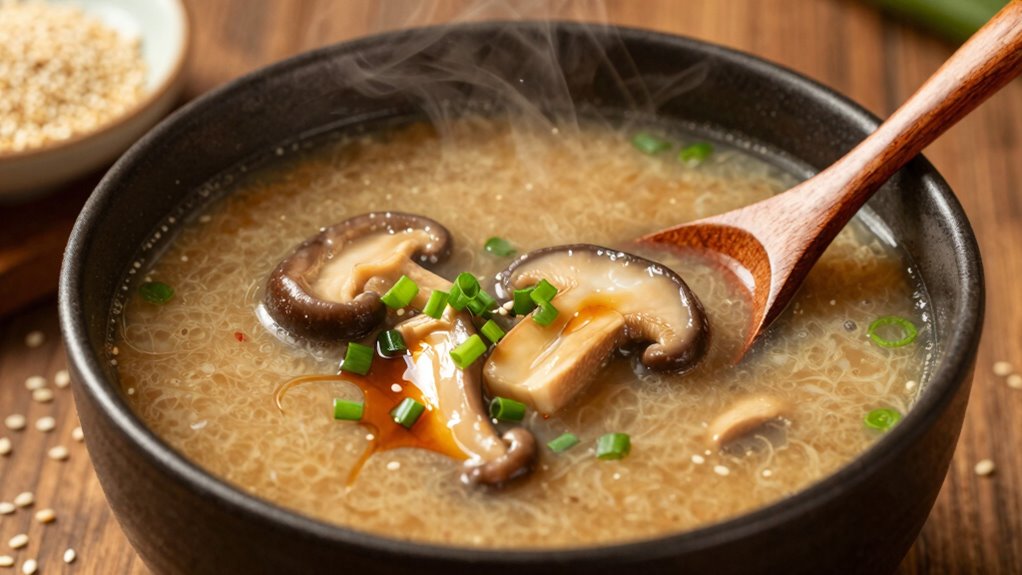

To boost umami flavor in any dish, focus on naturally rich ingredients like soy sauce, miso, dried mushrooms, or fermented fish, which contain glutamates that enhance savory tastes. Use techniques like slow braising, roasting, or fermentation to concentrate these flavors, and add umami-rich elements early in the cooking process for deeper integration. Pay attention to balancing flavors without overpowering, and explore different ingredients and methods to develop a more satisfying, savory profile as you experiment further.
Key Takeaways
- Incorporate naturally umami-rich ingredients like soy sauce, fermented fish, dried mushrooms, or Parmesan to enhance flavor naturally.
- Use cooking techniques such as roasting, slow braising, or fermentation to concentrate glutamates and deepen savory taste.
- Add umami ingredients early in cooking to allow flavors to fully develop and integrate into the dish.
- Taste ingredients raw and cooked to understand their umami strength and adjust seasoning accordingly.
- Balance umami with other flavors to achieve a satisfying, layered, and authentic flavor profile without overpowering.
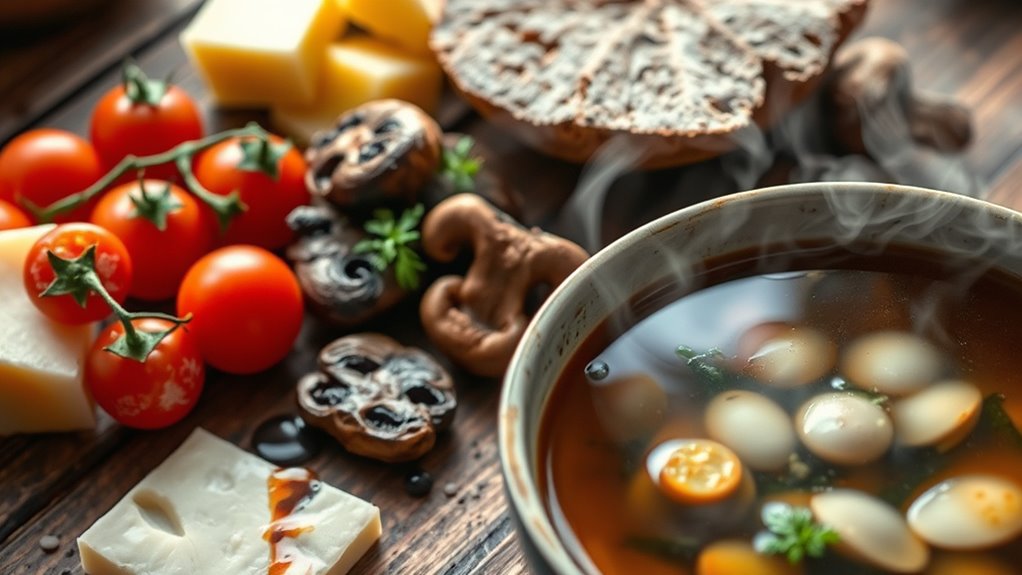
Have you ever wondered what gives certain foods their rich, savory flavor that goes beyond sweet, sour, salty, and bitter? That depth of flavor is thanks to umami, often called the fifth taste. To understand umami, you need to explore its origins and how to enhance it through specific tasting techniques. Umami origins trace back centuries, rooted in Asian cuisines where ingredients like soy sauce, fermented fish, and dried mushrooms have been used for generations. These foods contain naturally occurring glutamates, which are amino acids responsible for umami’s savory profile. In recent decades, scientists confirmed that our taste buds detect these glutamates, explaining why certain dishes taste so profoundly satisfying. Recognizing umami’s origins helps you appreciate its natural presence in many ingredients, guiding you in selecting components that boost flavor naturally. Additionally, technological advancements in architectural solutions have facilitated innovative ways to improve culinary environments, enhancing the overall dining experience.
To incorporate umami into your cooking, learning umami tasting techniques is essential. One effective method is to taste ingredients raw and then try them cooked or combined with other ingredients to notice how their flavor intensifies. For example, tasting a piece of dried shiitake mushroom before and after rehydration reveals how umami becomes more pronounced once the mushroom releases its glutamates. Another technique is to use tasting spoons or small samples to compare different ingredients side-by-side, helping you identify which bring the most umami to a dish. This practice sharpens your palate and enables you to balance flavors more intentionally. Additionally, paying attention to the timing of adding umami-rich ingredients during cooking can help maximize their savory impact. For instance, adding soy sauce or miso early in the cooking process allows their flavors to meld deeply into the dish, rather than just providing a salty note on the surface. Understanding glutamates and their role in flavor development can further refine your ability to create savory dishes. Moreover, learning about umami-rich ingredients helps you discover new ways to enhance dishes naturally, broadening your culinary repertoire. Developing your palate to recognize these savory flavors is key to elevating your cooking skills and creating dishes that are both delicious and well-balanced.
You can also experiment with umami-enhancing cooking methods, like slow braising or fermentation, which concentrate glutamates and other flavor compounds. Roasting meats and vegetables can enhance their natural umami, creating a richer taste profile. Using umami tasting techniques, you’ll start to notice how small adjustments—like adding a splash of fish sauce or sprinkling Parmesan—can considerably elevate your dishes. The key is to develop your palate to recognize the subtle but powerful presence of umami and to understand its origins. By doing so, you’ll be able to craft more flavorful, satisfying meals with confidence. Remember, mastering umami isn’t about overpowering your dishes but about balancing and amplifying their natural savory qualities, making every bite more enjoyable.

Lee Kum Kee Soy Sauce (64 oz – 1 Pack) Vegan, Non-GM Soybeans | Umami Flavor | Perfect for Marinades, Stews, Sauce Mixes, Stir-Frying, Drizzling, Dipping, Seasoning & Braising
- Rich Umami Flavor: Bold, savory taste enhances dishes
- Deep Color and Aroma: Rich brown color with fragrant aroma
- Full-Bodied Flavor: Bold, smooth, and satisfying taste
As an affiliate, we earn on qualifying purchases.
As an affiliate, we earn on qualifying purchases.
Frequently Asked Questions
Can Umami Be Naturally Found in Fruits?
Yes, umami can be naturally found in fruits. You’ll discover natural umami in fruit sources like tomatoes, shiitake mushrooms, and olives, which have high levels of glutamates. These ingredients add depth and richness to your dishes. Incorporating these fruits enhances flavor naturally, making your meals more savory without needing artificial additives. So, next time you cook, consider adding tomatoes or olives for that delicious umami boost.
How Do Age and Storage Affect Umami in Food?
Ever wonder how age and storage impact umami in food? As you age or store food, fermentation and aging processes develop stronger umami flavors, especially in cured or fermented products. Proper storage conditions, like cool, dark places, help preserve these flavors, while poor conditions can diminish umami. So, yes, aging and storage substantially influence umami, intensifying or diminishing its savoriness depending on how you handle your ingredients.
Are There Health Benefits Associated With Umami-Rich Foods?
Yes, eating umami-rich foods offers health benefits and positive nutritional impacts. These foods, like mushrooms, tomatoes, and aged cheeses, can help satisfy your appetite with less salt, supporting heart health. They also provide antioxidants and essential nutrients, boosting your immune system and overall well-being. Incorporating umami-rich ingredients into your meals can enhance flavor while contributing to a balanced, nutritious diet.
Can Vegetarians Easily Incorporate Umami Into Their Dishes?
Like a skilled painter adding depth to a canvas, you can easily incorporate umami into your vegetarian dishes. Use plant-based broths, miso, soy sauce, and nutritional yeast as your palette of vegetarian umami sources. These ingredients enhance flavor without meat, allowing you to create rich, savory dishes that satisfy the palate. With a little creativity, your vegetarian meals can achieve the same umami depth as their non-vegetarian counterparts.
What Are Common Cooking Mistakes That Diminish Umami Flavor?
You might diminish umami flavor by making seasoning errors, like under-salting or relying solely on salt. Overcooking ingredients can also break down natural umami compounds, reducing depth of flavor. Avoid these pitfalls by seasoning gradually, tasting frequently, and cooking ingredients just enough to preserve their savory qualities. Staying mindful of these mistakes helps you enhance umami, making your dishes richer and more satisfying.

Orsky Dried Shiitake Mushrooms Sliced, Dried Mushrooms for Cooking, Quick Rehydration, Smooth Taste, Fresh and Tender, Vacuum Sealed, No Fumigation Sulfur, 8 Oz
- Quick Rehydration: Rehydrate in 3 minutes in warm water
- Rich Flavor and Texture: Great taste with chewy texture for various dishes
- High-Quality Mushrooms: 100% natural, fresh, and fragrant shiitake mushrooms
As an affiliate, we earn on qualifying purchases.
As an affiliate, we earn on qualifying purchases.
Conclusion
Think of umami as the secret ingredient in your flavor toolbox, adding depth and richness like the foundation of a sturdy house. When you understand how to boost it—through ingredients like mushrooms, aged cheeses, or soy sauce—you open a world of savory potential in every dish. With these techniques, you’re the artist painting a culinary masterpiece, turning simple ingredients into a symphony of taste that keeps everyone coming back for more.

ZAB MIKE® PASTEURIZED THAI FERMENTED FISH SAUCE, PAPAYA-SALAD FORMULA (SOM-TUM)
As an affiliate, we earn on qualifying purchases.
As an affiliate, we earn on qualifying purchases.

Belgioioso, Parmesan, 8 Ounce
- All-natural cheese with nutty flavor: Full, rich taste
- Gluten-free: Suitable for gluten sensitivities
- rBST free: No artificial growth hormones
As an affiliate, we earn on qualifying purchases.
As an affiliate, we earn on qualifying purchases.