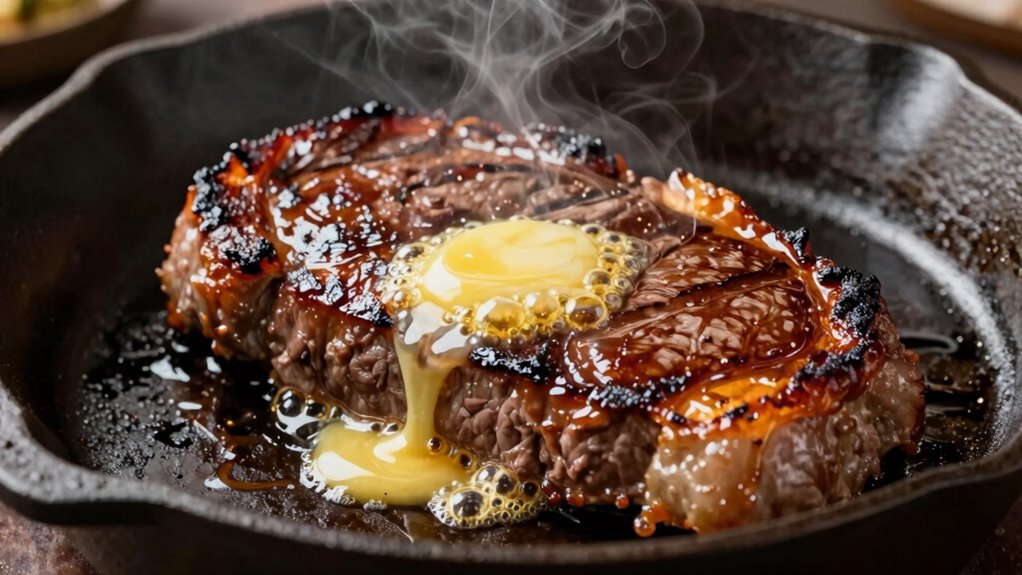

To achieve the perfect sear with cast iron, start by choosing a high smoke point oil like grapeseed or avocado and heat it until it just shimmers. Once at the right temperature, carefully place your food in the skillet, ensuring a satisfying sizzle. For extra flavor, add butter, herbs, and garlic toward the end, then spoon the melted butter over the food. Managing heat and technique will help you master that beautifully crusted, flavorful finish—learn more to perfect your skills.
Key Takeaways
- Preheat cast iron skillet and choose high smoke point oil for optimal searing temperature.
- Achieve a satisfying sizzle before adding food to ensure proper crust formation.
- Maintain consistent heat, adjusting as needed to prevent smoking or lack of sizzle.
- Add butter, herbs, and garlic toward the end, then tilt and spoon for even butter-basting.
- Monitor oil temperature throughout to prevent burning and ensure a flavorful, glossy crust.

Searing with cast iron is one of the most effective ways to develop rich, flavorful crusts on meats and vegetables. To achieve that perfect sear, you need to pay close attention to the oil temperature. The key is heating your oil just enough so it’s hot but not smoking excessively. When you add your food, you want the oil to shimmer and gently ripple, indicating it’s at the right temperature. If it’s too cold, your food will stick and won’t develop that desirable crust. If it’s too hot, the oil will reach its smoke point and start to break down, producing unpleasant flavors and smoke. That’s why understanding the smoke point of your chosen oil is critical. Oils like avocado or grapeseed have high smoke points, making them ideal choices for searing at high temperatures. Conversely, oils with lower smoke points, such as extra virgin olive oil, can burn quickly, imparting a bitter taste and creating unwanted smoke.
Once your oil hits the right temperature, carefully place your meat or vegetables into the skillet. You should hear a satisfying sizzle immediately—this is a good sign that the surface is searing properly. Resist the temptation to move or poke the food too soon; letting it sit undisturbed allows the crust to form and prevents sticking. As the surface caramelizes, you’ll notice a deepening color and a crust that’s both flavorful and visually appealing. Maintaining the right oil temperature is essential during this process, so keep an eye on the heat. If the oil begins to smoke excessively, lower the heat slightly; if it’s not sizzling, turn it up a bit. Achieving this balance ensures your food gets that perfect sear without burning.
Once you’ve created a solid crust on one side, flip your food and repeat the process. For an even more flavorful finish, you can incorporate butter-basting toward the end of the searing process. When the meat is nearly done, add a generous pat of butter along with herbs and garlic. As the butter melts, tilt the skillet slightly and spoon the hot butter over the surface repeatedly. This technique not only enhances flavor but also helps develop a beautiful, glossy crust. Throughout this process, stay attentive to the oil temperature and smoke point, adjusting heat as needed. With patience and precision, you’ll master the art of cast iron searing, producing dishes with unbeatable texture and depth of flavor.
Frequently Asked Questions
Can I Use Butter From the Start or Only at the End?
You can use butter from the start, but timing matters for the best flavor enhancement. Adding butter early can burn it, creating a bitter taste, so it’s better to introduce it towards the end of cooking. This way, you get the rich flavor and aroma without risking burning. For a perfect sear, sear the meat first, then add butter to baste and enrich the flavor just before removing it from the heat.
How Do I Prevent Butter From Burning During Searing?
To prevent butter from burning during searing, focus on temperature control and butter choice. Keep your heat at medium or lower to avoid overheating the butter. Use clarified butter or a high-smoke-point butter like ghee, which resist burning better than regular butter. Add butter later in the process, towards the end of searing, to benefit from its flavor without risking it burning. This way, you get a perfect sear with rich flavor.
Is It Necessary to Preheat the Cast Iron Before Searing?
Yes, preheating your cast iron is essential for a perfect sear. It helps you achieve the right cast iron temperature, ensuring an even, high heat that creates a beautiful crust. By preheating, you reduce sticking and get a better Maillard reaction. Just heat your cast iron over medium-high heat for a few minutes before adding your meat, and you’ll notice improved searing results and more flavorful, caramelized surfaces.
What’s the Best Way to Clean and Maintain Cast Iron After Searing?
To clean and maintain your cast iron after searing, start by wiping it with a paper towel or soft cloth to remove excess oil and food bits. For stubborn residue, use warm water and a gentle brush—avoid soap. Dry it thoroughly, then apply a thin layer of oil to preserve the seasoning. Regular cleaning techniques like this help maintain your cast iron’s non-stick surface and prevent rust.
Can I Use Oil Instead of Butter for Basting?
Think of basting as watering a plant; you want nourishment without overwhelming it. Yes, you can use oil instead of butter for basting—alternative oils like grapeseed or avocado work well. They provide a similar glossy finish and flavor boost. Butter substitutes offer high smoke points and fewer milk solids, making your steak just as delicious. Just keep in mind, oils may lack the richness butter brings, but they’re a solid, flavorful alternative.
Conclusion
Now that you’ve mastered the art of searing with cast iron and butter-basting, you’re well on your way to restaurant-quality results at home. Remember, practice makes perfect, so don’t be discouraged if it’s not flawless the first time. With patience and attention to detail, you’ll turn every meal into a culinary masterpiece. Keep your eye on the prize and don’t count your chickens before they hatch—your perfect steak is just a sear away.