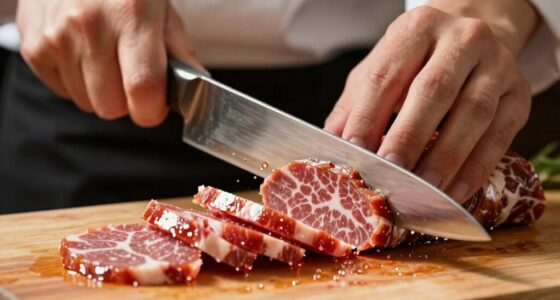
Nose-to-tail butchery means you use every part of the animal to honor it and reduce waste. It encourages you to explore lesser-known cuts like oxtail, tongue, and marrow bones, transforming them into delicious dishes. This approach supports ethical sourcing, sustainability, and responsible consumption while deepening your appreciation for the animal. By adopting these techniques, you’ll discover new flavors and respect the entire process—if you stick around, there’s much more to uncover.
Key Takeaways
- Nose-to-tail butchery promotes using all parts of the animal to minimize waste and honor its life.
- It emphasizes ethical sourcing, ensuring humane treatment and sustainable practices in meat production.
- This approach expands culinary options by transforming lesser-known cuts like oxtail, tongue, and marrow into flavorful dishes.
- It fosters appreciation for the animal and supports mindful, respectful consumption from farm to table.
- Overall, nose-to-tail butchery encourages sustainability, resourcefulness, and a deeper connection to food and culinary traditions.
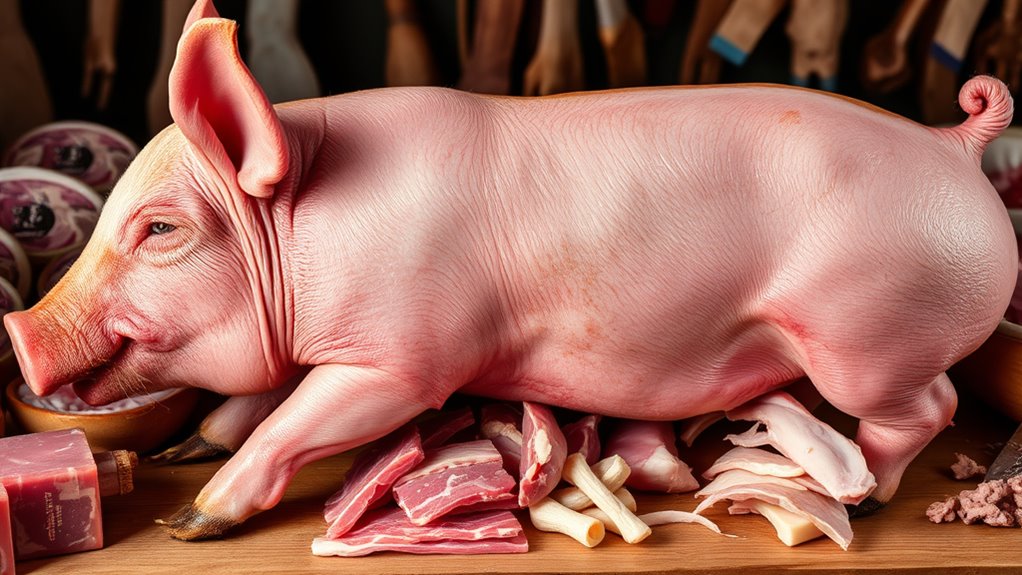
Have you ever wondered what it means to truly respect an animal and make the most of every part? Nose-to-tail butchery is about honoring the animal by using all its parts, reducing waste, and embracing a sustainable approach to food. It’s rooted in culinary traditions across cultures that have long valued resourcefulness, whether it’s using scraps for rich broths or crafting delicacies from lesser-known cuts. But beyond tradition, nose-to-tail butchery aligns with ethical sourcing principles. When you choose meat that’s sourced responsibly, you’re supporting farms and suppliers committed to humane treatment, sustainable practices, and transparency. This guarantees that every part of the animal is obtained with care, respecting the animal and the environment.
By adopting a nose-to-tail mindset, you also elevate your culinary repertoire. You learn to appreciate cuts that might seem unfamiliar or intimidating at first, like oxtail, tongue, or marrow bones. These parts, often discarded in conventional butchery, can be transformed into delicious, nourishing dishes. For example, slow-cooked oxtail becomes tender and flavorful, while beef tongue can be sliced thin for sandwiches or braised into a savory dish. Using every part not only minimizes waste but also provides a richer, more complex dining experience. It’s about understanding that each piece has its own unique texture and flavor, and with the right preparation, they can shine.
Moreover, nose-to-tail butchery encourages a deeper connection to your food. When you take the time to learn how to prepare and cook these different cuts, you develop a greater appreciation for the animal and the effort that went into raising it. Ethical sourcing plays a vital role here; knowing where your meat comes from makes you more conscious of the entire process. You’re less likely to indulge in mindless consumption and more inclined to support farms that prioritize animal welfare and sustainability. This practice promotes a more mindful approach to eating, where respect for the animal and its life becomes central.
Ultimately, nose-to-tail butchery isn’t just about food—it’s a way of respecting the animal, honoring culinary traditions, and making ethical choices. It invites you to rethink what’s possible in your kitchen, to reduce waste, and to enjoy a richer, more sustainable relationship with your food. When you adopt this approach, you’re not only nourishing yourself but also contributing to a more ethical and sustainable food system.
Frequently Asked Questions
How Do I Store Different Parts of the Animal Safely?
You should store different parts of the animal properly to guarantee meat storage and refrigeration safety. Keep raw meats in airtight containers or tightly wrapped in plastic in the coldest part of your refrigerator, ideally at or below 40°F (4°C). Use separate containers for different cuts to prevent cross-contamination. Label everything clearly, and consume or freeze within recommended time frames to maintain freshness and safety.
What Are the Best Cooking Methods for Each Part?
Ever wonder how to make the most of each cut? For tender cuts like steaks or roasts, you’ll want to use dry heat cooking techniques such as grilling or roasting, pairing them with bold flavors like garlic or herbs. Tougher cuts like brisket or shank respond well to slow cooking or braising, which tenderizes and enhances their rich flavor profiles. Why not experiment with different flavor pairings and cooking methods to elevate every part?
Are There Health Risks With Consuming Organ Meats?
Yes, there are some health risks with consuming organ meats, mainly toxicity concerns from contaminants or toxins stored in organs like the liver or kidneys. However, if you source them from reputable, healthy animals, these risks are minimized. Organ meats are nutrient-dense, and proper cooking enhances nutrient absorption, making them a healthy addition to your diet. Just be mindful of portion sizes and quality.
How Do I Identify Quality Meat Cuts?
Imagine selecting a steak at the butcher shop; you look for marbling analysis, which shows how fat is distributed, indicating flavor and juiciness. To identify quality meat cuts, you focus on cut tenderness—firm yet pliable texture. Good quality meat typically has even marbling, a bright color, and firm texture. Trust your senses: bright color, good marbling, and a firm feel guarantee you choose a fresh, high-quality cut.
Can Nose-To-Tail Butchery Be Done at Home?
Yes, you can do nose-to-tail butchery at home. It requires basic skills, sharp knives, and knowledge of different cuts. You’ll learn to use various cooking techniques like braising, roasting, and grilling to maximize flavor. Plus, it offers sustainability benefits by reducing waste and making the most of the animal. Start with simple recipes, and gradually explore more complex cuts to become confident in this eco-friendly approach.
Conclusion
By embracing nose-to-tail butchery, you transform every part of the animal into a culinary treasure, reducing waste and honoring the animal’s life. It’s like peeling back layers of a story, revealing flavors and textures you never knew existed. With each cut, you become more connected to your food, turning cooking into a mindful, respectful act. So, next time you prepare meat, remember: there’s a world of taste waiting just beneath the surface—like a hidden gem ready to be uncovered.