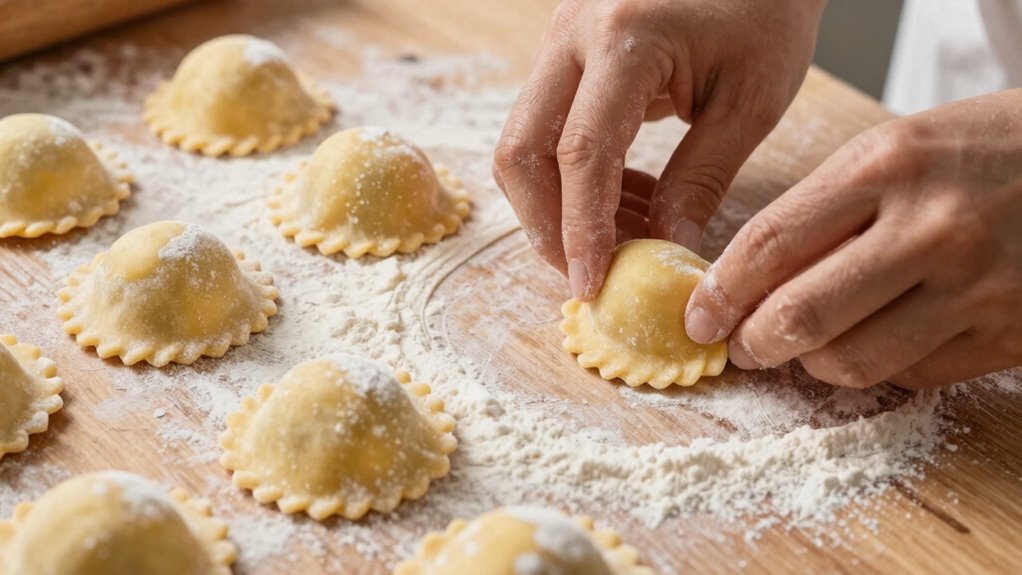
To achieve pasta perfection when making ravioli and gnocchi by hand, focus on creating a smooth, elastic dough that’s just the right thickness. Fill and seal each piece carefully to prevent bursting, using precise tools like small spoons or piping bags. Proper storage—whether short-term on a floured surface or frozen for later—keeps your pasta fresh and delicious. Mastering these techniques assures a homemade taste that’s well worth the effort; discover more tips to perfect your pasta craft.
Key Takeaways
- Craft a smooth, elastic dough to ensure it’s thin yet sturdy for stuffing and sealing.
- Use precise filling techniques and secure seals to prevent leaks during cooking.
- Store prepared pasta properly on floured surfaces or freeze in airtight containers to maintain freshness.
- Cook frozen ravioli and gnocchi directly in boiling water without thawing, adjusting cooking time accordingly.
- Practice patience and attention to detail to achieve homemade pasta perfection with consistent quality.
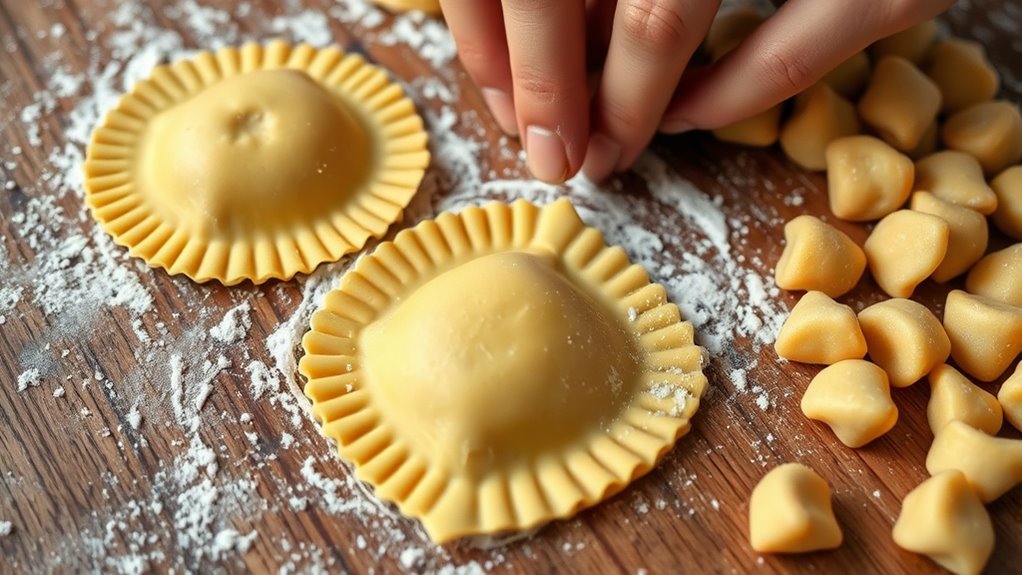
Have you ever wondered what makes the perfect plate of pasta? It’s not just about the sauce or the shape; it’s about the craftsmanship behind each bite. When you’re making stuffed pasta like ravioli or gnocchi by hand, every step counts. The process begins with creating a smooth, elastic dough that can hold fillings without tearing. Once your dough is ready, rolling it out to just the right thickness is essential—thin enough to be tender but sturdy enough to contain the filling. You want to handle the pasta gently, as overworking it can make it tough. When it’s time to fill your stuffed pasta, use a small spoon or piping bag for precision, ensuring each piece is evenly filled. Proper sealing is fundamental—press out any air pockets to prevent bursting during cooking, and use a little water or beaten egg to seal the edges securely. This attention to detail guarantees that each piece holds its filling beautifully and cooks evenly. Additionally, understanding the importance of pasta storage helps maintain freshness and quality. After assembling your stuffed pasta, you might wonder about the best way to store it if you’re not cooking it immediately. Pasta storage is a key step in maintaining freshness and preventing sticking. For short-term storage, lay the uncooked stuffed pasta on a floured baking sheet, making sure the pieces don’t touch, and cover them loosely with plastic wrap or a damp towel. This prevents them from drying out or sticking together. If you want to keep them longer, freeze your stuffed pasta on the baking sheet until solid, then transfer them to an airtight container or zip-top bag. Make sure to label and date the package, so you use it within a few months. Incorporating proper handling techniques ensures your pasta remains in optimal condition. When you’re ready to cook, don’t thaw it; just drop the frozen pasta directly into boiling water. Remember, frozen stuffed pasta takes a little longer to cook than fresh, so keep an eye on it. Making gnocchi and ravioli by hand isn’t just about the end result—it’s a process that involves patience and care. By mastering pasta storage techniques, you can prepare in advance and still serve up fresh, delicious stuffed pasta whenever you like. Proper storage keeps your pasta from becoming mushy or dry, ensuring each bite is just as satisfying as if it were freshly made. Whether you’re making a small batch for a cozy dinner or preparing a large portion for guests, understanding how to handle and store your pasta properly helps you achieve that perfect, homemade touch. So, take your time, pay attention to each step, and enjoy the rewarding process of creating and storing beautiful stuffed pasta.
Frequently Asked Questions
What Are the Best Fillings for Homemade Ravioli?
You should try classic cheese combinations like ricotta with spinach or mascarpone with herbs for a rich, creamy filling. For meat options, beef, pork, or chicken work wonderfully, especially when mixed with herbs or cheese for added flavor. Feel free to experiment with combinations like sausage and ricotta or mushroom and mozzarella. These fillings provide a delicious balance of flavors that elevate your homemade ravioli.
Can I Freeze Ravioli and Gnocchi Before Cooking?
Yes, you can freeze ravioli and gnocchi before cooking. Use proper freezing techniques by laying them out on a baking sheet to prevent sticking, then transfer them to an airtight container or freezer bag. For best results, store them flat and remove excess air to prevent freezer burn. Follow these storage tips, and you’ll preserve their freshness, making it easy to cook them straight from the freezer when you’re ready.
Which Flour Type Yields the Best Pasta Texture?
You’ll get the best pasta texture using high-protein, bread or semolina flour. The higher gluten development from these flours gives your pasta elasticity and firmness, making it easier to roll and shape without tearing. All-purpose flour works too, but for a sturdier, more traditional bite, opt for flour with a higher protein content. This results in better gluten development and a richer, more satisfying texture in your homemade pasta.
How Do I Prevent Gnocchi From Falling Apart?
To prevent gnocchi from falling apart, you need to choose the right potato variations, like starchy Russets, and handle them gently. Incorporate just enough flour or gluten-free options to bind the mixture without making it tough. Keep the dough firm but pliable, and avoid overworking it. Shape the gnocchi carefully, pressing lightly, and cook in boiling water until they float to make sure they stay intact.
What Tools Are Essential for Hand-Making Pasta?
You’ll need a good pasta roller for even pasta sheets and a sharp knife or dough cutter for cutting. A small brush helps with filling sealing, ensuring no air gets trapped. A pastry brush or your finger can help seal edges tightly. Keep a damp cloth nearby to prevent drying out during pasta rolling and filling sealing. These tools make hand-making pasta easier, ensuring consistent thickness and perfect seals.
Conclusion
Now that you’ve mastered making ravioli and gnocchi by hand, you’ve uncovered the secret to transforming simple ingredients into culinary masterpieces that could wow even the most discerning food critics. With each perfect fold and tender bite, you’re not just making pasta—you’re creating edible works of art that will blow minds and leave everyone begging for your recipe. So go ahead, wield that rolling pin and let your pasta dreams take over the world!