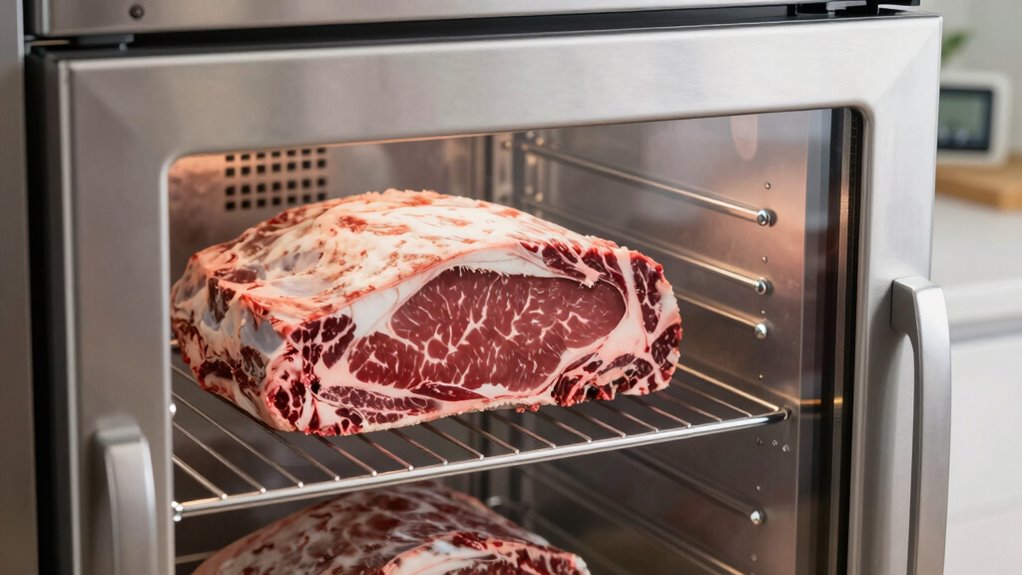
To dry-age beef at home, select a high-quality, bone-in cut with good fat coverage, then set up a dedicated fridge with a small fan, thermometer, and a wire rack. Maintain 34-38°F and humidity of 80%, ensuring proper air circulation. Periodically check for odors and mold, and after 2-3 weeks, trim away the dried outer layer before cooking. For detailed steps and tips, keep exploring to get started confidently.
Key Takeaways
- Use a dedicated refrigerator set to 34-38°F with consistent temperature and humidity control.
- Select high-quality, bone-in beef cuts with a thick fat cap and place on a wire rack for even airflow.
- Trim any dried surface layers while leaving a thin protective coat before aging.
- Maintain proper air circulation, monitor humidity, and check for odors or spoilage regularly.
- Age the beef for 2-3 weeks, then trim away the dried exterior before cooking to enjoy enhanced flavor and tenderness.
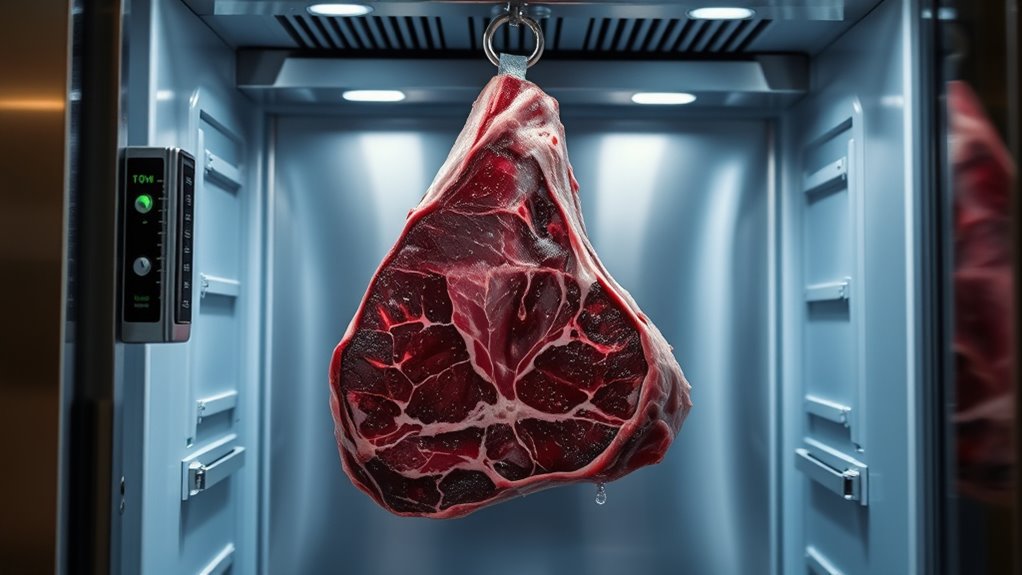
Dry-aging beef at home might seem like a complex process, but with the right tools and techniques, it’s more accessible than you think. The key is understanding how the aging process enhances beef flavor by concentrating natural juices and breaking down connective tissues. When you dry-age beef properly, you’ll notice a richer, more intense taste that simply can’t be matched by fresh or wet-aged meat. The goal is to create an environment where moisture evaporates slowly, intensifying flavors, while controlling temperature and humidity to prevent spoilage.
Dry-aging beef enhances flavor through moisture evaporation and connective tissue breakdown for a richer, more intense taste.
To start, you need a dedicated space—ideally a refrigerator that can maintain a consistent temperature around 34 to 38°F (1 to 3°C). It’s best if this fridge has a small fan to promote air circulation and a built-in thermometer to monitor conditions accurately. You’ll also want a wire rack or a perforated tray to allow air to circulate freely around the beef, ensuring even drying. Select a high-quality, bone-in cut like a ribeye or sirloin, preferably with a thick fat cap, since this helps protect the meat during the aging process. Avoid leaner cuts, as they are more prone to spoilage.
Preparing the meat involves trimming off any surface fat or dried outer layers that might have formed during aging, but don’t remove too much—leaving a thin layer helps shield the interior. Place the beef on your wire rack inside the fridge, ensuring it’s not touching any surfaces, and close the door. During the aging process, which typically lasts between two and four weeks, you’ll need to check on the meat periodically. If you notice any unusual odors or slimy textures, it’s best to discard the meat, as these signs indicate spoilage. Additionally, monitoring humidity levels can help prevent mold formation and ensure optimal conditions. Using a hygrometer to keep track of humidity can be a simple way to maintain proper environment conditions.
As the aging process progresses, moisture evaporates from the beef, concentrating its beef flavor and tenderizing the muscle fibers. The longer you age it, the more pronounced these flavor enhancements become, but overdoing it can lead to overly dry or bitter tastes. Most home enthusiasts find a two to three-week period strikes a perfect balance—developing complex, nutty flavors without sacrificing texture. Additionally, controlling temperature and humidity is crucial for successful dry-aging at home. Maintaining proper air circulation ensures even drying and reduces the risk of mold formation. Once the desired aging period is complete, you’ll carefully trim away the dried outer layer before cooking. This step reveals a deeply flavored, tender piece of meat that’s been enhanced through the dry-aging process, delivering a premium steak experience right in your own kitchen.
Frequently Asked Questions
How Do I Prevent Mold During Dry-Aging at Home?
To prevent mold during dry-aging, you should focus on proper storage techniques. Keep the beef in a controlled environment with consistent temperature and humidity, around 34-38°F and 80-85% humidity. Guarantee good airflow and regularly check for any mold spots. If you spot mold, trim it off carefully. Maintaining cleanliness and proper airflow helps mold prevention and keeps your dry-aging process safe and successful.
What Are the Safest Temperatures for Home Dry-Aging?
Think of your fridge as a delicate dance partner—balance is everything. Keep the temperature between 34°F and 38°F, ensuring precise temperature control. Maintain humidity levels around 80%, like a cozy room for aging beef. Too warm or too cold, and you risk spoilage or improper aging. By monitoring these factors, you create a safe environment to dry-age your beef, turning it into a culinary masterpiece.
How Long Can I Store Dry-Aged Beef Safely?
You can store dry-aged beef safely for about 2 to 4 weeks if you maintain proper conditions. During this storage duration, you’re preventing spoilage by keeping the temperature low and humidity controlled. Check for any off smells or slimy textures regularly, as these signs indicate spoilage. Proper storage duration guarantees you enjoy the beef’s best flavor while avoiding safety risks and spoilage, making your dry-aging process successful.
Can I Dry-Age Different Cuts of Beef at Home?
Yes, you can dry-age different cuts of beef at home, but choosing the right cut is essential. Opt for tender, well-marbled options like ribeye, sirloin, or tenderloin. Smaller cuts may age faster, so adjust your aging duration accordingly. Remember, thicker cuts generally develop better flavor and texture. By selecting suitable cuts and monitoring aging time, you’ll achieve a delicious, dry-aged delicacy right in your own kitchen.
How Do I Know When Dry-Aged Beef Is Ready to Eat?
You’ll know your dry-aged beef is ready when it develops a deep, rich aroma indicator and shows visual cues like a darker color and a firm, crusty exterior. The smell should be earthy and nutty, not sour or off-putting. If the beef feels firm but not hard and the surface has formed a dry, thick crust, it’s perfect for cooking. Trust these signs to guarantee your beef is flavorful and safe to eat.
Conclusion
Now that you know how to dry-age beef at home, you’re ready to elevate your steak game. Imagine trying a perfectly aged ribeye, tender and bursting with flavor, just like a professional butcher’s. For example, Sarah tried it herself and was amazed at the depth of taste she achieved. With patience and careful attention, you can enjoy restaurant-quality beef right in your own kitchen. Happy aging, and savor every delicious bite!