To master candies like caramels and brittles, focus on precise temperature control and gentle handling. Use a reliable thermometer to monitor syrup and chocolate temperatures and avoid stirring once the desired temp is reached. Carefully follow steps for tempering chocolate to achieve that glossy, firm finish and prevent crystallization by washing down sugar crystals on the pan sides. Keep working patiently; the more you refine your technique, the more you’ll reveal the secrets to perfect confections.
Key Takeaways
- Control sugar crystallization by gentle stirring after reaching target temperature and using wet brushes to prevent grainy textures.
- Properly temper chocolate through precise heating and cooling to achieve glossy, firm, and well-snapped confections.
- Maintain accurate temperature control with reliable thermometers for consistent caramel, brittle, and candy results.
- Use patience and proper techniques, including working in a cool environment, to master candy textures and appearance.
- Achieve professional-looking candies with even textures and glossy finishes by careful handling of temperature and crystallization.
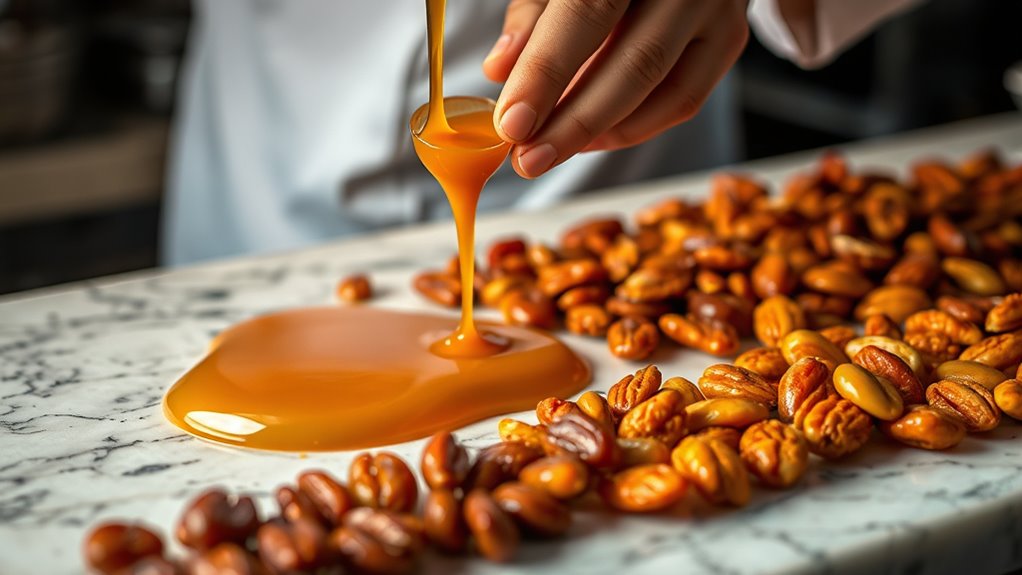
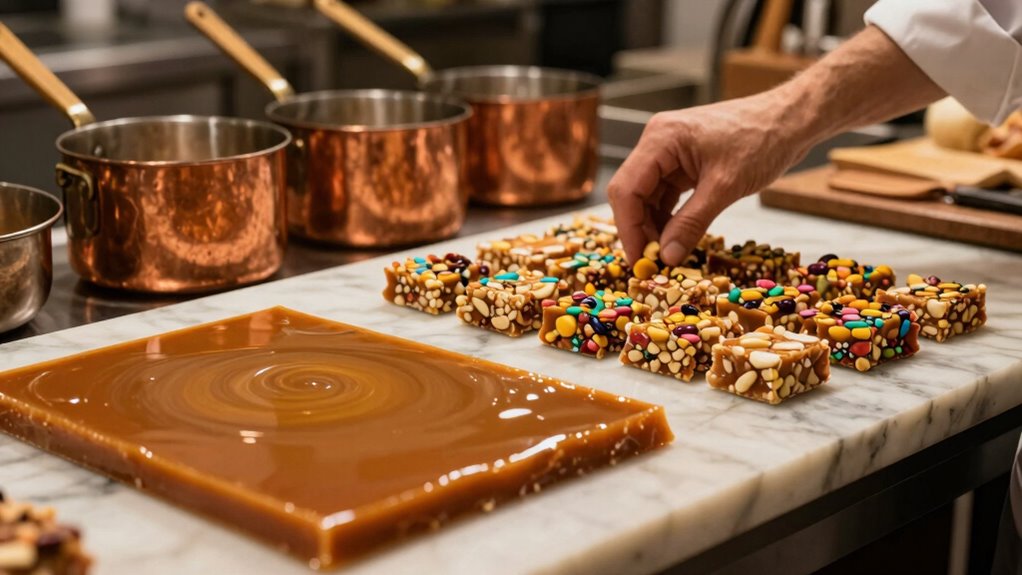
Candy making is both an art and a science that requires precision, patience, and practice. When you’re working with sugar, understanding sugar crystallization is vital. If you want that smooth, glossy finish on your candies, you need to control how sugar molecules come together as they cool. Too much agitation or uneven heating can cause unwanted crystals to form, resulting in grainy textures. To prevent this, you should stir gently once the sugar mixture reaches the right temperature and avoid disturbing it as it cools. Using a wet pastry brush to wash down any sugar crystals on the sides of your pan also helps maintain a clear, smooth syrup, which is indispensable for perfect caramels or brittles.
Tempering chocolate is another essential skill in candy making. It involves heating and cooling chocolate to specific temperatures to stabilize its cocoa butter crystals. When you properly temper chocolate, it becomes glossy and firm, with a satisfying snap when broken. If you skip this step, your chocolate might look dull or melt too quickly at room temperature. To temper chocolate, you melt two-thirds of it gently over a double boiler until it reaches about 115°F (46°C). Then, you add the remaining third, stirring constantly, to lower the temperature to around 82°F (28°C). Finally, you reheat the mixture slightly to 88-90°F (31-32°C) for dark chocolate, or a bit lower for milk and white chocolates. This process guarantees your chocolates will set beautifully, perfect for coating candies or making delicate truffles.
Mastering sugar crystallization and tempering chocolate takes practice, but once you get the hang of it, your candies will look professional and taste exceptional. When working with sugar, keep a close eye on your thermometer, as temperature control is the key to achieving the right consistency—whether you’re making caramel, brittles, or lollipops. Be patient and resist the urge to stir or interfere too much once the syrup reaches its target temperature. As for chocolate, tempering is all about patience and precision. Use a reliable thermometer, work in a cool, dry environment, and follow the steps carefully to avoid dull, streaky, or poorly set chocolates. Proper temperature control is critical for consistent results in candy making, and investing in a good thermometer can significantly improve your success rate. Additionally, understanding the energy efficiency of your equipment can help maintain consistent temperatures and improve your overall candy-making success. Keep in mind that the cleanliness of your workspace also plays a role in avoiding unwanted crystals or contamination, ensuring a smooth process from start to finish.
With these techniques mastered, your candies will not only taste delicious but also have that glossy, professional appearance that makes them stand out.
Frequently Asked Questions
What Are Common Mistakes to Avoid When Making Caramel?
When making caramel, avoid common mistakes like sugar crystallization, which can cause grainy texture. Stir gently and use a wet brush to dissolve sugar crystals on the sides of the pan. Also, don’t overcook the caramel, as it can quickly burn and become bitter. Keep a close eye on the heat, and use a candy thermometer to guarantee you reach the right temperature without overdoing it.
How Do I Store Homemade Brittles to Prevent Sticking?
To prevent stickiness and store homemade brittles properly, first let them cool completely on a parchment-lined surface. Use brittle storage tips like wrapping each piece in wax paper or placing them in an airtight container with a layer of parchment paper between layers. Keep the container in a cool, dry place to prevent moisture from making your brittles sticky. These steps will help maintain their crispness and prevent sticking.
Can I Make Candy Substitutions for Dietary Restrictions?
Did you know that over 10% of people worldwide have dietary restrictions? Yes, you can make candy substitutions for these needs. For gluten-free options, swap regular flour with almond or rice flour. For vegan sweeteners, try maple syrup, agave nectar, or coconut sugar. These alternatives work well in many recipes, allowing you to enjoy homemade treats without compromising your dietary needs. Just experiment and adjust the recipe as needed!
What Tools Are Essential for Professional Candy Making at Home?
To make professional-quality candy at home, you need crucial tools like a reliable candy thermometer to monitor precise temperatures and guarantee perfect textures. A silicone spatula is also indispensable for stirring, scraping, and mixing ingredients smoothly without sticking. These tools help you achieve consistent results, whether you’re crafting caramels, brittles, or other confections. With these essentials, you’ll elevate your candy-making skills and create delicious treats with confidence.
How Do Temperature Variations Affect Candy Texture and Flavor?
Temperature variations can make or break your candy’s perfection, acting like a silent maestro. When you control temperature carefully, you guarantee consistent texture and deepen flavor development. Too high or low, and your candies might turn crumbly, chewy, or bland. Precise temperature control ensures your caramel’s smoothness, brittles’ crunch, and rich flavor. It’s the key to turning simple ingredients into irresistible treats, highlighting the artistry behind every batch you craft.
Conclusion
Now that you’ve unwrapped the secrets of perfect caramels, brittles, and more, you’re on the brink of becoming a candy-making legend. With every batch, you’ll create treats so divine, they’ll be remembered for generations. Your kitchen is now a magical kingdom where sugar transforms into pure happiness. So go ahead—dare to dream bigger, craft bolder, and turn your sweets into legendary masterpieces that will blow everyone’s mind!