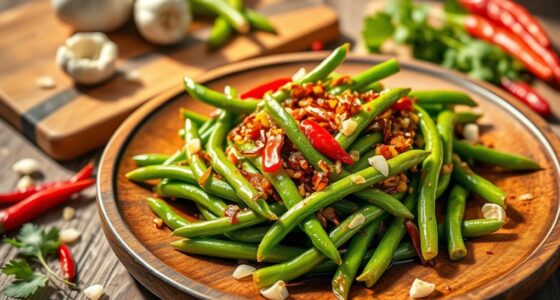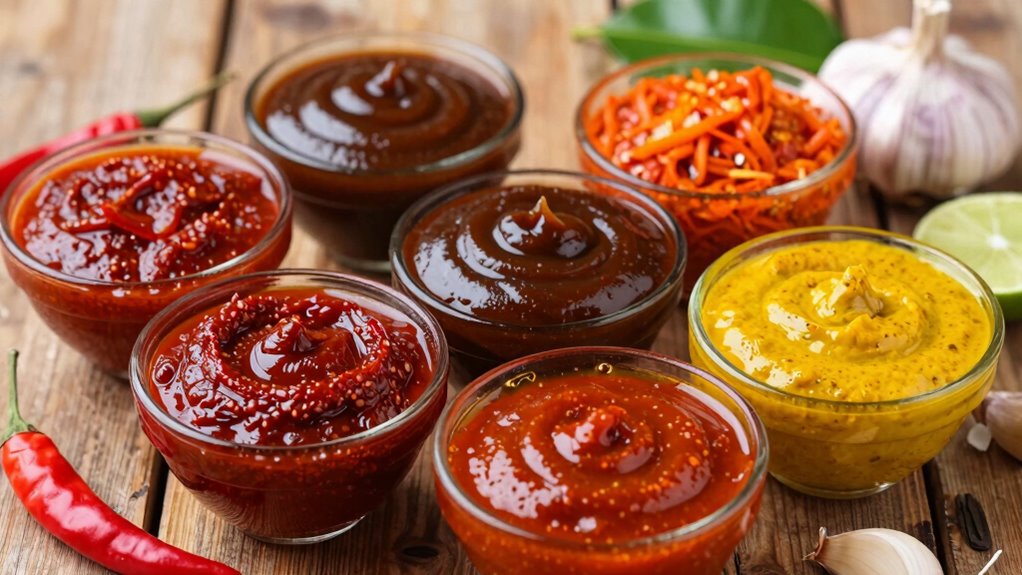

Indonesian sauces like kecap manis and sambal deserve more space in your kitchen for their incredible versatility and bold flavors. Kecap manis adds sweetness and richness, perfect for stir-fries, marinades, or drizzling over grilled meats. Sambal brings heat and depth, elevating everything from breakfast eggs to pasta. These sauces can transform simple dishes into exciting culinary adventures. Keep exploring to discover even more creative ways to incorporate these flavorful ingredients into your meals.
Listen free for 30 days with Audible
Thousands of audiobooks and originals — cancel anytime.
As an affiliate, we earn on qualifying purchases.
Key Takeaways
- Kecap manis adds a versatile sweet-savory depth to numerous dishes beyond traditional Indonesian cuisine.
- Sambal offers a flavorful heat that can elevate breakfast, snacks, and dinner recipes across various cuisines.
- Both sauces seamlessly integrate into fusion dishes, encouraging experimentation in American kitchens.
- Their adaptability in marinades, glazes, and condiments makes them valuable for everyday cooking.
- Incorporating Indonesian sauces introduces bold, new flavor profiles that enhance culinary creativity.
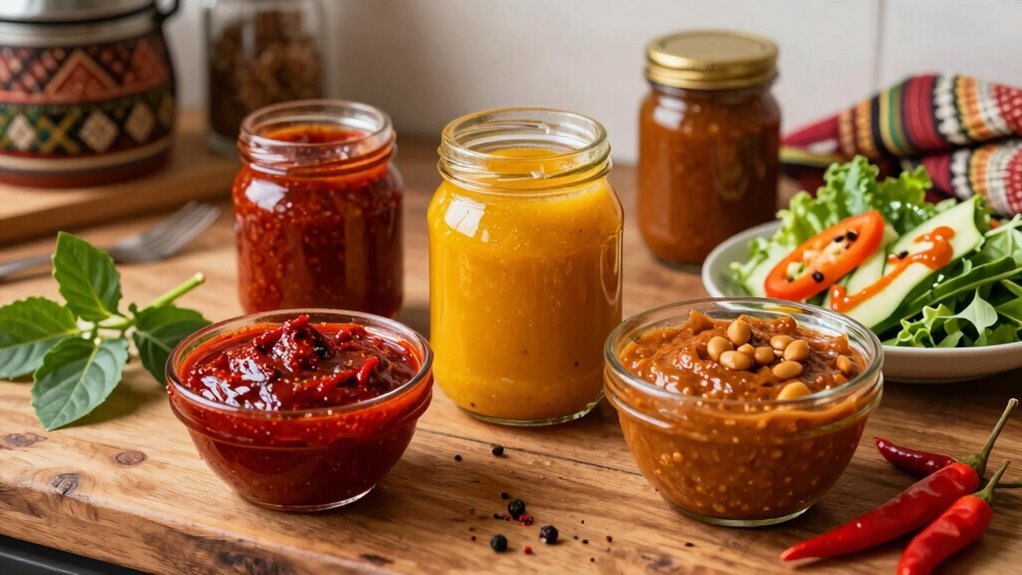
Many American kitchens are discovering the vibrant flavors of Indonesian sauces, adding new depth to everyday dishes. These sauces bring more than just bold tastes; they open the door to exciting fusion pairings and demonstrate impressive ingredient versatility. Once you start experimenting with these condiments, you’ll realize how effortlessly they elevate simple meals into culinary adventures, blending traditional Indonesian elements with a variety of global cuisines.
Indonesian sauces like kecap manis, sambal, and rica-rica aren’t just flavorful; they’re incredibly adaptable. For example, kecap manis, a sweet soy sauce, can be used as a marinade for chicken, a stir-fry ingredient, or a finishing drizzle for roasted vegetables. Its rich sweetness balances spicy or savory dishes, making it a versatile tool in your kitchen arsenal. Similarly, sambal, a chili paste often made with garlic, lime, and sugar, lends itself well to fusion pairings. You can stir it into scrambled eggs for a spicy kick, mix it into mayonnaise for a fiery dip, or even blend it into pasta sauces to add depth and heat. Its ingredient versatility means you can incorporate sambal into almost anything, from breakfast to dinner.
Kecap manis and sambal are versatile, adding sweetness, heat, and depth to a variety of dishes from breakfast to dinner.
The beauty of Indonesian sauces lies in their ability to seamlessly merge with different cuisines. You might pair kecap manis with burgers or grilled meats, creating a sweet and savory contrast that surprises the palate. Sambal, on the other hand, can complement Mexican tacos or add a fiery edge to Asian-inspired bowls. Their adaptability invites you to get creative, mixing and matching flavors to craft dishes that reflect your personal taste and culinary curiosity.
Indonesian sauces also encourage you to think beyond traditional uses. For instance, you could toss vegetables in a sambal glaze before roasting or add a splash of kecap manis to your stir-fry for a hint of sweetness. These sauces aren’t confined to one type of dish; instead, they act as flavor amplifiers across a variety of ingredients. Exploring culinary versatility with these condiments can inspire innovative cooking ideas and help you develop a more adventurous palate. By exploring their potential, you expand your cooking horizons and introduce new, exciting flavors into your routine.
In the end, embracing Indonesian sauces in your kitchen isn’t just about adding a new ingredient—it’s about unlocking a world of fusion pairings and ingredient versatility that can transform your cooking. Whether you’re experimenting with bold new flavor combinations or simply looking to enrich your everyday dishes, these sauces offer a gateway to culinary creativity. Soon enough, you’ll find yourself reaching for them regularly, enthusiastic to discover how they can enhance your favorite meals and inspire new ones.
As an affiliate, we earn on qualifying purchases.
Frequently Asked Questions
How Long Do Indonesian Sauces Typically Last in the Fridge?
Indonesian sauces usually last about one to two weeks in your fridge if stored properly. To maximize flavor preservation, keep them in airtight containers and avoid cross-contamination. Store them in the coldest part of your fridge, and always use clean utensils when handling. For longer shelf life, consider freezing small portions. Following these storage tips guarantees you enjoy the rich flavors without risking spoilage or losing that vibrant taste.
Are Indonesian Sauces Suitable for Vegetarians or Vegans?
Indonesian sauces are like a vibrant tapestry, often suitable for vegetarians and vegans, especially with plant-based alternatives. Many traditional cooking methods use ingredients like coconut milk, tamarind, and chili, which easily fit into a plant-based diet. However, some sauces might contain fish or shrimp paste, so it’s essential to check labels or make your own. Overall, with mindful choices, you can enjoy authentic Indonesian flavors cruelty-free.
Can Indonesian Sauces Be Used as Marinades?
Yes, you can definitely use Indonesian sauces as marinades. They add vibrant flavor pairings to meats, vegetables, and even tofu. Cultural variations, like sweet soy or spicy sambal, give you diverse options to match different dishes. Marinating with these sauces enhances tenderness and infuses your ingredients with rich, authentic Indonesian flavors. Just adjust the seasoning to suit your taste, and enjoy a delicious, culturally inspired meal.
What Are the Most Common Dishes Paired With These Sauces?
Imagine a scene straight out of a 70s diner—you’re mixing flavors with Indonesian sauces. You’ll find them commonly paired with traditional dishes like satay, nasi goreng, and tempeh. These sauces also shine in fusion recipes, adding depth and spice. Whether drizzled over grilled meats or stirred into stir-fries, their versatility makes them perfect for innovative or classic pairings, elevating your cooking with authentic, bold flavors.
How Can I Make Indonesian Sauces Milder or Spicier?
To make Indonesian sauces milder or spicier, you can adjust the flavor balancing with ingredient substitutions. For milder heat, add coconut milk, yogurt, or a splash of honey to soften the spice. To increase spiciness, incorporate more chili peppers, sambal, or a dash of hot sauce. Taste as you go to find the perfect balance, ensuring your sauce matches your desired heat level without overpowering the flavors.
As an affiliate, we earn on qualifying purchases.
Conclusion
So, why not give Indonesian sauces a shot and let your kitchen become a treasure trove of bold flavors? They’re like a secret ingredient waiting to elevate your meals and surprise your taste buds. Don’t let these vibrant condiments stay in the shadows—they’re ready to turn your everyday dishes into something extraordinary. Embrace the opportunity to spice things up and cook with confidence, because sometimes, the best flavors are hiding in plain sight, just waiting to be discovered.
As an affiliate, we earn on qualifying purchases.
As an affiliate, we earn on qualifying purchases.
Labor Day sales Picks
labor day deals
As an affiliate, we earn on qualifying purchases.