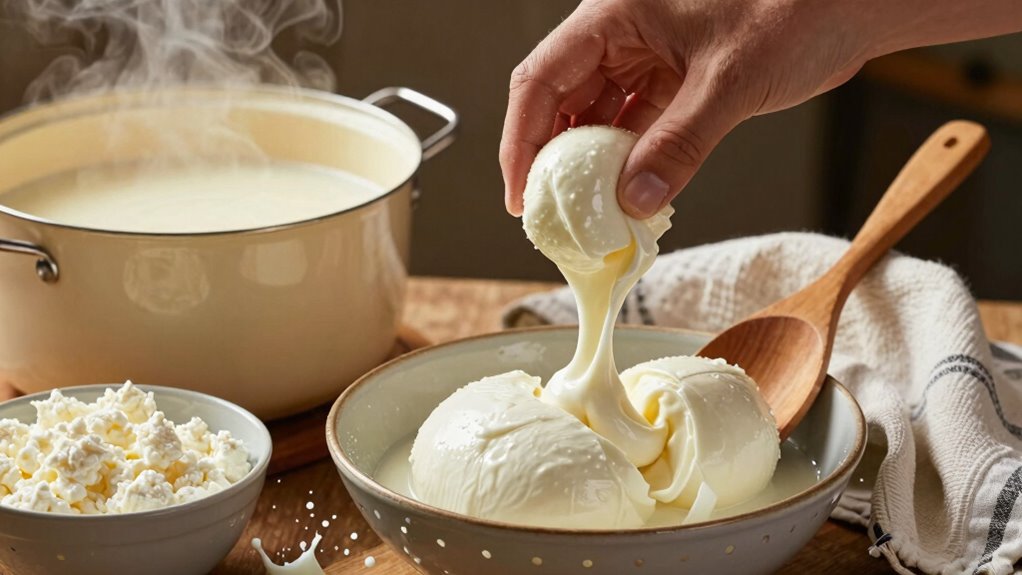

To make mozzarella and ricotta at home, start with pasteurized milk to guarantee safety and quality. Heat the milk to the right temperature, then add a starter culture or rennet for curdling. For ricotta, gently cook the curds and strain the whey, while mozzarella involves stretching the warm curds until smooth. Mastering temperature control and handling techniques is key. Keep going, and you’ll discover how simple ingredients can create delicious, fresh cheeses from scratch.

Get kitchen staples and gadgets delivered free — and shop member deals
- Fast, free delivery on millions of items
- Access to Prime Big Deal Days deals on October 6–7
- Prime Video, Amazon Music and more included
Key Takeaways
- Use pasteurized milk and add starter culture or rennet for proper curdling.
- Maintain precise temperatures during coagulation, stretching, and whey draining for best results.
- For ricotta, gently cook the curds and strain whey; for mozzarella, stretch and knead warm curds.
- Fresh cheeses like mozzarella and ricotta require minimal aging, focusing on texture and flavor from handling.
- Proper pasteurization and handling ensure safe, high-quality homemade cheese with consistent results.
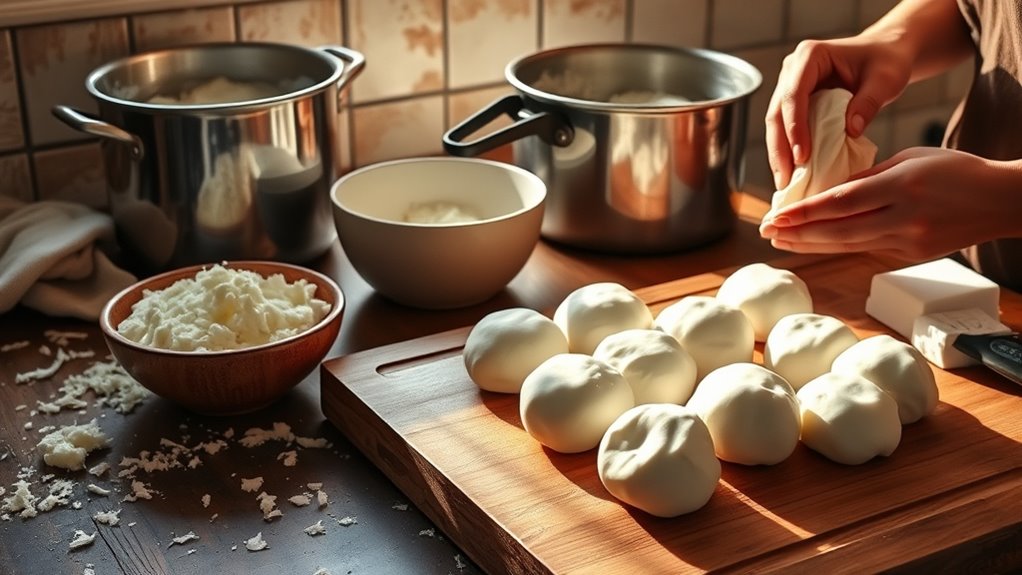
Ever wondered how to make cheese at home? It’s easier than you might think, and the first step is understanding the importance of milk pasteurization. When you start with pasteurized milk, you eliminate harmful bacteria, making your cheese safer and extending its shelf life. Pasteurization involves heating the milk to a specific temperature for a set period, then quickly cooling it down. This process not only ensures safety but also creates a clean canvas for flavors to develop. Once you’ve pasteurized your milk, you can focus on transforming it into delicious cheese, like mozzarella or ricotta.
The next step is to contemplate cheese aging, a process that allows flavors to deepen and mature over time. Although mozzarella and ricotta are fresh cheeses that don’t require long aging, understanding cheese aging is valuable for broader cheese-making adventures. Aging involves storing cheese under controlled conditions, typically in a cool, humid environment. During this period, enzymes and microbes work together to develop complex flavors and textures. For fresh cheeses like mozzarella and ricotta, aging is minimal or unnecessary, but if you decide to experiment with other varieties later, it’s good to know that aging can turn a simple cheese into a gourmet treat.
Back to mozzarella and ricotta: after pasteurizing the milk, you’ll add a starter culture or rennet to curdle the milk. This is where the transformation begins. You’ll notice the milk separating into curds and whey. For ricotta, you’ll gently cook the curds, then strain out the whey to create a soft, creamy cheese. With mozzarella, you’ll stretch and knead the curds while they’re still warm, developing that signature elastic texture. Both cheeses require precise temperature control and gentle handling to achieve the perfect consistency.
As you get more comfortable with the process, you’ll see that making cheese at home is a rewarding blend of science and artistry. The safety and quality of your cheese depend on proper milk pasteurization and maintaining the right environment during the process. While fresh cheeses like mozzarella and ricotta don’t need extensive aging, understanding this step prepares you for more complex cheese-making projects down the line. With patience and attention to detail, you’ll craft delicious cheeses from scratch, all in your own kitchen.
Frequently Asked Questions
Can I Make Cheese Without Specialized Equipment?
Yes, you can make cheese without specialized equipment. Use common kitchen items like a pot, spoon, and cheesecloth as equipment alternatives. Keep in mind, cheese aging might require a controlled environment, but for fresh cheeses like mozzarella and ricotta, you just need clean tools and patience. Focus on maintaining good hygiene and temperature control, and you’ll successfully create cheese at home without fancy gear.
How Long Does Homemade Cheese Stay Fresh?
Your homemade cheese can stay fresh for about 3 to 7 days if you follow proper storage techniques. Think of it as aging gracefully; keep it in an airtight container in the fridge to prevent it from spoiling too soon. Fresh cheeses like mozzarella and ricotta are delicate, so consume them promptly for peak flavor. If you want it to last longer, consider freezing, but note that texture may change.
Is It Safe to Use Raw Milk for Cheese?
Using raw milk for cheese can be safe if you understand pasteurization safety and handle it properly. Raw milk benefits include richer flavors and natural enzymes, but it carries a higher risk of harmful bacteria. To minimize risks, source high-quality raw milk from trusted farms and follow strict hygiene practices. If you’re concerned about safety, pasteurizing the milk yourself before cheese making can give you the best of both worlds.
Can I Customize Flavors in Homemade Cheese?
Absolutely, you can customize flavors in your homemade cheese through flavor infusion and spice blends. You can add herbs, garlic, or chili during the curd formation or mix in spices after the cheese is ready. By experimenting with different ingredients, you create unique, personalized cheeses. Just remember to balance your additions to enhance flavor without overpowering the cheese’s natural taste, making every batch tailored to your preferences.
What Are Common Mistakes to Avoid?
You should avoid overheating milk, which can scorch or alter its flavor, and improper curdling, leading to weak or uneven curds. Use a gentle heat and monitor temperature carefully. Follow the recipe precisely for curdling agents and timing. Rushing the process or using incorrect temperatures can ruin your cheese. Stay attentive, keep your ingredients fresh, and don’t skip steps to guarantee successful homemade mozzarella and ricotta.
Conclusion
Now that you’ve learned how to make mozzarella and ricotta at home, you’re on your way to creating fresh, delicious cheeses anytime. Did you know that homemade cheese can be up to 30% cheaper than store-bought options? Plus, it’s incredibly satisfying to craft your own dairy delights from scratch. So, gather your ingredients, get hands-on, and enjoy the rewarding experience of making cheese right in your kitchen!
NFL season / tailgating Picks
team gear
As an affiliate, we earn on qualifying purchases.