Using a water bath during baking is essential for achieving perfect cheesecakes. It ensures gentle, even heat that prevents cracks and helps your dessert develop a smooth, velvety texture. By wrapping the pan in foil and adding hot water halfway up the sides, you create a controlled environment that preserves delicate flavors and promotes slow, even setting. Keep your water level consistent, and you’ll be rewarded with a professional-looking cheesecake—continue exploring for more tips to master this technique.
Open a free Amazon Business account
Business pricing, bulk buying and tax-exempt orders.
As an affiliate, we earn on qualifying purchases.
Key Takeaways
- Water bath ensures gentle, even heat, preventing cracks and uneven texture in cheesecakes.
- Wrapping the pan with foil prevents water seepage and maintains a clean baking environment.
- Maintaining consistent water levels during baking promotes uniform cooking and smooth results.
- Gradual cooling in the water bath helps preserve delicate flavors and prevents cracks.
- Proper water bath use enhances the overall appearance and creamy consistency of the finished cheesecake.
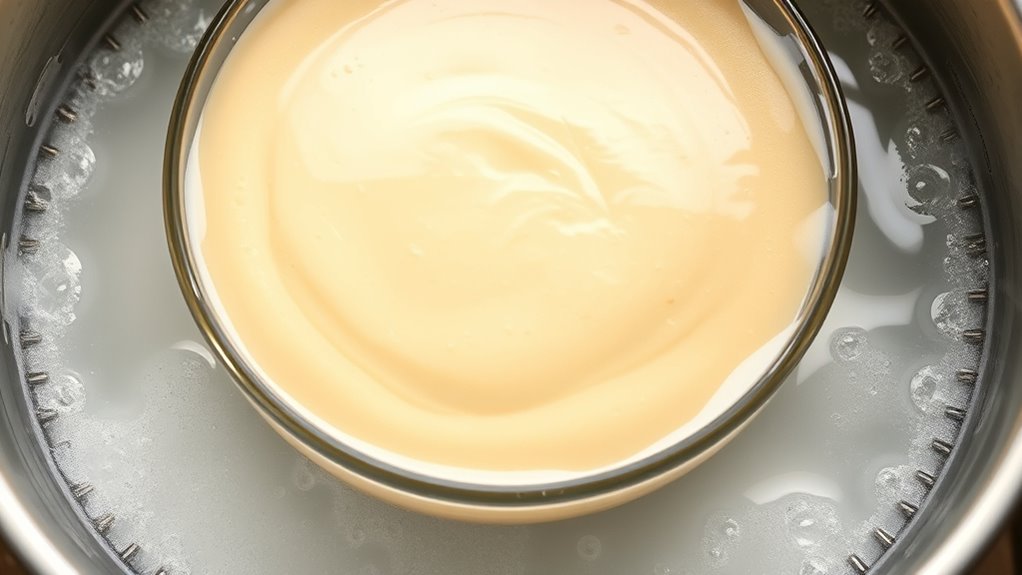
Water bath baking, also known as bain-marie, is a technique that helps you achieve even, gentle heat for delicate desserts like cheesecakes and custards. This method prevents sudden temperature shifts that can cause cracks or uneven textures, guaranteeing your dessert turns out smooth and creamy. To start, focus on crust preparation, as a well-made crust forms the foundation for a perfect cheesecake. When preparing your crust, consider how it pairs with your filling—whether you prefer a buttery graham cracker crust or a more textured biscuit base. The crust should be pressed evenly into the pan, providing a sturdy base that complements the delicate filling. Adding a touch of sweetness or spice to your crust can also enhance flavor pairing, creating a more harmonious bite. For instance, a hint of cinnamon or vanilla in the crust can beautifully complement a rich, vanilla-flavored cheesecake.
Once your crust is ready, assemble your cheesecake filling, but don’t forget that the water bath plays a vital role during baking. When placing your filled pan into the larger baking dish, guarantee it’s wrapped with foil to prevent water from seeping in. Pour hot water into the outer dish until it reaches about halfway up the sides of your cheesecake pan. This creates a gentle, uniform heat that prevents the filling from overheating or cracking. The water bath ensures the heat surrounds your cheesecake evenly, allowing it to set slowly and maintain a luscious, velvety texture. It’s especially important when working with flavor pairings that require a delicate touch, like citrus or fruit-infused cheesecakes, where abrupt temperature changes can ruin the nuanced flavors.
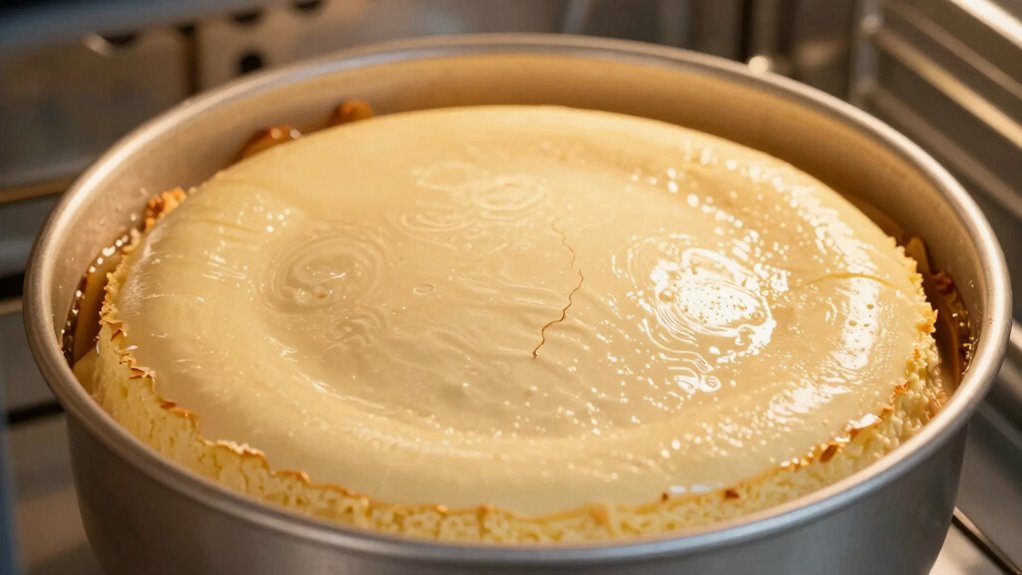
Throughout the baking process, keep an eye on the water level and add more hot water if needed to maintain consistency. When your cheesecake is done, it will be slightly jiggly in the center but firm around the edges. Using a water bath isn’t just about preventing cracks; it’s about elevating the overall quality of your dessert. The gentle heat preserves the subtle flavors and ensures an even, creamy texture with every slice. After baking, allow your cheesecake to cool gradually in the water bath before refrigerating; this step further minimizes cracks and promotes ideal flavor pairing by letting the flavors meld naturally. With proper crust preparation and the right use of a water bath, you’re well on your way to creating a cheesecake that’s not only visually stunning but also irresistibly delicious.

GBYAN Silicone Springform Pan Protector, Cheesecake Water Bath Protector
- Size Compatibility: Fits 9 to 9.5-inch springform pans
- Temperature Range: Safe from -40℉ to +445℉
- Water Bath Protection: Keeps water out during cheesecake baking
As an affiliate, we earn on qualifying purchases.
As an affiliate, we earn on qualifying purchases.
Frequently Asked Questions
Can I Skip the Water Bath for a Cheesecake?
You can skip the water bath for your cheesecake, but it may affect the texture. Without it, your cheesecake could crack or become unevenly cooked. To prevent this, try alternatives like wrapping your springform pan with foil to prevent leaks and baking at a lower temperature. Keep an eye on your cheesecake, as these water bath alternatives help maintain the creamy texture you want, without the risk of cracks or overbaking.
What Type of Pan Is Best for Water Bath Baking?
You should use a springform pan for water bath baking, as it’s easy to remove without damaging your cheesecake. Opt for a metal springform pan over glass because metal conducts heat more evenly, preventing cracks. Glass pans can work, but they heat unevenly and may cause hot spots. Make sure your pan has a removable sides to create a smooth, professional-looking cheesecake.
How Do I Prevent Water From Seeping Into the Batter?
To prevent water from seeping into your batter, imagine sealing your baking pan like a fragile treasure chest. You can wrap the bottom of your baking pan with aluminum foil, ensuring all seams are tightly covered to prevent leaks. Use a sturdy, leak-proof baking pan and double-check the foil for any gaps. This way, you keep water out and your cheesecake perfectly smooth and creamy.
What’s the Ideal Water Temperature for the Bath?
You should aim for water temperature around 120°F (49°C) for your water bath. Keep the oven temperature between 300°F and 325°F (149°C-163°C) for baking your cheesecake. Using hot water helps prevent cracks and ensures even cooking, but it’s essential to maintain the right water temperature so it doesn’t overheat or cool down too quickly. Use a thermometer to monitor water temperature regularly for best results.
How Do I Know When a Water Bath Is Necessary?
You’ll want a water bath when your recipe calls for gentle, even baking to prevent cracks or overbaking, especially with delicate desserts like cheesecakes. If your oven has low humidity, a water bath helps maintain moisture and consistency. Use it if the baking duration is long or if your recipe emphasizes a creamy texture. When in doubt, check if your recipe specifies a water bath—it’s often the best way to guarantee perfect results.

MontoPack 9” Round Aluminum Foil Pans with Clear Lids | Disposable Containers with Straight Walls for Storing, Baking, Meal Prep & Reheating | Freezer & Oven Safe, Recyclable | 40 Pack of Tins
- All-in-One Baking and Storage: Bake, serve, and store with lids
- Deep Straight Walls: Hold more food and ensure even cooking
- Heavy-Duty Aluminum Construction: Reinforced for durability and reuse
As an affiliate, we earn on qualifying purchases.
As an affiliate, we earn on qualifying purchases.
Conclusion
Now that you know the secret of water bath baking, your cheesecakes will never be the same. But remember, the true test lies in your next attempt—will it turn out flawless or face unexpected cracks? As you prepare, consider every detail, every step, and the gentle promise of a perfectly creamy, smooth texture. The real magic happens when you finally reveal that tender masterpiece—are you ready to discover its hidden perfection?
GBYAN Silicone Springform Pan Protector, Cheesecake Water Bath Protector
- Size Compatibility: Fits 9 to 9.5-inch springform pans
- Temperature Range: Safe from -40℉ to +445℉
- Water Bath Protection: Keeps water out during cheesecake baking
As an affiliate, we earn on qualifying purchases.
As an affiliate, we earn on qualifying purchases.

WILPREP 5-Pan Commercial Food Warmer, 50QT Steam Table Buffet Server and Warmer, 1200W Electric Warming Tray, Stainless Steel Bain Marie Buffet Catering Food Warmer for Parties Hotels Restaurants
- Number of Pans: 5-pan bain marie design
- Capacity: Holds 80 servings per pan
- Versatile Use: Suitable for various dishes and setups
As an affiliate, we earn on qualifying purchases.
As an affiliate, we earn on qualifying purchases.
Summer Picks
summer essentials
As an affiliate, we earn on qualifying purchases.