Eating with your hands is a cherished Indonesian tradition that deepens your connection to the food and others around you. It engages your senses, allowing you to feel textures and temperatures while fostering mindfulness. This practice isn’t just about eating; it’s about respecting tradition, building community, and experiencing dishes like nasi campur or satay in a meaningful way. If you want to explore more about this cultural art, there’s much more to discover below.
Key Takeaways
- Eating with hands is a centuries-old Indonesian tradition that fosters connection, respect, and shared cultural identity during communal meals.
- It engages multiple senses, enhancing appreciation of food textures, temperatures, and flavors through tactile, mindful dining.
- This practice symbolizes authenticity and respect for food, emphasizing communal bonding and cultural heritage in group settings.
- Traditional tools like banana leaves and wooden spoons complement hand-eating, enriching the cultural and sensory experience.
- Technology and AI can help preserve these traditions, promoting awareness and appreciation of Indonesia’s communal dining practices globally.
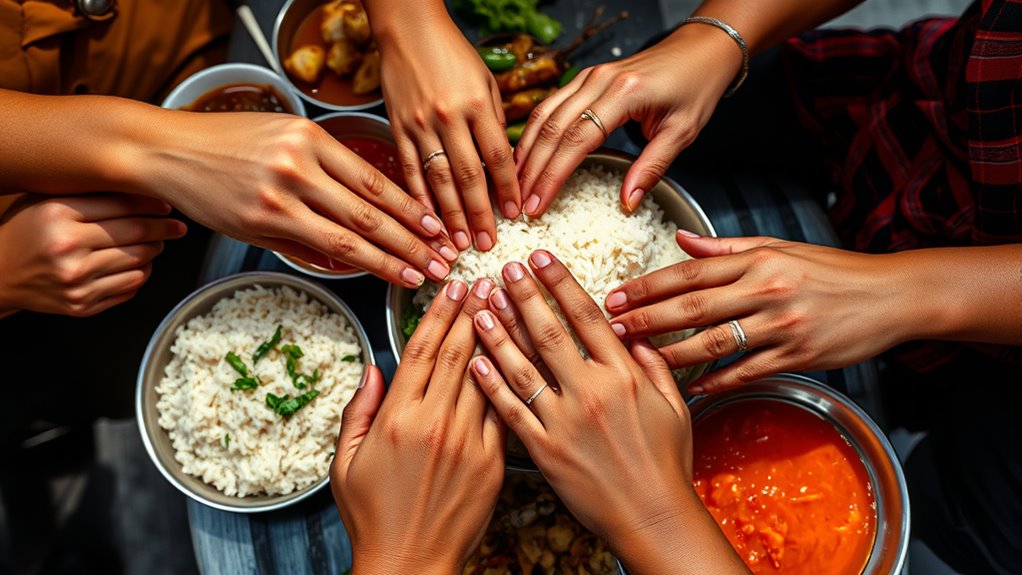
Have you ever wondered why eating with your hands feels so natural and satisfying? It’s more than just a sensory experience; it’s deeply rooted in cultural importance. In many Indonesian communities, communal eating with your hands isn’t just about nourishment—it’s about connection, tradition, and respect. When you pick up rice, vegetables, or grilled meats with your fingers, you’re participating in a centuries-old practice that fosters a sense of unity and shared identity. This act encourages mindfulness, allowing you to feel the textures and temperatures of your food directly, enhancing your appreciation of the meal. It’s a tactile experience that engages more senses than using utensils ever could, making each bite more memorable and meaningful.
Even if you’re used to cutlery, you might wonder about utensil alternatives in this context. In Indonesia, eating with your hands is often seen as the most authentic way to enjoy traditional dishes like nasi campur or satay. The act of using your fingers isn’t just practical; it’s a sign of respect for the food and the community that prepares it. When you eat with your hands, you connect more intimately with your meal, feeling the food’s texture and temperature, which helps you savor each bite fully. Many Indonesians believe that this method allows you to better gauge the amount of food you’re taking and to eat more mindfully. It’s also considered more hygienic in certain cultural settings because it fosters a personal connection and awareness of cleanliness. That said, in many cases, communal dining involves the use of banana leaves or shared plates, where everyone gathers around and eats together, reinforcing bonds and shared traditions.
Leveraging predictive analytics and other AI tools in culinary traditions could even help preserve and promote these cultural practices to wider audiences. Utensil alternatives like small pieces of banana leaf or traditional wooden spoons are common in Indonesian dishes, but these often serve more as serving tools than as substitutes for eating. The focus remains on using the hands to truly engage with the food. This practice isn’t about abandoning utensils altogether, but about understanding the cultural context in which eating with your hands is the most respectful and meaningful way to dine. When you adopt this approach, you’re not just eating—you’re participating in a tradition that emphasizes community, gratitude, and sensory connection. Whether in Indonesia or elsewhere, embracing the art of eating with your hands can deepen your appreciation for food’s cultural importance and transform a simple meal into a shared experience.
Frequently Asked Questions
How Do You Properly Clean Your Hands Before Eating?
You should wash your hands thoroughly before eating by using proper handwashing techniques. Wet your hands with clean, running water, then apply soap and scrub all surfaces, including between your fingers and under your nails, for at least 20 seconds. Rinse well and dry with a clean towel. This practice holds cultural significance in Indonesian communal dining, showing respect and maintaining hygiene during shared meals.
Are There Specific Utensils Used Alongside Communal Hand Dining?
You might think communal hand dining involves only hands, but indigenous utensils like small spoons or palm leaf plates often accompany it, depending on cultural variations. These utensils can enhance the experience and respect local traditions. While using hands is primary, incorporating these tools shows reverence and helps with certain dishes. It’s worth exploring how different communities blend traditional utensils with communal hand eating for a richer cultural connection.
Can Children Participate in Traditional Indonesian Hand-Eating Practices?
Yes, children can participate in traditional Indonesian hand-eating practices. They often start learning early to understand the cultural significance of communal dining, which fosters a sense of belonging and respect. As they grow, children actively engage in the shared experience, helping them appreciate the cultural values behind the practice. Participating in hand-eating with family helps children connect with their heritage and develop important social skills.
How Does Communal Dining Impact Social Relationships?
Communal dining acts like a glue, strengthening social bonds and fostering a sense of belonging. When you share food with others, you weave threads of trust and understanding, enriching your cultural identity. This shared experience encourages open conversations, mutual respect, and unity. By participating in these traditions, you not only nourish your body but also build lasting relationships, turning a simple meal into a powerful act of community connection.
What Are Common Mistakes to Avoid When Eating With Your Hands?
When eating with your hands, avoid common mistakes like neglecting cultural sensitivity and hygiene etiquette. Don’t use your fingers improperly or wipe them on your clothes, as this shows disrespect. Make sure to wash your hands thoroughly before and after, and use your right hand only, following tradition. Respect local customs and be mindful of the communal setting, so everyone feels comfortable sharing the meal together.
Conclusion
Eating with your hands connects you to the food and community in a way that utensils can’t match. In Indonesia, over 70% of meals are traditionally enjoyed this way, highlighting its cultural significance. Embracing this practice not only deepens your appreciation for Indonesian cuisine but also fosters a sense of togetherness. So next time you dine, consider trying it—you might discover a richer, more authentic experience that brings people closer.