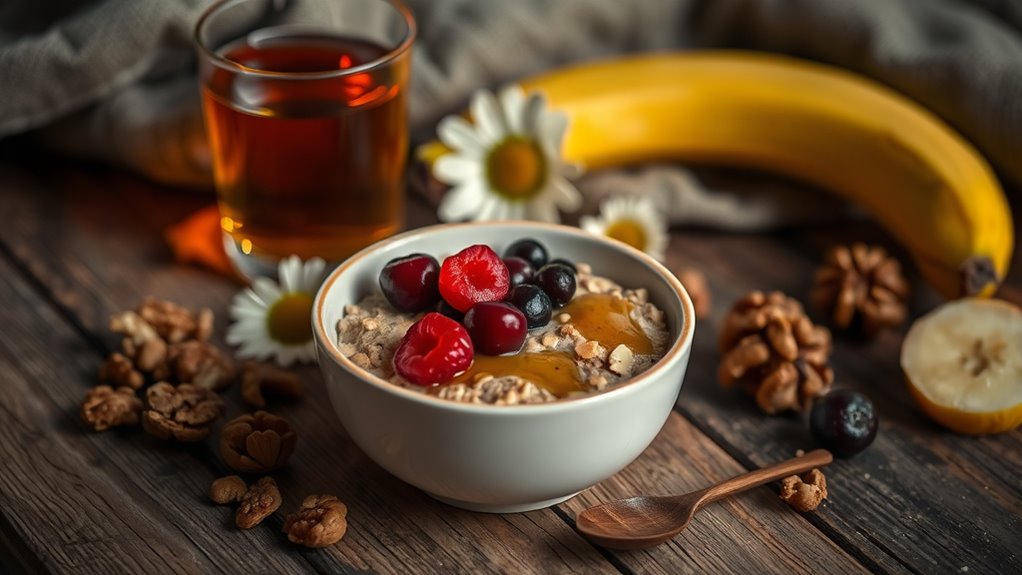

To improve your sleep, opt for snacks high in tryptophan, magnesium, and melatonin like almonds, Greek yogurt, or bananas with peanut butter. Sip calming herbal teas such as chamomile or lemon balm about 30 minutes before bed. Avoid heavy, spicy, or greasy foods, caffeine, and alcohol, as they can disrupt your rest. Making mindful eating choices can lead to better sleep—you’ll discover more tips just below.

Get kitchen staples and gadgets delivered free — and shop member deals
- Fast, free delivery on millions of items
- Access to Prime Big Deal Days deals on October 6–7
- Prime Video, Amazon Music and more included
Key Takeaways
- Opt for sleep-promoting snacks rich in tryptophan, magnesium, and melatonin like almonds, Greek yogurt, or bananas with peanut butter.
- Sip calming herbal teas such as chamomile, valerian root, or lemon balm 30-60 minutes before bed to relax the nervous system.
- Avoid heavy, spicy, greasy foods, caffeine, alcohol, and large meals late at night to prevent discomfort and sleep disruption.
- Incorporate small, nutrient-rich snacks that support sleep hormones and help maintain a healthy sleep cycle.
- Establish a calming bedtime routine with mindful eating and herbal teas to promote better sleep quality.
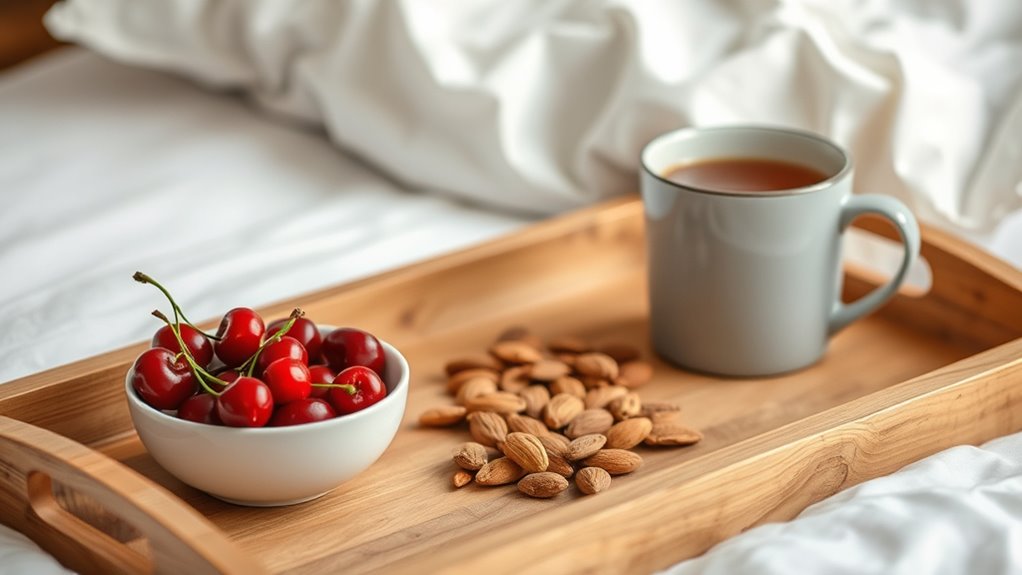
Getting enough restful sleep is essential for your overall health, and what you eat can considerably influence how well you sleep. Choosing the right foods before bed can make a significant difference in how quickly you fall asleep and the quality of your rest. Sleep-promoting snacks are a great option if you’re looking to enhance your sleep cycle. Think about snacks rich in tryptophan, magnesium, and melatonin, such as a handful of almonds, a banana with a small amount of peanut butter, or Greek yogurt. These foods can help your body produce the sleep hormones needed to relax and drift off more easily. Incorporating small, nutritious snacks into your evening routine not only satisfies your hunger but also sets the stage for better sleep.
Nighttime herbal teas are another effective way to promote relaxation and improve sleep quality. Chamomile, valerian root, and lemon balm are popular choices because they contain natural compounds that soothe your nervous system. Sipping a warm cup of herbal tea 30 to 60 minutes before bed can help calm your mind and reduce stress, making it easier to shift into sleep. Just make sure to avoid caffeinated teas or those with added sugars, as they can interfere with your ability to fall asleep. The ritual of drinking a warm, calming tea can also serve as a signal to your body that it’s time to wind down, helping to establish a consistent bedtime routine. Additionally, paying attention to sleep-promoting foods can further support your efforts to get restful sleep.
It’s equally important to avoid certain foods and drinks that can disrupt your sleep. Heavy, spicy, or greasy foods close to bedtime can cause discomfort, indigestion, or acid reflux, all of which can interrupt your sleep cycle. Caffeine, found in coffee, chocolate, and some teas, is a stimulant that can keep you awake if consumed too late in the day. Alcohol might initially make you feel sleepy, but it often leads to fragmented sleep and wakes you up during the night. Also, avoid large meals right before bed, as your digestive system needs time to process food, and eating late can lead to discomfort and difficulty falling asleep.
Ultimately, paying attention to what you eat at night can dramatically improve your sleep quality. Opt for sleep-promoting snacks and soothing herbal teas to help your body relax naturally. Steer clear of foods that cause discomfort or contain stimulants. By making mindful choices about your nighttime diet, you set yourself up for more restful, restorative sleep each night.
sleep-promoting herbal teas chamomile valerian root lemon balm
As an affiliate, we earn on qualifying purchases.
As an affiliate, we earn on qualifying purchases.
Frequently Asked Questions
Can Certain Foods Help Reduce Nighttime Leg Cramps?
Yes, certain foods can help reduce nighttime leg cramps. Eating magnesium-rich foods like nuts, seeds, and leafy greens may relax your muscles, while potassium sources such as bananas, oranges, and potatoes help prevent cramps. Incorporate these into your evening meals to support muscle function and reduce cramping. Staying well-hydrated and maintaining a balanced diet with these nutrients can make a noticeable difference in easing nighttime leg cramps.
How Does Caffeine Intake Affect Nighttime Sleep Quality?
Caffeine intake can profoundly affect your sleep quality by disrupting your sleep patterns. Since caffeine metabolism varies from person to person, it may stay in your system longer, leading to sleep disruption even hours after consumption. To improve your sleep, it’s best to limit caffeine, especially in the afternoon and evening, allowing your body to process it fully and enjoy more restful, uninterrupted sleep.
Are There Specific Foods That Promote REM Sleep?
You can boost REM sleep by choosing sleep-inducing snacks like cherries, bananas, or almonds, which are rich in melatonin, magnesium, and tryptophan. Incorporate Rem Sleep Enhancers such as walnuts or turkey into your evening routine. These foods help relax your mind and body, making it easier to enter REM stages. Just remember to eat them a few hours before bed for ideal benefits, supporting restorative sleep and overall well-being.
What Drinks Should I Avoid Before Bedtime for Better Sleep?
You should avoid alcohol consumption before bed, as it can disrupt your sleep cycle and cause frequent awakenings. Also, steer clear of caffeinated beverages and sugary drinks that can keep you awake. Instead, opt for calming herbal tea choices like chamomile or valerian root, which promote relaxation. Staying mindful of what you drink helps improve your sleep quality and guarantees you wake up feeling refreshed.
Do Food Allergies Influence Sleep Disturbances?
Like a rogue wave crashing unexpectedly, food allergies can unsettle your sleep. If you suffer from food allergy symptoms, they may trigger sleep disruption, turning your night into a turbulent sea of discomfort. Your immune system’s reaction can cause itching, swelling, or stomach issues, all of which make falling or staying asleep difficult. Recognizing and avoiding allergenic foods helps calm this storm, allowing you to sail smoothly into restful slumber.
tryptophan magnesium melatonin snacks almonds Greek yogurt bananas
As an affiliate, we earn on qualifying purchases.
As an affiliate, we earn on qualifying purchases.
Conclusion
Just as the moon guides the tides, your choices before bed can steer you toward restful sleep. By selecting calming, sleep-enhancing foods and steering clear of stimulants, you set the stage for a night of peaceful dreams. Think of your plate as a gentle lullaby, gently rocking you into slumber. Embrace these mindful habits, and you’ll wake refreshed, ready to greet the dawn—because a good night’s sleep is the secret key to living your best life.
bedtime snack foods for better sleep
As an affiliate, we earn on qualifying purchases.
As an affiliate, we earn on qualifying purchases.
As an affiliate, we earn on qualifying purchases.
Evergreen bestsellers Picks
bestsellers
As an affiliate, we earn on qualifying purchases.