
To eat well for less, focus on smart planning, building a well-stocked pantry, and preparing meals in advance. Buy staples like beans, grains, and canned vegetables in bulk, and incorporate affordable ingredients into your recipes. Meal prepping saves time and money while helping you avoid impulse buys. By using simple strategies like these, you can enjoy nutritious, budget-friendly meals daily—discover more tips that make healthy eating easier and cheaper.
Open a free Amazon Business account
Business pricing, bulk buying and tax-exempt orders.
As an affiliate, we earn on qualifying purchases.
Key Takeaways
- Plan meals ahead and utilize pantry staples to reduce grocery costs and minimize waste.
- Buy bulk essentials like beans, oats, and canned goods for savings and versatility.
- Prepare large batches of healthy ingredients to save time and avoid expensive takeout.
- Use affordable, nutrient-dense ingredients such as lentils, rice, and seasonal vegetables.
- Store prepped meals in reusable containers for convenience and to prevent impulse purchases.
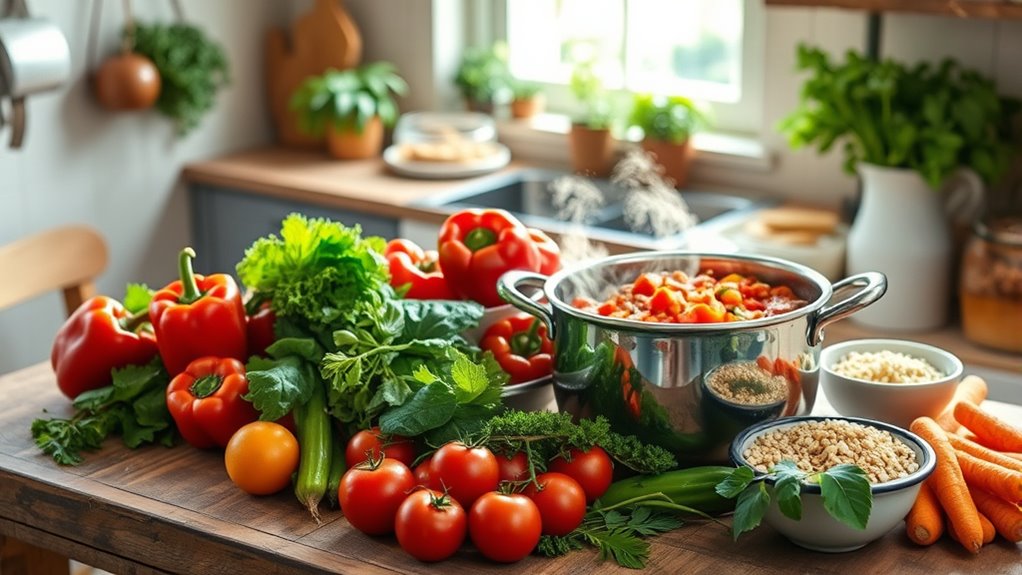
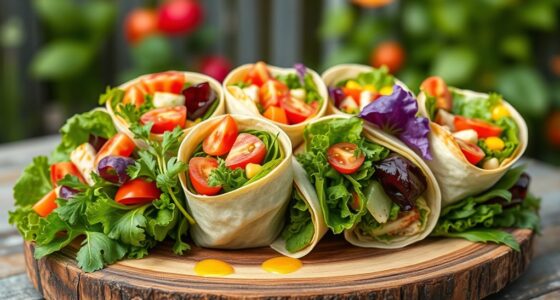
Eating healthy doesn’t have to break the bank. One of the smartest ways to save money while eating well is by embracing meal prep. When you plan your meals ahead of time, you reduce the temptation to order takeout or buy expensive convenience foods. It also helps you avoid impulse buys at the grocery store, which often lead to wasted food and money. Start by setting aside a couple of hours each week to prepare your meals in advance. Cook large batches of versatile ingredients like rice, beans, roasted vegetables, or grilled chicken. Then, portion these out into containers for the week. Not only does this save time, but it also guarantees you always have healthy options ready to go, preventing last-minute unhealthy choices.
Meal prep saves time, money, and keeps healthy options on hand all week.
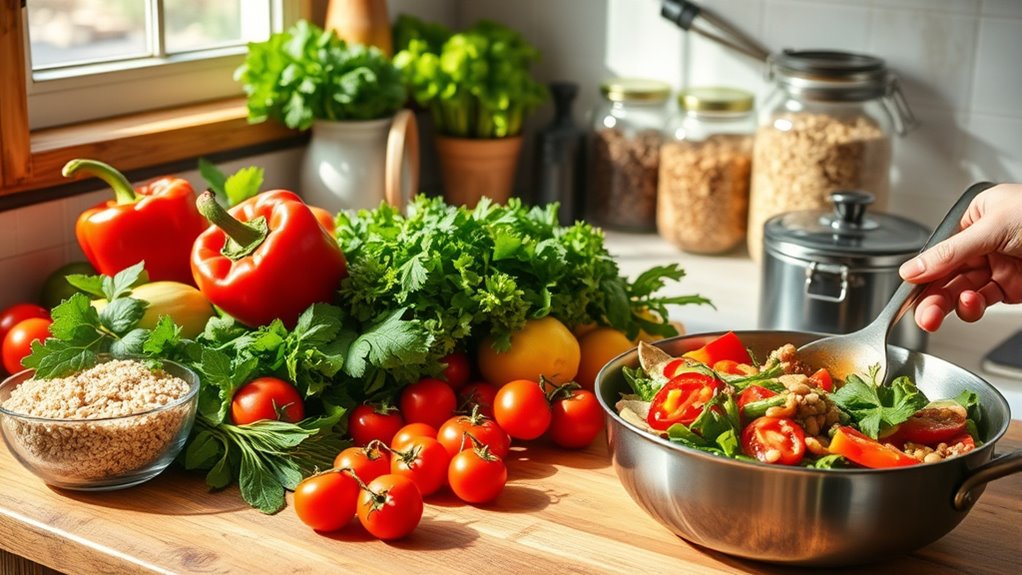
Another key to budget-friendly healthy eating is stocking your pantry with essential staples. These pantry staples act as the foundation for countless nutritious meals and are often inexpensive when bought in bulk. Items like dried beans, lentils, oats, canned tomatoes, and whole grains are versatile, long-lasting, and cost-effective. With these staples, you can whip up hearty soups, stews, grain bowls, and salads without breaking your budget. Keep a variety of spices and herbs on hand to add flavor without extra cost. A well-stocked pantry means you can turn simple ingredients into satisfying, nutritious meals at a moment’s notice, saving you money and time.
You can also make the most of sales and discounts on pantry staples by buying in bulk. Many stores offer affordable prices for larger quantities, which reduces your overall grocery bill. Consider investing in reusable containers to store your bulk purchases neatly and keep them fresh longer. When planning meals, focus on recipes that rely heavily on these staples, such as bean chili, vegetable stir-fries, or oatmeal topped with fruit and nuts. These dishes are not only healthy and filling but also inexpensive to prepare. Additionally, understanding the importance of contrast ratio in your cooking appliances can help in selecting the right equipment that preserves food quality and nutrients effectively. Staying consistent with meal prep and maintaining a well-stocked pantry allows you to make smarter choices and stretch your food budget further.
Ultimately, eating healthy on a budget boils down to planning and smart shopping. By dedicating time to meal prep and building a pantry full of affordable staples, you set yourself up for success. You’ll find that nutritious, satisfying meals don’t have to cost a fortune—they just require a little strategy and preparation. With these habits, you’ll enjoy better health without sacrificing your financial goals.
Frequently Asked Questions
How Can I Meal Prep Cost-Effective Healthy Dishes?
To meal prep cost-effective healthy dishes, start with smart meal prep tips like planning meals around sales and bulk buying. Use budget shopping to find affordable ingredients such as frozen vegetables and grains. Cook in large batches, portion your meals, and store them properly. This approach minimizes waste, saves money, and keeps your meals nutritious and convenient, making healthy eating affordable and easy to maintain.
What Are the Cheapest yet Nutritious Protein Sources?
You can find cheap yet nutritious protein sources in plant-based options like beans, lentils, and chickpeas, which are affordable and versatile. Also, consider affordable meat options such as eggs, canned tuna, or chicken thighs, which provide high-quality protein without breaking the bank. Incorporating these into your meals helps you stay healthy and save money, making your cooking both economical and nourishing.
How to Incorporate More Vegetables Affordably?
You can incorporate more vegetables affordably by making vegetable stir-fries with seasonal produce. Use affordable staples like carrots, cabbage, and frozen vegetables to keep costs low. Consider starting a garden planting project to grow your own veggies, which saves money long-term. Stir-fries are quick, versatile, and maximize your vegetable intake, making healthy eating budget-friendly while adding variety to your meals.
Are Frozen or Canned Foods Healthier Options?
Frozen foods are generally healthier options because they retain most of their nutrients through quick freezing, making their nutritional comparison to fresh produce quite favorable. Canned foods offer convenience factors but may contain added sodium or preservatives, so it’s best to choose low-sodium or rinsed options. Both are affordable and save prep time, helping you eat well on a budget. Just check labels and opt for minimally processed varieties for maximum health benefits.
How Can I Reduce Food Waste While Eating Healthy?
To reduce food waste while eating healthy, focus on proper food storage to keep leftovers fresh longer. Reuse leftovers creatively, like turning roasted vegetables into salads or soups. Plan your meals to buy only what you need, and store perishables properly. Using airtight containers and labeling can prevent spoilage. By rethinking how you store and reuse food, you’ll cut waste, save money, and enjoy healthier, sustainable eating habits.
Conclusion
So, as you discover new affordable recipes, you might find that healthy eating becomes easier and more enjoyable than you ever imagined. Sometimes, the best meals happen when you least expect it—like a sudden inspiration or a simple ingredient turning into a delicious surprise. Embrace these moments, and you’ll see that eating well doesn’t have to cost a fortune. After all, the joy of good food often comes from the little coincidences we least anticipate.
Flea & tick season Picks
flea and tick prevention
As an affiliate, we earn on qualifying purchases.