For most podcast and streaming setups, I’d start with the Shure MV7+: its USB-C and XLR connections make it easier to move from a simple desk setup to audio gear that can grow with you. The Shure SM7B is a stronger fit for a dedicated voice studio, while the RØDE NT1 Signature Series suits detailed studio recording. The main tradeoff is between plug-and-play convenience, the control of an XLR setup, and the flexibility of wireless systems for performers or events. Each serves a different meaning of “professional,” so matching the microphone to your room and recording chain matters as much as its sound. Read on for my ranked picks, setup guidance, and recommendations by buyer type.

Get kitchen staples and gadgets delivered free with Prime
- Fast, free delivery on millions of items
- Prime Video, Amazon Music and more included
- Member-only deals all year
Complete the kit



Key Takeaways
- The Shure MV7+ ranks first for versatility: USB-C keeps setup simple, while XLR gives podcasters and streamers a path to external audio equipment.
- The studio picks demand different rooms and workflows: the SM7B is a dynamic vocal mic suited to a dedicated chain, while the NT1 Signature Series is a condenser option for capturing more detail.
- Wireless options solve different scale problems: DJI’s two-transmitter kits suit mobile interviews and video, while Phenyx Pro’s four-channel system is aimed at events needing several handheld mics.
- The SM58 models are close relatives, not interchangeable bundles: choose among the standard XLR connection, included 25-foot cable, and on/off switch based on the needs of the stage setup.
- USB convenience has limits: the RØDE NT-USB+ and Blue Yeti simplify computer recording, but neither replaces a multi-mic wireless system or the routing options of a broader XLR setup.
| Shure MV7+ USB-C and XLR Podcast Dynamic Microphone, Black |  | Best Overall for Podcasting | Microphone type: Dynamic | Outputs: USB-C and XLR | LED touch panel: Full-color, 16.8 million color options; level monitoring and tap-to-mute | VIEW ON AMAZON | See Our Full Breakdown |
| JBL PartyBox Wireless Microphones, 2-Pack |  | Best for PartyBox Events | Microphones included: 2 | Wireless connection: 2.4 GHz | Wireless range: Up to 30 meters | VIEW ON AMAZON | See Our Full Breakdown |
| Phenyx Pro PTU-5000-4H 4-Channel UHF Wireless Microphone System |  | Best for Four-Person Events | Channels: 4 | Frequencies: 541.9 MHz, 546.3 MHz, 561.6 MHz, and 568.65 MHz | Wireless range: Up to 260 ft | VIEW ON AMAZON | See Our Full Breakdown |
| RØDE NT-USB+ Professional USB Condenser Microphone |  | Best USB Condenser for Home Studios | Microphone type: USB condenser | Connectivity: USB-C | Audio resolution: 48 kHz / 24-bit | VIEW ON AMAZON | See Our Full Breakdown |
| Pyle Dynamic Cardioid Handheld Microphone with 15 ft XLR Cable |  | Best Basic Wired Handheld | Microphone type: Dynamic | Polar pattern: Unidirectional cardioid | Frequency response: 50 Hz–15 kHz | VIEW ON AMAZON | See Our Full Breakdown |
| Shure SM58S Cardioid Dynamic Vocal Microphone with On/Off Switch |  | Best for Live Vocalists Who Want a Mute Switch | Microphone type: Dynamic | Polar pattern: Cardioid | Connector: XLR | VIEW ON AMAZON | See Our Full Breakdown |
| Shure SM7B Dynamic Vocal Microphone |  | Best for Broadcast and Studio Vocals | Type: Dynamic microphone | Pickup pattern: Cardioid | Output: XLR | VIEW ON AMAZON | See Our Full Breakdown |
| Shure SM58 Dynamic Vocal Microphone with 25-Foot XLR Cable |  | Best for Live Vocals with Cable Included | Microphone type: Dynamic | Pickup pattern: Cardioid | Included cable: 25-foot XLR | VIEW ON AMAZON | See Our Full Breakdown |
| JBL Wireless Two-Microphone System with Dual-Channel Receiver, Black |  | Best for Two-Person Wireless Presentations | Microphones: 2 | Receiver: Rechargeable dual-channel UHF | Playback time: Up to 6 hours | VIEW ON AMAZON | See Our Full Breakdown |
| RØDE NT1 Signature Series Studio Condenser Microphone, Black |  | Best Studio Condenser Starter Bundle | Microphone type: Large-diaphragm condenser | Polar pattern: Cardioid | Color: Black | VIEW ON AMAZON | See Our Full Breakdown |
| DJI Mic Mini Wireless Microphone System with 2 Transmitters, 1 Receiver, and Charging Case |  | Best Compact Wireless Pick | Transmitter weight: 10 g | Maximum transmission range: 400 m | Sampling rate: 48 kHz | VIEW ON AMAZON | See Our Full Breakdown |
| DJI Mic 3 Wireless Microphone (2 Transmitters, 1 Receiver, Charging Case) |  | Best for Flexible Multi-Person Recording | Transmitters: 2 included; receiver can pair with up to 4 | Receivers: 1 included; sync audio to 7 additional receivers | Internal recording: Dual-file 32-bit float | VIEW ON AMAZON | See Our Full Breakdown |
| Logitech Blue Yeti USB Microphone for PC and Mac, Blackout | 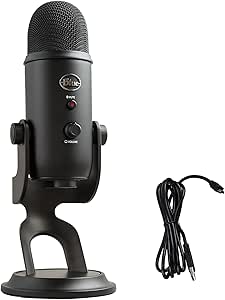 | Best for Desktop Versatility | Microphone type: USB condenser | Pickup patterns: Cardioid, omnidirectional, bidirectional, and stereo | Controls: Headphone volume, pickup pattern, mute, and microphone gain | VIEW ON AMAZON | See Our Full Breakdown |
| Phenyx Pro PTU-71-2H Dual UHF Handheld Wireless Microphone System |  | Best for Two-Person Events | Channels: 2 | Selectable frequencies: 100 per channel | Frequency ranges: Channel 1: 536.57–561.32 MHz; Channel 2: 562.37–587.12 MHz | VIEW ON AMAZON | See Our Full Breakdown |
| Shure SM58 Dynamic Vocal Microphone with XLR Connection |  | Best for Live Vocal Reliability | Microphone type: Dynamic | Connection: XLR | Pickup pattern: Cardioid | VIEW ON AMAZON | See Our Full Breakdown |
| professional microphone | Microphone type |
|---|---|
| Shure MV7+ USB-C and XLR Podca | Dynamic |
| JBL PartyBox Wireless Micropho | — |
| Phenyx Pro PTU-5000-4H 4-Chann | — |
| RØDE NT-USB+ Professional USB | USB condenser |
| Pyle Dynamic Cardioid Handheld | Dynamic |
| Shure SM58S Cardioid Dynamic V | Dynamic |
| Shure SM7B Dynamic Vocal Micro | — |
| Shure SM58 Dynamic Vocal Micro | Dynamic |
| JBL Wireless Two-Microphone Sy | — |
| RØDE NT1 Signature Series Stud | Large-diaphragm condenser |
| DJI Mic Mini Wireless Micropho | — |
| DJI Mic 3 Wireless Microphone | — |
| Logitech Blue Yeti USB Microph | USB condenser |
| Phenyx Pro PTU-71-2H Dual UHF | — |
| Shure SM58 Dynamic Vocal Micro | Dynamic |
More Details on Our Top Picks
Shure MV7+ USB-C and XLR Podcast Dynamic Microphone, Black
The Shure MV7+ is the most adaptable pick here for spoken-word creators who want a clear upgrade path from a simple desk setup to an XLR recording chain. Its USB-C and XLR outputs let you start without separate recording gear, then connect to a mixer or interface later. Voice isolation, denoising, and Auto Level Mode are aimed at keeping speech usable when room noise or mic distance varies; the RØDE NT-USB+ offers a condenser approach and included desk stand, but not the same XLR flexibility. The MV7+ also adds a customizable touch panel for monitoring and muting. Its tradeoff is that the supplied description does not list mounting hardware, and its processing options may be more than a singer or simple voice-call user needs.
Pros:- USB-C and XLR connections suit both direct computer recording and interface-based setups
- Auto Level Mode adjusts gain as speaking distance and volume change
- Voice isolation and real-time denoising target common home recording noise
- Touch panel provides level monitoring and tap-to-mute
Cons:- Included mounting hardware and accessories are not specified
- Dynamic spoken-word features may be unnecessary for straightforward calls or some music recording
Best for: Podcasters and streamers who want USB convenience now and the option to move to an XLR studio setup later
Not ideal for: Singers seeking a condenser microphone with a supplied desktop stand and pop filter, or buyers who need mounting accessories included
- Microphone type:Dynamic
- Outputs:USB-C and XLR
- LED touch panel:Full-color, 16.8 million color options; level monitoring and tap-to-mute
- Audio features:Voice isolation, Auto Level Mode, real-time denoising, Plate, Hall, and Studio reverb
- Color:Black
- Recommended uses:Podcasting, streaming, content creation, voiceover, recording, and home studio setups
Our verdict“Choose the MV7+ if you want a speech-focused microphone that can move from USB recording to an XLR setup as your studio grows.”
JBL PartyBox Wireless Microphones, 2-Pack
For hosts running karaoke or audience participation through a JBL PartyBox, this two-mic wireless set solves a different problem from the studio-focused Shure MV7+. Cardioid pickup, built-in pop filters, and shock mounts are intended to keep vocals clearer and handling noise lower while performers move around. The stated wireless range reaches 30 meters with the dongle, and the microphones can operate while charging, which helps during longer events. The main limitation is ecosystem fit: the set is specified for JBL PartyBox speakers, so it is a poor match for a general recording desk or venue rig. Battery life is also listed as up to 12 hours with the dongle, shorter than the 20-hour figure without it.
Pros:- Two microphones support duets and shared hosting
- Cardioid pickup, shock mounts, and pop filters help manage vocal and handling noise
- Compatible with JBL PartyBox speakers
- Can be used while charging
Cons:- Designed for JBL PartyBox speakers rather than general-purpose studio systems
- Listed battery life falls to up to 12 hours when using the wireless dongle
- The 2.4 GHz range specification depends on the wireless dongle
Best for: Party hosts and karaoke organizers who need two wireless handheld microphones for compatible JBL PartyBox speakers
Not ideal for: Studio creators or event operators who need broad mixer compatibility, XLR outputs, or a microphone for computer recording
- Microphones included:2
- Wireless connection:2.4 GHz
- Wireless range:Up to 30 meters
- Battery life:Up to 20 hours; up to 12 hours with digital wireless dongle
- Charging:Rechargeable; 10 minutes of charging provides up to 2 hours of playtime
- Pickup pattern:Cardioid
- Compatibility:JBL PartyBox speakers
Our verdict“Pick this set for two-person vocals at a JBL PartyBox event, but choose a studio microphone such as the RØDE NT-USB+ for desk recording.”
Phenyx Pro PTU-5000-4H 4-Channel UHF Wireless Microphone System
The Phenyx Pro PTU-5000-4H is the lineup’s practical choice when four people need separate handheld microphones at once. Its receiver provides four XLR outputs and individual volume controls, giving an operator more control over each voice than the two-mic JBL PartyBox set. Dynamic cardioid cartridges aim to limit unwanted pickup, while the stated range of up to 260 feet allows movement around a larger room. This is an event sound system rather than a self-contained speaker: it needs an amplifier or speaker to produce sound. Its fixed frequencies also limit multi-set use, so it is less suitable for expanding a coordinated wireless rig than a system designed for frequency flexibility.
Pros:- Four handheld microphones support panels, ceremonies, and group events
- Four XLR receiver outputs allow separate routing
- Individual volume controls and an LCD frequency display aid operation
- All-metal receiver and microphones with up to 260 feet of stated range
Cons:- Requires an amplifier or speaker for sound output
- Fixed frequencies are not intended for multi-set operation
- Battery life is listed as up to 8 hours
Best for: Schools, community venues, and event hosts who need four handheld microphones feeding a mixer or sound system
Not ideal for: Buyers who need a complete plug-and-play speaker setup or plan to run multiple PTU-5000 sets together
- Channels:4
- Frequencies:541.9 MHz, 546.3 MHz, 561.6 MHz, and 568.65 MHz
- Wireless range:Up to 260 ft
- Microphone pattern:Dynamic cardioid
- Receiver outputs:4 XLR outputs
- Battery life:Up to 8 hours
- Included batteries:8 AA batteries
- Construction:All-metal receiver and handheld microphones
- Included microphones:4 handheld microphones
Our verdict“Choose this system when four speakers need separate wireless mics and you already have amplification; for solo desk recording, the Shure MV7+ is a better fit.”
RØDE NT-USB+ Professional USB Condenser Microphone
The RØDE NT-USB+ suits creators who want a direct-to-device condenser setup with useful monitoring built in. Its 48 kHz/24-bit capture and zero-latency headphone output let you hear your recording without monitoring delay, while the included stand and detachable pop filter make a basic desktop setup easier to assemble than the Shure MV7+, whose listed description does not specify those accessories. USB-C compatibility extends to computers, tablets, and smartphones. In exchange, this is a USB-only option: unlike the MV7+, it does not offer an XLR path into a conventional interface. APHEX processing also depends on RØDE Central, so buyers who want the microphone to work without companion software may prefer a simpler signal chain.
Pros:- Studio-grade condenser capsule and low-noise Revolution Preamp
- Zero-latency headphone output supports real-time monitoring
- USB-C works with computers, tablets, and smartphones
- Detachable pop filter and desktop stand are included
Cons:- USB-C is the only listed connection, with no XLR upgrade path
- APHEX Aural Exciter and Big Bottom processing require RØDE Central
Best for: Home-studio vocalists, podcasters, and streamers who want a USB condenser with headphone monitoring and a supplied desk setup
Not ideal for: Recording engineers who need XLR connectivity or creators who want APHEX processing without using RØDE Central
- Microphone type:USB condenser
- Connectivity:USB-C
- Audio resolution:48 kHz / 24-bit
- Monitoring:Zero-latency headphone output
- Included accessories:Detachable pop filter and desktop stand
- Audio processing:APHEX Aural Exciter and Big Bottom via RØDE Central
- Compatibility:Computers, tablets, and smartphones
Our verdict“Choose the NT-USB+ for a ready-to-place USB condenser recording setup; pick the Shure MV7+ if XLR expansion matters more.”
Pyle Dynamic Cardioid Handheld Microphone with 15 ft XLR Cable
The Pyle dynamic handheld is a straightforward option for singers or presenters who need a wired microphone and an XLR cable in the box. Its cardioid pattern is intended to focus on the voice and help reduce feedback, while the metal body and passive design avoid battery management. Compared with the four-mic Phenyx Pro system, this is simpler to route and does not depend on wireless frequencies, but it cannot give a performer freedom to move around a room. It also lacks the MV7+’s USB connection and software-assisted speech controls, making it a less flexible choice for podcasting at a computer. With no on/off switch and a listed weight of 1.48 pounds, it asks the operator to manage muting and handling carefully.
Pros:- Includes a 15-foot XLR cable
- Cardioid pickup helps limit background noise and feedback
- Zinc alloy body and built-in pop filter and windscreen
- Passive operation requires no batteries
Cons:- Wired cable restricts movement on stage
- No on/off switch for quick muting
- Listed weight of 1.48 pounds may feel heavy during extended handheld use
Best for: Budget-conscious singers, presenters, and small venues that already have an XLR input and need one wired handheld
Not ideal for: Mobile performers, desk podcasters who need USB, or anyone who wants a handheld mute switch
- Microphone type:Dynamic
- Polar pattern:Unidirectional cardioid
- Frequency response:50 Hz–15 kHz
- Impedance:600 ohms
- Sensitivity:-54 dB
- Connector and cable:XLR; 15 ft cable
- Body material:Zinc alloy
- Dimensions and weight:6.41 × 1.96 × 1.96 in; 1.48 lbs
- Power:Passive; no batteries required
Our verdict“Choose the Pyle for a basic wired vocal setup with an XLR input; choose the JBL set if performers need wireless movement.”
Shure SM58S Cardioid Dynamic Vocal Microphone with On/Off Switch
The SM58S suits singers who want a familiar, rugged vocal mic with a switch for muting between songs or during stage changes. Its cardioid pattern favors sound from the front, while the grille and internal filtering help tame plosives, breath noise, and handling sounds. Compared with the Shure SM7B, it is a simpler handheld choice for live vocals rather than a studio-focused mic with added isolation and shielding. The built-in switch is useful onstage, though it adds a control that can be bumped accidentally. This is an XLR microphone, so it needs a compatible mixer or interface; it is not a direct USB option for a computer-only setup.
Pros:- Cardioid pickup helps reduce off-axis noise
- On/off switch provides quick muting
- Grille and internal filtering help control plosives and breath noise
- Handheld format is suited to vocal performance
Cons:- XLR connection requires compatible audio equipment
- Switch can be bumped during handling
- Vocal-focused design is less suited to capturing a wide range of sound sources
Best for: Performers who want a durable handheld vocal mic and convenient on-mic muting during live sets
Not ideal for: Computer-only streamers or podcasters who need USB connectivity and a setup without an audio interface or mixer
- Microphone type:Dynamic
- Polar pattern:Cardioid
- Connector:XLR
- Switch:On/off
- Color:Black
- Dimensions:4.90 × 3.30 × 10.30 inches
Our verdict“Choose the SM58S if you want a rugged stage vocal mic with a built-in mute switch and already have XLR equipment.”
Shure SM7B Dynamic Vocal Microphone
The Shure SM7B is the more studio-oriented option here for spoken voice, podcasting, streaming, voiceover, and vocals. Its shock isolation, pop filtering, and electromagnetic shielding address common recording distractions such as handling vibration, plosives, and interference. Compared with the handheld Shure SM58, it is better suited to a fixed mic position and controlled recording setup, while the SM58 is easier to carry around for live performance. The tradeoff is a less self-contained setup: the SM7B uses XLR and needs an audio interface or mixer. Its broadcast-style body and included windscreen options also make it a more specialized choice than a straightforward handheld vocal mic.
Pros:- Shock isolation helps limit handling vibration
- Built-in pop filtering and detachable windscreen help control plosives
- Electromagnetic shielding helps reduce interference
- All-metal construction suits regular studio use
Cons:- XLR connection requires an audio interface or mixer
- Fixed-position format is less convenient for handheld live performance
- Specialized studio design may be more than a simple vocal setup needs
Best for: Podcasters, voiceover artists, and studio vocalists with an XLR interface or mixer and a fixed recording position
Not ideal for: Singers seeking a lightweight handheld stage mic or creators who need a direct USB connection
- Type:Dynamic microphone
- Pickup pattern:Cardioid
- Output:XLR
- Construction:All-metal
- Shock isolation:Air suspension
- Pop filtering:Built-in
- Windscreen:Detachable
- Interference protection:Electromagnetic shielding
Our verdict“Pick the SM7B for controlled spoken-word or vocal recording if you have the XLR gear and a stationary setup.”
Shure SM58 Dynamic Vocal Microphone with 25-Foot XLR Cable
This SM58 bundle pairs a rugged handheld vocal microphone with a 25-foot XLR cable, making it a practical pick for performers who need to connect across a stage without sourcing a cable separately. Its cardioid pattern, internal pop filter, and shock mount help reduce background noise, plosives, and handling sounds. Compared with the SM58S, this version has no listed on/off switch, but the included cable makes the package more immediately useful for a wired setup. The long cable can be helpful onstage yet awkward in a compact recording space or when a different length is needed. Like the SM7B, it requires XLR equipment, but its handheld design is more natural for live singing.
Pros:- Includes a 25-foot XLR cable
- Cardioid pattern helps reject background noise
- Internal pop filter and shock mount reduce unwanted vocal and handling noise
- Rugged metal construction suits regular performance use
Cons:- XLR cable requires a compatible mixer or interface
- Included cable length may be cumbersome in small spaces
- Designed primarily for vocal applications
Best for: Singers and small venues that need a durable wired handheld mic with a long XLR cable included
Not ideal for: Mobile creators who need wireless operation or buyers whose setup requires a shorter or different cable
- Microphone type:Dynamic
- Pickup pattern:Cardioid
- Included cable:25-foot XLR
- Construction:Rugged metal
- Grille:Spherical mesh
- Pop filtering:Internal
- Shock mount:Internal
Our verdict“Choose this SM58 package for wired live vocals when the included 25-foot cable fits your stage layout.”
JBL Wireless Two-Microphone System with Dual-Channel Receiver, Black
The JBL two-microphone system makes sense when two people need to speak or sing through one connected speaker without separate wired mic runs. Its rechargeable dual-channel UHF receiver mixes both voices, and plug-and-play setup favors events where speed matters more than detailed studio control. Compared with the wired Shure SM58, this set gives presenters freedom to move around, but it trades the simplicity of a single cable for a receiver and battery management. The receiver offers up to six hours of playback, while the microphones use replaceable AA batteries, so users need to keep spares ready. This is a convenient event system, though its supplied details are less focused on recording features than the XLR studio microphones in this roundup.
Pros:- Two microphones can be used at once
- Dual-channel receiver mixes both voices through a connected speaker
- Plug-and-play setup suits events and presentations
- Receiver provides up to six hours of playback
Cons:- Microphones require replaceable AA batteries
- Requires a connected speaker for amplified sound
- Wireless receiver and battery upkeep add setup steps compared with the wired SM58
Best for: Event hosts, instructors, and small venues that need two wireless handheld microphones feeding one speaker
Not ideal for: Studio vocalists seeking a detailed XLR recording setup or users who prefer rechargeable batteries in each microphone
- Microphones:2
- Receiver:Rechargeable dual-channel UHF
- Playback time:Up to 6 hours
- Microphone batteries:Replaceable AA batteries
- Setup:Plug-and-play
- Audio output use:Voices mixed through a connected speaker
- Color:Black
Our verdict“Pick the JBL system for two-person events where wireless movement and quick setup matter more than studio recording features.”
RØDE NT1 Signature Series Studio Condenser Microphone, Black
The RØDE NT1 Signature Series is the condenser choice for buyers building an XLR studio vocal chain. Its large diaphragm and cardioid pattern focus on the voice, while the listed low self-noise suits recording quieter sources. The package also includes an SM6 shock mount with pop filter, an XLR cable, and a dust cover, so several common studio accessories are already accounted for. Compared with the dynamic Shure SM7B, this bundle offers a condenser approach and more included mounting accessories; the SM7B instead emphasizes shock isolation, pop control, and electromagnetic shielding in its description. The NT1 still needs an audio interface to record, and its studio-oriented setup is less convenient for handheld stage vocals.
Pros:- Large-diaphragm condenser design for studio vocals
- Cardioid pattern focuses on vocals and rejects room sound
- Includes SM6 shock mount with pop filter
- XLR cable and dust cover are included
Cons:- Requires an audio interface to record
- Studio setup is less suited to handheld live performance
- Condenser design may be less suitable than a dynamic mic for untreated, noisy rooms
Best for: Home studio vocalists who want a large-diaphragm XLR condenser and key mounting accessories in one package
Not ideal for: Performers seeking a handheld live microphone or computer users who need USB recording without an interface
- Microphone type:Large-diaphragm condenser
- Polar pattern:Cardioid
- Color:Black
- Shock mount:SM6
- Pop filter:Included with SM6 shock mount
- Cable:XLR included
- Other included accessory:Dust cover
- Recording connection requirement:Audio interface required
Our verdict“Choose the NT1 bundle for a home studio vocal chain if you have an interface and want the shock mount, pop filter, and cable included.”
DJI Mic Mini Wireless Microphone System with 2 Transmitters, 1 Receiver, and Charging Case
The DJI Mic Mini suits creators who need two people mic’d without adding much bulk: each transmitter weighs just 10 g, and the case extends battery life to up to 48 hours. Its 400 m stated range gives it more room to work than a desktop USB option like the Logitech Blue Yeti, while the Yeti is simpler for a fixed PC or Mac setup. Two noise-cancellation levels and automatic audio limiting help manage changing conditions, though strong cancellation is aimed at noisy locations and may not suit every voice or setting. This bundle is less flexible outside DJI’s compatible devices if you want to connect a transmitter directly without the receiver. Choose it for mobile interviews and creator shoots; skip it if your work centers on a studio desk or needs broad direct-connect compatibility.
Pros:- Very light 10 g transmitters are discreet on camera
- Up to 400 m transmission range
- Charging case supports up to 48 hours of battery life
- Two noise-cancellation levels and automatic audio limiting
Cons:- Strong noise cancellation may not suit quieter or more natural-sounding recordings
- Direct transmitter connection is limited to compatible DJI devices
Best for: Mobile creators and interviewers who need two discreet wireless mics, long operating time, and compatibility with listed DJI devices.
Not ideal for: Studio podcasters who record at a fixed computer or buyers who need transmitter direct connection across a broad range of devices.
- Transmitter weight:10 g
- Maximum transmission range:400 m
- Sampling rate:48 kHz
- Maximum SPL:120 dB
- Battery life with charging case:Up to 48 hours
- Noise cancellation:2 levels: Basic and Strong
- Included:2 transmitters, 1 receiver, charging case, and accessories
- Compatible devices:Osmo Nano, Osmo 360, Osmo Mobile 7P, Osmo Action 5 Pro, Osmo Action 4, and Osmo Pocket 3
Our verdict“Choose the DJI Mic Mini for lightweight two-person mobile recording with compatible gear; choose the Blue Yeti for a straightforward desktop setup.”
DJI Mic 3 Wireless Microphone (2 Transmitters, 1 Receiver, Charging Case)
Where the DJI Mic Mini focuses on light transmitters and long case-supported battery life, the DJI Mic 3 puts more emphasis on recording control and expansion. Its dual-file 32-bit float internal recording can help preserve detail when levels vary, and adaptive gain control, three voice tones, and two noise-cancelling levels give creators more ways to shape a recording. The receiver can pair with up to four transmitters and sync audio to seven additional receivers, which makes it a stronger fit for growing interview or production setups than the Mini’s listed two-transmitter bundle. The included bundle still has only two transmitters and one receiver, and filming time is up to 28 hours, shorter than the Mini’s case-supported claim. Direct connection remains limited to select DJI devices.
Pros:- Dual-file 32-bit float internal recording helps handle changing audio levels
- Receiver can pair with up to four transmitters
- Adaptive gain, three voice tones, and two noise-cancelling levels
- Up to 28 hours of filming time
Cons:- The listed bundle includes only two transmitters and one receiver
- Direct transmitter connection works only with select DJI devices
- Shorter stated runtime than the DJI Mic Mini with its charging case
Best for: Video teams and mobile interviewers who want internal backup recording, audio controls, and room to add transmitters or receivers.
Not ideal for: Buyers seeking the longest listed case-supported runtime or a system that connects directly to non-DJI devices without a receiver.
- Transmitters:2 included; receiver can pair with up to 4
- Receivers:1 included; sync audio to 7 additional receivers
- Internal recording:Dual-file 32-bit float
- Audio features:Adaptive gain control, 2 noise-cancelling levels, and 3 voice tones
- Interference control:Dual-band anti-interference
- Battery life:Up to 28 hours of filming
- Included accessories:Charging case, USB-C mobile phone adapter, and more
- Compatibility:Select DJI Osmo devices support direct transmitter connection
Our verdict“Pick the Mic 3 when internal backup recording and expansion matter more than the Mic Mini’s longer case-supported battery life.”
Logitech Blue Yeti USB Microphone for PC and Mac, Blackout
The Blue Yeti is the desktop choice for people who switch between solo narration, calls, and recordings with more than one speaker. Its four pickup patterns make it more adaptable to different desk arrangements than the Shure SM58, which uses a cardioid pattern and needs an XLR connection. Onboard gain, mute, pattern, and headphone controls also make routine adjustments easy to reach, while zero-latency monitoring lets a speaker hear their voice as they record. The tradeoff is a desk-bound USB condenser format: it does not offer the SM58’s handheld dynamic build for stage use or the DJI wireless systems’ freedom to move around. Full functionality also depends on Logitech G HUB. This pick fits a PC or Mac workspace that values flexible setup and accessible controls over portability.
Pros:- Four pickup patterns handle solo, stereo, and multi-person desk setups
- Onboard mute, gain, pattern, and headphone controls
- Zero-latency headphone monitoring
- USB connection supports PC and Mac
Cons:- Desktop USB format is less suited to handheld or mobile recording
- Full functionality requires Logitech G HUB
- Condenser pickup patterns can capture more room sound than a close-miked cardioid dynamic mic
Best for: PC and Mac streamers, podcasters, and remote presenters who record at a desk and want several pickup patterns.
Not ideal for: Performers who need a rugged handheld XLR microphone or mobile creators who need wireless movement.
- Microphone type:USB condenser
- Pickup patterns:Cardioid, omnidirectional, bidirectional, and stereo
- Controls:Headphone volume, pickup pattern, mute, and microphone gain
- Monitoring:Zero-latency headphone monitoring
- Connectivity:USB
- Compatibility:PC and Mac
- Included accessory:Adjustable desktop stand
- Software:Logitech G HUB for full functionality
Our verdict“Choose the Blue Yeti for a flexible desktop recording setup, and the Shure SM58 for handheld vocal work over XLR.”
Phenyx Pro PTU-71-2H Dual UHF Handheld Wireless Microphone System
For events where two speakers need handheld microphones, the Phenyx Pro PTU-71-2H offers a more stage-ready setup than either DJI lavalier system. Its two metal cardioid handhelds, receiver, and Auto Scan frequency selection are built around presenters moving within a venue, with up to 16 transmitters supported simultaneously. That makes it more appropriate for a multi-mic event environment than the DJI Mic 3, which is a compact clip-on system with internal recording and creator-focused controls. The Phenyx’s published 290–328 ft range is specified for line-of-sight use, so walls and venue layout may limit where it works reliably. Each microphone also relies on AA batteries. Pick this for two-person hosting or presentations; skip it if you need discreet mics or recorded backup files.
Pros:- Two metal handheld microphones with cardioid pickup
- Auto Scan and frequency locking help manage interference
- Supports up to 16 simultaneous transmitters
- Includes receiver, antennas, batteries, and setup accessories
Cons:- Handheld microphones require AA batteries
- 290–328 ft operating range is specified for line-of-sight use
- Bulkier and less discreet than the DJI Mic Mini clip-on transmitters
Best for: Event hosts, community venues, and presenters who need two handheld wireless microphones and may expand to several transmitters.
Not ideal for: Video creators who need discreet clip-on microphones, internal backup recording, or operation without replaceable AA batteries.
- Channels:2
- Selectable frequencies:100 per channel
- Frequency ranges:Channel 1: 536.57–561.32 MHz; Channel 2: 562.37–587.12 MHz
- Maximum simultaneous transmitters:16
- Operating range:290–328 ft line of sight
- Microphone polar pattern:Cardioid
- Microphone battery life:Up to 16 hours
- Included microphones:2 UHF handheld microphones
- Included accessories:Receiver, audio cables and adapter, power adapter, antennas, 4 AA batteries, and setup accessories
Our verdict“Choose the PTU-71-2H for two handheld event microphones and frequency management; choose the DJI Mic 3 for discreet creator recording with internal backup.”
Shure SM58 Dynamic Vocal Microphone with XLR Connection
The Shure SM58 is the straightforward vocal pick for singers, presenters, and broadcasters who want a rugged handheld mic with a familiar XLR connection. Its dynamic capsule and cardioid pattern help focus on a nearby voice, while the built-in filter reduces plosives, breath, and wind noise. Compared with the Phenyx Pro PTU-71-2H, the SM58 trades wireless movement and a second included microphone for a direct wired connection and a simpler single-mic setup. It also lacks the Blue Yeti’s USB convenience and multiple pickup patterns, so it needs compatible XLR audio gear and suits one speaker at a time. The metal construction and reinforced stand adapter make it a practical fit for regular handling. Choose it for dependable vocal use; look elsewhere for wireless or computer-only plug-and-play recording.
Pros:- Cardioid pickup helps focus on the speaker and limit background sound
- Built-in filter reduces plosives, breath, and wind noise
- Rugged metal construction for regular handling
- Tuned vocal response suited to live performance and broadcast
Cons:- XLR connection requires compatible audio equipment
- Wired setup limits movement compared with the Phenyx Pro wireless system
- Single microphone offers less flexibility for two-person recording than the DJI systems
Best for: Vocalists, presenters, and broadcasters who need a durable wired handheld microphone and have XLR equipment.
Not ideal for: Creators who need a USB mic for direct computer connection, wireless movement, or multiple pickup patterns.
- Microphone type:Dynamic
- Connection:XLR
- Pickup pattern:Cardioid
- Construction:Rugged metal
- Noise reduction:Built-in filter reduces plosives, breath, and wind noise
- Use cases:Live performance, recording, podcasting, and broadcast
Our verdict“Choose the SM58 for durable, focused vocal capture over XLR; choose the Blue Yeti for a direct USB desktop setup.”

How We Picked
I ranked these microphones by how well their design serves a clear professional use: spoken-word recording, studio vocals, live performance, mobile video, or group events. I weighed connection options, microphone type, included accessories, channel capacity, and the setup knowledge each product asks from its buyer. Those factors shape what a microphone can do in a real workflow: a USB model can reduce setup friction, while XLR and wireless systems can offer more flexibility when paired with suitable equipment.
The order reflects role and versatility across common recording needs, not a claim that one microphone wins every job. That puts the MV7+ first for its USB-C and XLR options, followed by specialist studio and wireless picks that suit narrower workflows. The SM58 variants appear as practical stage choices, while simple wired, party, and multi-channel systems rank lower for general professional recording because their strengths are tied to specific settings. Product names and configurations are judged as listed, including bundled cables, switches, transmitters, and receivers.
| professional microphone | Microphone type |
|---|---|
| Shure MV7+ USB-C and XLR Podca | Dynamic |
| JBL PartyBox Wireless Micropho | — |
| Phenyx Pro PTU-5000-4H 4-Chann | — |
| RØDE NT-USB+ Professional USB | USB condenser |
| Pyle Dynamic Cardioid Handheld | Dynamic |
| Shure SM58S Cardioid Dynamic V | Dynamic |
| Shure SM7B Dynamic Vocal Micro | — |
| Shure SM58 Dynamic Vocal Micro | Dynamic |
| JBL Wireless Two-Microphone Sy | — |
| RØDE NT1 Signature Series Stud | Large-diaphragm condenser |
| DJI Mic Mini Wireless Micropho | — |
| DJI Mic 3 Wireless Microphone | — |
| Logitech Blue Yeti USB Microph | USB condenser |
| Phenyx Pro PTU-71-2H Dual UHF | — |
| Shure SM58 Dynamic Vocal Micro | Dynamic |
Factors to Consider When Choosing Professional Microphones
I’d choose a microphone by starting with the recording chain and the environment, then narrowing the shortlist by who or what needs to be recorded. These decisions often matter more than adding another feature to a spec sheet.
Match the microphone to the room
A microphone can only capture the sound that reaches it, including room reflections, computer fans, and nearby conversation. In a treated studio, a condenser can capture detailed vocals and instruments; in an untreated room, a close-positioned dynamic mic may be easier to manage. Buyers sometimes choose a sensitive mic for its detail without accounting for how much room sound it will also pick up. Before buying, record a short sample in the actual space and listen for reflections or noise. If you cannot change the room, prioritize placement and a microphone suited to close work. Room treatment and mic technique can make a larger difference than moving between similar models.
Choose USB, XLR, or wireless around the whole setup
USB connects directly to a computer and suits a single-person desk workflow with little extra equipment. XLR normally needs an interface or mixer, but can fit into a larger studio or live sound setup with more control over routing. Wireless replaces the cable between performer and receiver, though it introduces transmitters, charging, and radio setup to manage. A common mistake is comparing microphone connectors without checking what else the recording chain requires. List every connection between the speaker and the recording device before choosing. If you expect your setup to change, a mic with both USB and XLR can make that change easier.
Account for the sound source and distance
A voice recorded a few inches from a microphone creates different demands from a singer moving across a stage or an interviewer tracking two people. Dynamic handhelds are built for close vocal use and stage handling, while a desk microphone works best when its position stays predictable. For video, a compact wireless transmitter can place the mic near the speaker even when the camera is farther away. Buyers often focus on the microphone and overlook a stand, boom arm, wind protection, or cable needed to keep it correctly placed. Think through whether the speaker will sit, stand, move, or share the mic. That decision can rule out an otherwise appealing format.
Plan for the number of people and channels
A two-transmitter wireless kit can handle a pair of speakers, while a four-channel receiver serves a larger event with several handheld microphones. More channels can help with panel discussions or performances, but they also add coordination and setup work. For a solo podcast, extra transmitters may sit unused while a straightforward USB or XLR mic better fits the job. Check whether each person needs a separate recording channel or whether a combined output is enough for your editing workflow. Also check what the receiver connects to, since a wireless kit still needs a compatible camera, recorder, mixer, or computer input. Buy for the group size you actually need to record, with some allowance for planned growth.
Budget for the accessories and support equipment
The microphone itself may be only one part of a working setup. XLR models can call for a cable, stand, interface, and sometimes additional gain; wireless kits need charging and a receiver connection that suits the recording device. A bundled cable can make a wired handheld ready for a basic connection, but it does not supply an interface if the computer has no suitable input. Another frequent misstep is choosing based on included extras without checking their length, compatibility, or intended use. Make a short list of the parts already on hand and the parts still required. Comparing complete setups gives a more realistic view of effort and cost without reducing the choice to the mic alone.
Pay for flexibility only when it serves your workflow
Dual USB and XLR connections, multiple transmitters, and expanded channel counts can be useful when they support a real next step. They add little if you only need one mic for calls or a fixed recording desk. A beginner may get more value from a direct computer connection and simple controls than from a studio mic that depends on an interface and careful gain setup. A working studio or event crew may prefer that added control because it fits equipment already in use. Decide what you expect to record over the next year, then pay for features that cover those sessions. This helps separate useful flexibility from equipment that adds setup without solving a problem.
Frequently Asked Questions
Can I use a professional microphone directly with my computer?
Yes, if you choose a USB microphone such as the Shure MV7+, RØDE NT-USB+, or Blue Yeti. An XLR-only mic such as the SM7B or SM58 needs an audio interface or mixer to connect to most computers. Check whether your computer has the ports and software inputs the mic requires before ordering. USB is usually simpler for one-person recording, while an interface supports a wider XLR workflow. A mic’s professional label does not tell you how it connects.
Should I choose a dynamic or condenser microphone for spoken-word recording?
Think about the room and how close you can stay to the mic. A dynamic model is often easier to use close to the speaker in a room with background noise or untreated reflections. A condenser can capture more fine detail, which can benefit a controlled studio but also reveal more of the room. Neither type automatically sounds better for speech. If possible, compare short recordings from your actual space before deciding.
Do I need an audio interface for the Shure SM7B?
The SM7B uses XLR, so you need an interface, mixer, or other XLR-compatible recording device. You should also check that the device can provide enough clean gain for your voice and preferred recording distance. A USB microphone avoids that extra piece of equipment and is simpler for a desk setup. The SM7B makes more sense when its studio-oriented vocal design fits your work and you are prepared to build the supporting chain. Confirm the full signal path before purchasing the microphone.
Which kind of wireless microphone kit suits interviews versus events?
For mobile interviews or video with two speakers, a kit with two small transmitters and a receiver, such as the DJI Mic Mini or DJI Mic 3, is built around portability. For events where several people need handheld microphones, a multi-channel receiver system such as the Phenyx Pro PTU-5000-4H is a closer match. These formats are not direct substitutes: lavalier-style transmitters keep hands free, while handhelds suit stage use. Check how the receiver connects to your camera, recorder, or sound system. Also plan how you will charge and manage transmitters during longer sessions.
Which Shure SM58 version should I choose?
Start with the details of the exact listing and your stage setup. The standard SM58 with XLR connection is the straightforward choice when you already have a cable, while the version bundled with a 25-foot cable can suit a setup that needs that reach. The SM58S adds an on/off switch, which can help when a performer or operator needs local mute control. The switch also adds a control that could be moved accidentally during handling. Compare what is included and how the mic will be managed on stage before selecting a version.
Conclusion
For one microphone that can support a simple desk today and an XLR setup later, I recommend the Shure MV7+ as the best overall pick. For the best value in a straightforward live vocal setup, the Shure SM58 is the practical choice, while the Shure SM7B is my best premium pick for a dedicated voice studio with the equipment to support it. Beginners who want direct computer recording can start with the RØDE NT-USB+ or Blue Yeti; mobile two-person video points to the DJI Mic Mini or DJI Mic 3, and larger events have a clearer fit in the Phenyx Pro PTU-5000-4H. Choose by the sound source, room, and recording chain you actually have, and the right professional microphone becomes easier to identify.
Fall Picks
fall essentials
As an affiliate, we earn on qualifying purchases.