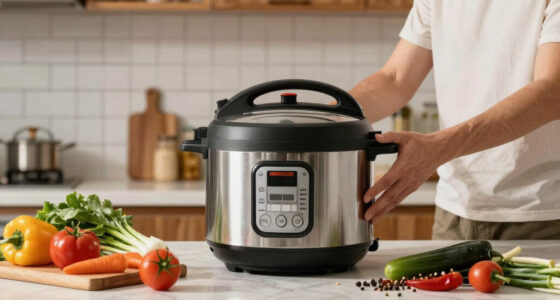
A great kitchen food processor should chop, slice, shred, and mix without forcing you to babysit it, and the 2026 field splits sharply between budget choppers under $50 and high-wattage do-it-all machines. My top pick is the Cuisinart 14-Cup with 720-watt motor, which balances bowl capacity, slicing precision, and durability better than anything else here. If you mainly want smoothies and soups alongside chopping, the Ninja Kitchen System TB401 blends and processes in one base, while the Hamilton Beach 10-Cup delivers surprising performance for the price. The main tradeoff you’ll face: paying more buys power and bowl size, but cheap models win on cleanup simplicity and counter space. Read on for the full breakdown of all 12.
Listen free for 30 days with Audible
Thousands of audiobooks and originals — cancel anytime.
Start your free trialAs an affiliate, we earn on qualifying purchases.
Complete the kit


Key Takeaways
- The Cuisinart 14-Cup (720W) takes best overall because its sealed bowl and consistent slicing beat the higher-wattage Ninja machines on precision, even though the Ninjas win raw power.
- Bowl capacity matters more than buyers expect: the 3-cup and 5-cup Cuisinart minis are fantastic for nuts and herbs but physically cannot handle a full onion or shredding a block of cheese.
- Hamilton Beach’s Stack & Snap design is the standout usability win across the lineup — no twisting, no aligning — making it the best pick for anyone intimidated by fiddly lids.
- The Ninja PrecisionPro BZ601 is the only affordable model here that kneads dough credibly, closing most of the gap to full-size machines for half the price.
- Spending more than about $200 mostly buys blending integration (the TB401 and BL770), not better chopping — pure food-processor buyers get more value in the $60–$160 range.
| Cuisinart 14-Cup Food Processor with 720-Watt Motor |  | Best Overall | Capacity: 14 cups | Motor Power: 720 watts | Blade Material: Stainless steel | VIEW LATEST PRICE | See Our Full Breakdown |
| Ninja Kitchen System with BlendSense Technology, 72 oz, 1800W, TB401 |  | Best Premium All-in-One | Motor Power: 1800W | Pitcher Capacity: 72 oz | Single-Serve Cup: 24 oz | VIEW LATEST PRICE | See Our Full Breakdown |
| Ninja Professional Plus Food Processor, 1000PW, 9-Cup, BN601 |  | Best for Effortless Presets | Motor Power: 1000-peak-watt | Capacity: 9 cups | Included Blades: Stainless steel blades, dough blade | VIEW LATEST PRICE | See Our Full Breakdown |
| Hamilton Beach Food Processor & Vegetable Chopper, 10 Cups |  | Best Value | Capacity: 10 cups | Motor Power: 450 watts | Speeds: 2 speeds plus pulse | VIEW LATEST PRICE | See Our Full Breakdown |
| KitchenAid 7-Cup Food Processor – KFP0718 |  | Best Compact for Small Kitchens | Capacity: 7 cups | Model: KFP0718 | Includes: Work bowl, lid, multi-purpose blade, reversible disc | VIEW LATEST PRICE | See Our Full Breakdown |
| BLACK+DECKER 8-Cup Food Processor |  | Best Budget Workhorse | Capacity: 8 cups | Motor Power: 450W | Blade: Stainless steel S-blade | VIEW LATEST PRICE | See Our Full Breakdown |
| Cuisinart Mini Food Processor, Reversible Blade, 3-Cup Capacity |  | Best Mini Prep Companion | Capacity: 24 ounces (3 cups) | Motor Power: 250 watts | Blade Type: Reversible stainless steel | VIEW LATEST PRICE | See Our Full Breakdown |
| Hamilton Beach 12 Cup Stack & Snap Food Processor and Vegetable Chopper |  | Best for Big-Batch Meal Prep | Capacity: 12 cups | Motor Power: 450 watts | Attachments: Chopping/pureeing blade, reversible slicing/shredding disc | VIEW LATEST PRICE | See Our Full Breakdown |
| BLACK+DECKER Food Processor and Vegetable Chopper, 8-Cup Capacity, 450W |  | Best Easy-Clean Mid-Size Pick | Model: FP4200B-RF | Capacity: 8 cups | Motor Power: 450W | VIEW LATEST PRICE | See Our Full Breakdown |
| Cuisinart 5-Cup Chop & Shred Food Processor |  | Best Compact All-Rounder | Capacity: 5 cups | Color: Silver | Blade: Universal chopping blade | VIEW LATEST PRICE | See Our Full Breakdown |
| Ninja PrecisionPro Food Processor & Dough Mixer, 1000PW, 9-Cup, BZ601 |  | Best for Dough and Big-Batch Meal Prep | Motor Power: 1000-peak-watt | Capacity: 9 cups | Preset Programs: Auto-iQ for chopping, slicing, shredding, pureeing, and dough | VIEW LATEST PRICE | See Our Full Breakdown |
| Ninja BL770 Mega Kitchen System, 1500W, 72 Oz Pitcher, 8-Cup, Black |  | Best Two-in-One Blender and Processor | Power: 1500W | Blender Pitcher Capacity: 72 oz | Food Processor Capacity: 8 cups | VIEW LATEST PRICE | See Our Full Breakdown |
| kitchen food processor | Capacity | Motor Power |
|---|---|---|
| Cuisinart 14-Cup Food Processo | 14 cups | 720 watts |
| Ninja Kitchen System with Blen | — | 1800W |
| Ninja Professional Plus Food P | 9 cups | 1000-peak-watt |
| Hamilton Beach Food Processor | 10 cups | 450 watts |
| KitchenAid 7-Cup Food Processo | 7 cups | — |
| BLACK+DECKER 8-Cup Food Proces | 8 cups | 450W |
| Cuisinart Mini Food Processor | 24 ounces (3 cups) | 250 watts |
| Hamilton Beach 12 Cup Stack & | 12 cups | 450 watts |
| BLACK+DECKER Food Processor an | 8 cups | 450W |
| Cuisinart 5-Cup Chop & Shred F | 5 cups | — |
| Ninja PrecisionPro Food Proces | 9 cups | 1000-peak-watt |
| Ninja BL770 Mega Kitchen Syste | — | — |
More Details on Our Top Picks
Cuisinart 14-Cup Food Processor with 720-Watt Motor
When I weigh capacity against raw capability, this Cuisinart 14-cup workhorse earns the top spot because it solves the problem most processors eventually hit: running out of room mid-recipe. Fourteen cups means an entire head of cabbage or a double batch of dough fits without stopping to empty the bowl, something the KitchenAid KFP0718 simply cannot manage at half the volume. The 720-watt motor kneads bread dough and powers through dense vegetables without straining, and dishwasher-safe discs turn cleanup into a non-event.
The tradeoff is precision. Unlike the Ninja TB401 with its ten speeds and automatic blending logic, this Cuisinart keeps controls basic, and the slicing and shredding discs are fixed thickness — no dial-adjustable cuts here. Buyers who want paper-thin cucumber or adjustable shred coarseness will feel that ceiling. Still, for sheer prep volume per dollar, nothing else in this lineup matches it.
Pros:- Massive 14-cup capacity handles double batches without emptying the bowl
- 720-watt motor kneads dough and processes dense ingredients without bogging down
- Dishwasher-safe stainless steel discs and blades make cleanup fast
- Strong 3-year warranty with 5-year motor coverage beats most budget rivals
Cons:- Slicing and shredding discs are fixed thickness with no adjustability
- Basic controls lack preset programs found on similarly priced Ninja models
Best for: Home cooks and batch cookers who regularly prep large quantities of vegetables, dough, or meal-prep portions
Not ideal for: Small kitchens or single-person households — the 14-cup bowl is oversized and the base takes real counter space
- Capacity:14 cups
- Motor Power:720 watts
- Blade Material:Stainless steel
- Included Discs:Slicing and shredding discs
- Warranty:3-year limited, 5-year motor
- Cleaning:Dishwasher-safe accessories
Our verdict“Buy this if you cook in volume and want a proven, no-frills machine that will not quit — skip it if you need adjustable slicing or compact storage.”
Ninja Kitchen System with BlendSense Technology, 72 oz, 1800W, TB401
This is the pick for buyers who want one appliance to replace both a blender and a food processor. The 1800-watt motor is the most powerful in this roundup — nearly double the Cuisinart 14-cup — and it comes paired with a 72-oz blending pitcher plus a 24-oz single-serve cup, so smoothies, nut butters, and salsa all live on one base. BlendSense technology automatically adjusts speed and power as ingredients change texture, which removes the guesswork the Cuisinart’s manual controls demand.
All that power and versatility cost you three things: money, counter space, and simplicity. The control panel takes time to learn, the footprint dwarfs the compact KitchenAid KFP0718, and it runs loud enough to be a genuine annoyance during early-morning prep. Compared with the Ninja BL770, the BlendSense system and extra attachments justify the premium — but only for households that will genuinely use the blending side.
Pros:- 1800W motor is the strongest here, crushing ice and tough ingredients effortlessly
- BlendSense auto-adjusts power and speed for consistent results without babysitting
- Genuinely replaces two appliances with a 72-oz pitcher, 24-oz cup, and 8-cup processing bowl
- Ten variable speeds plus multiple blades cover chopping, dough, slicing, and shredding
Cons:- Largest footprint in the lineup and one of the loudest during operation
- Complex controls and many attachments mean a real learning curve
Best for: Smoothie-loving households that want blender-grade power and food processing from a single countertop appliance
Not ideal for: Buyers who already own a good blender — they would be paying twice for capability they have
- Motor Power:1800W
- Pitcher Capacity:72 oz
- Single-Serve Cup:24 oz
- Processing Bowl:8-cup
- Speed Settings:10 variable speeds with BlendSense
- Included Attachments:Slicing/shredding disc, chopping blade, dough blade, hybrid edge blades
Our verdict“Worth the premium only if you want blender-level power and food processing in one machine; otherwise the Cuisinart covers pure prep for less.”
Ninja Professional Plus Food Processor, 1000PW, 9-Cup, BN601
Where the Cuisinart 14-cup rewards hands-on cooks, this Ninja targets people who want to press a button and walk away. Its Auto-iQ preset programs deliver timed chopping, slicing, pureeing, and dough cycles, which means no more guessing whether you have pulsed three times or seven — a genuine advantage over the Hamilton Beach 10-cup’s two-speed-plus-pulse simplicity. The 1000-peak-watt motor is 250 watts stronger than that Hamilton Beach, so fibrous kale stems and frozen fruit pose no threat.
That automation cuts both ways. If a preset over-processes your onions, there is less manual control to correct it compared with dial-based models, and the 9-cup bowl, while generous, sits below the Cuisinart’s capacity for marathon batch cooking. It also costs more than basic models. For busy weeknight cooks, though, the presets plus dishwasher-safe BPA-free parts strike a balance of convenience that feels just right.
Pros:- Auto-iQ preset programs remove guesswork for chopping, pureeing, and dough
- 1000-peak-watt motor powers through tough ingredients with headroom to spare
- 9-cup capacity suits most family-sized batches
- BPA-free dishwasher-safe parts keep cleanup quick
Cons:- Preset programs limit manual control compared with dial-based rivals
- Priced above basic models like the Hamilton Beach 10-cup for capability not everyone needs
Best for: Busy weeknight cooks and food-prep beginners who want one-touch presets instead of manual pulsing
Not ideal for: Control-focused cooks who like dialing in texture manually — the presets constrain fine adjustments
- Motor Power:1000-peak-watt
- Capacity:9 cups
- Included Blades:Stainless steel blades, dough blade
- Programs:4 Auto-iQ presets (chop, slice, puree, dough)
- Material:BPA-free plastic, stainless steel blades
- Dishwasher Safe:Yes
- Color:Grey
Our verdict“The right choice if you value push-button consistency over hands-on control; manual cooks should lean toward the Cuisinart instead.”
Hamilton Beach Food Processor & Vegetable Chopper, 10 Cups
Not everyone needs presets or 1800 watts, and this Hamilton Beach proves it by delivering the best price-to-capacity ratio in the roundup. Ten cups is more bowl than the pricier Ninja BN601 offers, and the built-in bowl scraper is a genuinely clever touch — you clear stuck food off the sides mid-process without removing the lid, which no other model here can claim. Two speeds plus pulse covers the essentials: chop, slice, shred, puree.
The honest tradeoff is the 450-watt motor, which is the weakest among the full-size picks here. It handles vegetables and cooked foods fine, but thick bread dough will strain it in a way the Cuisinart’s 720 watts never would, and there are no extra attachments in the box — what you see is all you get. Compared with the smaller Hamilton Beach Stack & Snap, though, the scraper and larger bowl make this the smarter budget buy for families.
Pros:- Built-in bowl scraper clears the sides without stopping or removing the lid
- 10-cup capacity beats pricier models like the Ninja BN601 on bowl size
- Dishwasher-safe BPA-free parts simplify cleanup
- Two speeds plus pulse covers all everyday processing tasks
Cons:- 450-watt motor is underpowered for kneading dough or extended heavy use
- No additional attachments or discs beyond the basics included
Best for: Budget-conscious families who want big-bowl everyday chopping and shredding without paying for motor power they rarely need
Not ideal for: Bread bakers and heavy-duty users — the 450-watt motor struggles with stiff doughs and dense mixtures
- Capacity:10 cups
- Motor Power:450 watts
- Speeds:2 speeds plus pulse
- Blade Types:Slicing/shredding disc, chopping/pureeing blade
- Special Feature:Built-in bowl scraper
- Bowl Material:BPA-free plastic
- Dishwasher Safe:Yes
Our verdict“The smartest spend for everyday vegetable prep on a budget — just do not expect it to knead bread like the Cuisinart.”
KitchenAid 7-Cup Food Processor – KFP0718
For apartments, RVs, and kitchens where counter space is the scarcest ingredient, this KitchenAid 7-cup is the full-size processor that actually fits. It undercuts even the Hamilton Beach 10-cup on footprint while still including a multi-purpose blade and reversible slicing/shredding disc, so the core tasks are all covered. The leak-resistant bowl is a quiet advantage when processing soups or saucy mixtures — splatter stays contained, and the simple controls with LED indicators make operation obvious from the first use.
The limitations are equally clear. Seven cups means batch cooking is out; doubling a coleslaw recipe means processing in shifts, which the Cuisinart 14-cup handles in one pass. There is also no dough blade or adjustable disc in the box, so serious bakers should look elsewhere, and the control panel is basic compared with the Ninja BN601’s preset programs. As a right-sized everyday machine, though, it nails the brief.
Pros:- Compact footprint fits kitchens where full-size models crowd the counter
- Leak-resistant bowl contains liquids and sauces during processing
- Multi-purpose blade plus reversible disc covers chopping, slicing, and shredding
- Simple controls with LED indicators are beginner-friendly from day one
Cons:- 7-cup capacity forces batch work for larger recipes
- No dough blade or expandable accessory ecosystem for ambitious baking
Best for: Apartment dwellers, couples, and small households who want full processor function in a right-sized footprint
Not ideal for: Meal preppers and large families — the 7-cup bowl forces multiple batches for big recipes
- Capacity:7 cups
- Model:KFP0718
- Includes:Work bowl, lid, multi-purpose blade, reversible disc
- Controls:Multiple speeds with LED indicators
- Bowl Design:Leak-resistant
- Cleaning:Dishwasher-safe parts
Our verdict“The clear choice when counter space is the deciding factor — just accept smaller batches in exchange for the smaller footprint.”
BLACK+DECKER 8-Cup Food Processor
Shoppers who want a no-frills work bowl without the premium price will find this model makes the most sense. Compared with the Hamilton Beach 12-Cup Stack & Snap, it gives up four cups of capacity and the Big Mouth chute, but it costs noticeably less and takes up less counter space. The 450W motor handles chopping and pureeing quickly, and the reversible shred and slice disc covers the two functions most home cooks actually use weekly. The tradeoff is refinement: assembly is straightforward but less foolproof than Hamilton Beach’s Stack & Snap system, and unlike that model, BLACK+DECKER doesn’t advertise dishwasher-safe parts, which means more hand-washing after messy jobs like cheese or pesto. It’s also louder than the smaller Cuisinart Mini-Prep. Still, for a budget buyer, this is a dependable middle ground between tiny choppers and full-size machines.
Pros:- Very affordable for an 8-cup machine with a reversible disc
- 450W motor processes chopping and pureeing jobs quickly
- Simple locking lid makes assembly intuitive
- 8-cup bowl is large enough for most family recipes
Cons:- Parts are not advertised as dishwasher-safe, adding cleanup effort
- Noticeably noisier than compact models like the Cuisinart Mini-Prep
- No wide feed chute, so ingredients need pre-cutting
Best for: Budget-minded home cooks who want slicing and shredding capability without paying full-size prices
Not ideal for: Buyers who hate hand-washing — parts aren’t confirmed dishwasher-safe, and messy prep means extra sink time
- Capacity:8 cups
- Motor Power:450W
- Blade:Stainless steel S-blade
- Additional Discs:Reversible shred and slice disc
- Assembly:Locking lid design
- Functions:Chop, puree, mix, shred, slice
Our verdict“A sensible pick for cooks who want core slicing and shredding functions at a rock-bottom price and don’t mind hand-washing.”
Cuisinart Mini Food Processor, Reversible Blade, 3-Cup Capacity
Not everyone needs a full-size bowl, and that’s exactly where this 3-cup Cuisinart Mini-Prep Plus earns its spot. It serves a different purpose than the BLACK+DECKER 8-Cup: rather than batch cooking, it excels at small, precise jobs — chopping herbs, grinding hard cheese, mincing garlic for a single recipe. The reversible stainless steel blade switches between a sharp edge for chopping and a blunt edge for grinding, a clever touch at this size. Cleanup is where it beats every budget option here; the dishwasher-safe bowl and lid rinse clean in seconds, and the compact footprint fits in a cabinet or even on a countertop in a studio apartment. The honest tradeoff is capacity — it can’t slice or shred at all, and attempting larger prep tasks means working in frustratingly small batches. It also shouldn’t be used for grinding coffee beans.
Pros:- Reversible blade handles both delicate chopping and hard grinding
- Dishwasher-safe bowl and lid for the easiest cleanup in this lineup
- Compact size stores in a drawer-adjacent cabinet or small counter
- 18-month warranty from a trusted brand at this price
Cons:- 24-ounce capacity limits it to small tasks only
- No slicing or shredding capability at all
- Not suitable for grinding coffee beans or very hard spices
Best for: Apartment dwellers and occasional cooks who need fast small-batch chopping, like herbs, garlic, and nuts
Not ideal for: Meal preppers — no slicing or shredding disc and a 24-ounce bowl make batch work impractical
- Capacity:24 ounces (3 cups)
- Motor Power:250 watts
- Blade Type:Reversible stainless steel
- Bowl Material:BPA-free plastic
- Controls:Push-button control panel
- Dishwasher Safe:Yes (bowl and lid)
- Warranty:18 months
Our verdict“The right second processor (or only processor) for small-kitchen cooks whose prep is mostly herbs, garlic, and cheese.”
Hamilton Beach 12 Cup Stack & Snap Food Processor and Vegetable Chopper
When volume is the priority, this model stands out as the capacity leader among the mid-priced options here. Its 12-cup sealed bowl outpaces the BLACK+DECKER 8-cup by half again, which matters for anyone making salsa for a crowd, grating a block of cheese in one pass, or even preparing homemade pet food — a use Hamilton Beach explicitly designed for. The Stack & Snap assembly solves the most common food processor frustration: unlike the BLACK+DECKER’s twist-lock lid, parts click together with no alignment guesswork, so there’s no fighting the base mid-recipe. The Big Mouth chute accepts whole tomatoes and half-onions where smaller feed tubes demand pre-cutting. The drawbacks are real, though — it’s bulky enough to dominate a small counter, it’s loud at full power, and it lacks the dough-kneading ability of the Ninja PrecisionPro BZ601.
Pros:- 12-cup sealed bowl handles the largest batches in this price tier
- Stack & Snap assembly eliminates alignment frustration
- Big Mouth and 2-in-1 chute reduce pre-cutting of whole vegetables
- Fully dishwasher-safe parts plus suction cup feet and pour spout
Cons:- Footprint is too large for cramped counters or shallow cabinets
- No dough-mixing capability like the Ninja PrecisionPro
- 450W motor is loud during sustained use
Best for: Batch cooks and large families who process big volumes of vegetables, cheese, or pet food at once
Not ideal for: Small-kitchen owners or buyers wanting dough functions — it’s bulky and limited to slice, shred, chop, and puree
- Capacity:12 cups
- Motor Power:450 watts
- Attachments:Chopping/pureeing blade, reversible slicing/shredding disc
- Bowl Material:Sealed plastic
- Disc Material:Stainless steel
- Dishwasher Safe:Yes
- Extra Features:Big Mouth chute, 2-in-1 chute, pour spout, suction cup feet
Our verdict“The volume king for budget buyers — pick it if batch size matters more than versatility or quiet operation.”
BLACK+DECKER Food Processor and Vegetable Chopper, 8-Cup Capacity, 450W
This model reads like a refined sibling of the BLACK+DECKER 8-Cup (B0841NBX4Y) — same 450W motor and 8-cup bowl, but with two upgrades that change the daily experience: multiple speeds with pulse and dishwasher-safe removable parts. The pulse function gives real control over texture, which matters when you want coarse chopped onions rather than salsa; the earlier model’s basic operation can’t match that precision. Compared upward to the Hamilton Beach 12-Cup, you trade four cups of capacity for a smaller footprint and similar cleanup convenience — a fair swap for two-person households. The compromises are honest ones: 450W can bog down with dense dough or fibrous root vegetables where the Cuisinart 14-Cup’s 720W motor wouldn’t blink, and flipping the reversible disc between slice and shred modes mid-cook is a minor hassle. For everyday prep, though, it’s a well-rounded middle path.
Pros:- Multiple speeds plus pulse give texture control the base BLACK+DECKER lacks
- Dishwasher-safe parts make post-dinner cleanup fast
- 8-cup bowl suits most weeknight recipes without wasted space
- Simple locking-lid assembly with S-blade and shredding disc included
Cons:- 450W motor struggles with dough or very dense ingredients
- Swapping the reversible disc between functions interrupts workflow
- Lacks the wide feed chute of the Hamilton Beach 12-Cup
Best for: Couples and small families who want speed control and dishwasher-safe cleanup at a modest price
Not ideal for: Heavy-duty cooks — 450W struggles with dough and very tough ingredients compared to 720W-plus rivals
- Model:FP4200B-RF
- Capacity:8 cups
- Motor Power:450W
- Included Components:S-blade, reversible shredding/slicing disc
- Speeds:Multiple speeds with pulse
- Dishwasher Safe:Yes (removable parts)
- Functions:Blend, chop, mince, shred, slice
Our verdict“The smarter buy over the standard BLACK+DECKER 8-cup if you value pulse control and dishwasher-safe parts.”
Cuisinart 5-Cup Chop & Shred Food Processor
This 5-cup model occupies a smart middle ground that’s rarer than it should be: bigger than the Cuisinart Mini-Prep Plus yet far smaller than the Hamilton Beach 12-Cup. Unlike the Mini-Prep, it includes reversible shredding discs, so it can actually handle coleslaw or grated carrots — tasks a chopper-only unit simply can’t do. The wide-mouth feed tube is a genuine convenience at this size, letting you feed chunks rather than dice everything first. Thoughtful touches like the ergonomic handle on the bowl and cord storage signal it’s designed for people who keep a processor on the counter or pull it out often. The catch is capacity and muscle: five cups means working in batches for anything beyond a two-person meal, and the motor won’t stand up to kneading dough or grinding hard ingredients the way the larger Cuisinart 14-Cup will. It’s a trade of power for footprint.
Pros:- Shredding and chopping in a footprint small enough for everyday counter storage
- Wide-mouth feed tube reduces pre-cutting despite the compact size
- Ergonomic bowl handle makes pouring and carrying easier
- Cord storage keeps the counter tidy when parked
Cons:- 5-cup capacity forces batch work for family-size recipes
- Not built for heavy-duty tasks like dough kneading or hard grinding
- Fewer attachments and functions than similarly priced larger models
Best for: Small households and condo kitchens that want both chopping and real shredding in a storable size
Not ideal for: Frequent entertainers or bread bakers — the 5-cup bowl and modest motor can’t handle volume or dough
- Capacity:5 cups
- Color:Silver
- Blade:Universal chopping blade
- Discs:Reversible shredding disc
- Feed Tube:Wide-mouth
- Motor:High-performance
- Storage:Cord storage
Our verdict“A tidy compromise for cooks who need genuine shredding capability without surrendering counter space to a 12-cup machine.”
Ninja PrecisionPro Food Processor & Dough Mixer, 1000PW, 9-Cup, BZ601
This model stands out for its dough-making capability, which most processors in this lineup don’t handle well at all. The dedicated dough blade plus Auto-iQ preset programs means kneading bread or pizza dough is a button press rather than guesswork — something the Hamilton Beach 10-Cup simply can’t match with its manual pulse controls. Compared with the similar Ninja Professional Plus BN601, the PrecisionPro leans harder into guided presets for chopping, slicing, shredding, and pureeing, making it better suited to cooks who want repeatable results without babysitting the machine.
The tradeoffs are real, though. It runs loud, takes up meaningful counter space, and anyone who only needs occasional vegetable chopping would be better served by the cheaper BLACK+DECKER 8-Cup. This pick makes the most sense for frequent bakers and weekly meal preppers who will actually use that 1000-peak-watt muscle.
Pros:- Dedicated dough blade with Auto-iQ presets handles bread and pizza dough reliably
- 1000-peak-watt motor powers through tough ingredients without stalling
- 9-cup bowl suits family-sized batches
- Dishwasher-safe bowl, blades, and discs simplify cleanup
Cons:- Runs noticeably loud during operation
- Footprint is large for compact counters
- Sits at a higher price point than basic choppers in this roundup
Best for: Home bakers and weekly meal preppers who regularly make dough and process large batches
Not ideal for: Small kitchens or occasional choppers — it’s bulky and overpowered for light tasks
- Motor Power:1000-peak-watt
- Capacity:9 cups
- Preset Programs:Auto-iQ for chopping, slicing, shredding, pureeing, and dough
- Included Accessories:Processing bowl, feed chute lid, chopping blade, dough blade, slicing/shredding disc, recipe guide
- Cleanup:Dishwasher-safe parts
- Best Use:Dough, large-batch chopping, and meal prep
Our verdict“Buy this if dough making and high-volume meal prep are regular parts of your cooking routine; skip it if you just chop vegetables now and then.”
Ninja BL770 Mega Kitchen System, 1500W, 72 Oz Pitcher, 8-Cup, Black
The BL770 earns its spot by solving a space problem: instead of buying a dedicated processor like the Cuisinart 14-Cup and a full-size blender, you get both in one 1500W base. The 72-ounce pitcher crushes ice and handles smoothies at a level no food-only processor here can touch, while the 8-cup processor bowl covers chopping and dough basics. Add the two Nutri Ninja to-go cups, and this is the most complete kitchen system in the roundup for households that drink as much as they chop.
The compromises come on the processing side. Eight cups is smaller than the Cuisinart’s 14, the quad blades require careful hand-washing, and the whole assembly is heavy on the counter. Compared with the newer Ninja BlendSense TB401, it lacks smart blending presets, but it typically costs less — which is exactly why value-focused buyers will prefer it.
Pros:- 1500W motor powers through ice, frozen fruit, and tough ingredients
- Combines a full-size blender, processor bowl, and single-serve cups in one system
- 72-oz pitcher handles crowd-sized batches
- Two Nutri Ninja cups with to-go lids add real daily convenience
Cons:- Heavy and bulky, dominating small counters
- Sharp stacked blades demand careful hand-washing
- 8-cup bowl is modest compared with dedicated large processors
Best for: Smoothie-drinking households who want blending and food processing from a single base
Not ideal for: Serious cooks who need a large dedicated processor — the 8-cup bowl limits big-batch prep
- Power:1500W
- Blender Pitcher Capacity:72 oz
- Food Processor Capacity:8 cups
- Included Cups:2 Nutri Ninja Cups with To-Go Lids
- Functions:Blend, chop, crush, dough, and single-serve
- Form Factor:All-in-one kitchen system with interchangeable attachments
Our verdict“Choose this if you’d otherwise buy a blender and processor separately; pick a dedicated model if batch cooking capacity matters more than smoothies.”
How We Picked
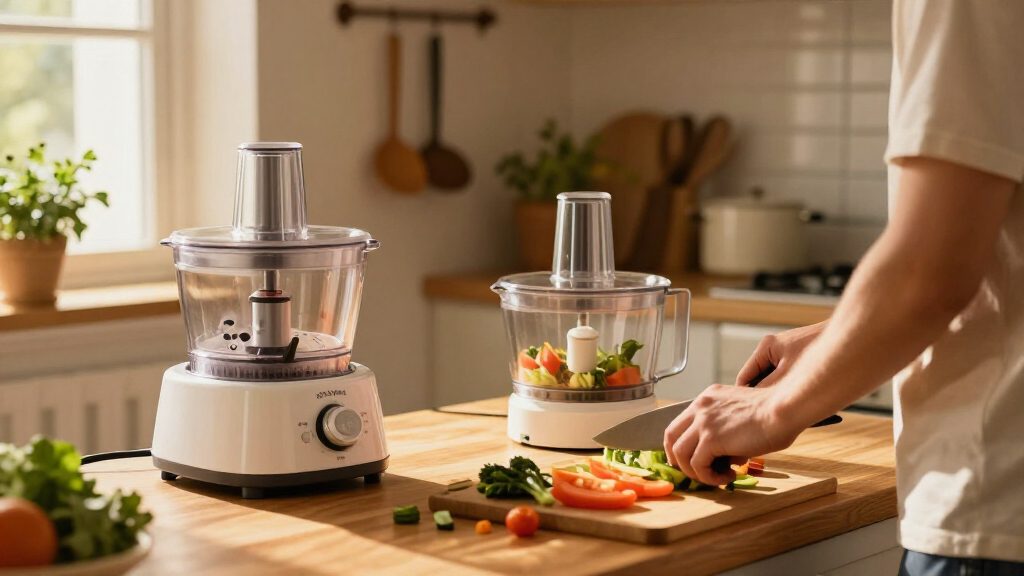
I ranked these 12 models on four buyer-facing criteria rather than spec sheets alone. Processing consistency came first: a kitchen food processor exists to chop evenly, slice without ragged edges, and shred cheese without turning it to powder, so models with stable blades and well-designed feed tubes scored highest. Capacity and power balance came second — a huge bowl with a weak motor, or a strong motor trapped in a tiny bowl, both frustrate real cooks. Third, I weighed usability and cleanup: how many parts come apart, whether they’re dishwasher-safe, and how forgiving the assembly is. Finally, I judged value retention — warranty length, build materials, and whether the price matches what the machine actually does well.
The ranking logic follows a clear ladder. Full-capacity, versatile machines sit at the top because they serve the most buyers. Mid-tier picks earn their spots by doing one or two jobs exceptionally — dough kneading, budget chopping, beginner-friendly assembly. Small-capacity minis rank lower not because they’re bad, but because they serve narrow jobs; a 3-cup chopper is a supplement to a kitchen, not its workhorse.
Factors to Consider When Choosing Kitchen Food Processor
Before clicking buy on any kitchen food processor, a few category-wide realities will shape whether you end up loving the machine or leaving it in a cabinet.Bowl Size: Buy for Your Real Batch, Not Your Dream Batch
The most common mistake in this category is buying a bowl that’s too small for how you actually cook. A 3-cup or 5-cup mini handles a single onion, a handful of nuts, or baby food beautifully — but attempt a double batch of salsa or shredding cheese for enchiladas and you’ll be working in three rounds with cleanup between each. An 8-to-10-cup bowl is the practical floor for family cooking, and 12-to-14 cups earns its footprint only if you meal prep or entertain. One counterintuitive point: a bigger bowl performs worse on tiny jobs, because small amounts of food spin around under the blade without making contact. Households that do both extremes often end up happier with a large processor plus a $25 mini than one compromise machine.
Wattage Matters — But Only Up to a Point
Motor power is the most abused marketing number in this category. Yes, 1800-watt Ninja machines pulverize ice and frozen fruit faster than a 450-watt BLACK+DECKER, but for the core jobs of chopping vegetables and shredding cheese, anything above roughly 700 watts delivers diminishing returns. Below that line, you notice it: soft foods turn to paste while the motor labors. Where extra power genuinely pays off is dough kneading and frozen ingredients — if bread or smoothie bowls are on your weekly rotation, spend for the wattage. If you’re a chop-and-shred cook, a mid-range motor with good blade geometry beats a powerful motor with sloppy blades every time, which is exactly why the 720-watt Cuisinart outranks several higher-wattage models in this lineup.
Attachment Systems: The Hidden Frustration Factor
Every food processor here has a locking mechanism between bowl, lid, and base, and the differences show up on the third use, not the first. Traditional twist-lock systems like Cuisinart’s require the bowl and lid to align precisely or the machine refuses to start — safe, but maddening when you’re in a hurry. Hamilton Beach’s Stack & Snap approach eliminates the alignment puzzle entirely, which is why it dominates beginner recommendations. Also count the parts before you buy: models with reversible slicing/shredding discs store flat and clean in minutes, while systems with five or six specialized attachments tend to spend their lives scattered in a drawer. Fewer, well-designed attachments almost always beat an attachment arsenal.
Food Processor vs. Blender Hybrid: What Are You Actually Buying?
Three entries in this roundup — the Ninja TB401, BL770, and to a degree the BN601 — blur the line between blender and food processor, and that hybrid design is a genuine tradeoff, not a free upgrade. Blenders need narrow, angled jars with liquid vortex; processors need wide, flat bowls with dry ingredients. Hybrid machines handle both adequately rather than excellently: their processing bowls typically run smaller, their slicing discs are less refined, and dough performance lags dedicated machines. The hybrid makes sense when counter space or budget forces one appliance to do everything. If you already own a decent blender, a dedicated processor like the Cuisinart or Hamilton Beach will out-chop any hybrid at the same price.
Cleanup, Seams, and Why You’ll Actually Use It
The best predictor of whether a food processor gets used after month two is cleanup effort. Look for dishwasher-safe bowls and blades, minimal crevices where pesto can hide, and a feed tube you can scrub without a specialty brush. Sealed one-piece lids clean faster but can trap moisture; multi-piece pushers come apart for washing but are the first part to vanish. Blade design matters too: serrated blades shred soft cheese cleanly but snag sponges during washing. My practical advice is to hand-wash blades immediately and machine-wash everything else — dull blades are the number one reason people conclude their processor ‘stopped working well’ when the motor is fine.
Price Tiers and When to Pay More
This category has three honest price bands. Under $40 buys a competent chopper — the BLACK+DECKER 8-cup and Cuisinart minis live here and are worth it for light duty, but expect thinner plastic and shorter warranties. The $60–$160 band is the sweet spot, where the Hamilton Beach 10-cup, KitchenAid 7-cup, and Ninja BN601 deliver 90% of premium performance. Above $200, you’re paying for blending integration, extra capacity, or brand-name build quality, and only specific buyers — smoothie households, bulk meal preppers — get that money back. A common mistake is assuming price predicts durability; mid-tier models from Cuisinart and Hamilton Beach routinely outlast flashier machines because their simpler mechanisms have fewer failure points.
Frequently Asked Questions
Is a higher wattage food processor always better?
No, and it’s the most misleading number on the box. A 1800-watt motor matters for crushing ice, blending frozen fruit, and kneading stiff dough, but ordinary chopping and shredding jobs are finished well before a 450-to-700-watt motor breaks a sweat. What matters more at moderate power is blade sharpness, bowl geometry, and how securely the disc sits — a sharp blade in a 600-watt machine will out-chop a dull one in a 1500-watt machine. If you never make dough or frozen drinks, paying extra for wattage mostly buys noise, not results. That said, dip below roughly 450 watts and soft vegetables do start turning to paste before they chop evenly.
Can a food processor replace my blender?
For dry and semi-dry jobs, yes — a processor chops, shreds, slices, and makes pesto or hummus better than most blenders. For liquids, no: a food processor’s flat bowl and center blade create splashing rather than the vortex a blender’s narrow jar produces, so smoothies, soups, and purees come out coarser. This is exactly the gap the Ninja TB401 and BL770 target by including both a blender pitcher and a processing bowl on one base. If counter space forces a single appliance and you drink smoothies weekly, a hybrid makes sense. If you already own a blender you like, a dedicated processor will serve you better at every price point.
What size bowl do I actually need for everyday cooking?
For one or two people doing basic chopping, 7 to 8 cups is genuinely sufficient — the KitchenAid 7-cup and BLACK+DECKER 8-cup handle an onion, a carrot grind, or a batch of breadcrumbs without waste. Families of four or anyone who meal preps should start at 10 cups, which fits a full cabbage for slaw or cheese for a casserole in one pass. The 12-to-14-cup tier only pays off for batch cooking, entertaining, or doubling recipes; otherwise you’re storing a bulky bowl and running small jobs inefficiently, since tiny amounts of food spin beneath the blade without contact. A useful rule: your most common recipe’s largest ingredient should fill the bowl at least a quarter full.
Why won’t my food processor start, and is it broken?
Almost always, it’s the safety interlock, not the motor. Every model here requires the bowl to lock onto the base and the lid to lock onto the bowl in the correct alignment before the motor will engage — Cuisinart and KitchenAid are especially strict about this. Disassemble everything, reload the bowl with the handle at the alignment mark, twist the lid until it clicks audibly, and try again. If the lid tabs or bowl locking tabs have cracked from a drop, the machine will permanently refuse to start even though the motor is fine, and replacement bowls are usually cheaper than a new unit. Genuine motor failure is rare in the first several years of any model in this lineup.
Are cheap food processors under $50 worth buying?
Yes, if you match them to realistic expectations. The BLACK+DECKER 8-cup and Cuisinart 3-cup minis are honest machines for light chopping, small batches of garlic or nuts, and occasional salsa — they just won’t shred a bag of cheese gracefully or last a decade of weekly use. Where cheap models cut corners is blade sharpness out of the box, thinner bowls that stain and crack, and shorter warranties, so treat them as task-specific tools rather than all-purpose workhorses. The smarter play for tight budgets is the Hamilton Beach 10-cup at slightly more money, which delivers mid-tier performance at entry price. The genuinely bad zone is mid-priced models with weak motors and big promises — mediocre at everything is worse than cheap and honest.
Conclusion
The right pick here depends less on specs and more on what your kitchen actually demands. For best overall, the Cuisinart 14-Cup 720W is the machine I’d put in most homes — big enough for batch cooking, precise enough for slicing, and built to outlast trendier competitors. The Hamilton Beach 10-Cup takes best value, matching machines twice its price on everyday chopping while winning on assembly simplicity. For beginners, the Hamilton Beach 12-Cup Stack & Snap removes every frustration that makes people abandon food processors, and the BLACK+DECKER 8-Cup is the gentlest possible entry point under $40.
Best premium goes to the Ninja Kitchen System TB401, whose BlendSense technology and 1800 watts justify the spend for smoothie-and-soup households that also want real processing power. For specific needs: the Ninja PrecisionPro BZ601 is the pick for bread bakers on a budget, the Cuisinart 3-Cup mini for herbs, nuts, and tiny kitchens, and the BL770 for anyone who wants one base to do everything. Whatever you choose, match the bowl to your real batch size and the wattage to your dough and frozen habits — that single decision eliminates most buyer’s remorse in this category.
Fall Picks
fall essentials
As an affiliate, we earn on qualifying purchases.