Turning leftovers into quick, tasty new meals is easy and rewarding. Start by evaluating what’s in your fridge—like cooked rice, chicken, and vegetables—and think about flavor pairings. Add simple ingredients like cheese, herbs, or lemon to create dishes like wraps, stir-fries, or salads. Proper storage and reheating ensure safety and flavor. Keep exploring for creative ideas to transform yesterday’s meals into exciting, satisfying dishes in no time.
Key Takeaways
- Assess fridge leftovers like cooked rice, vegetables, and meats to plan versatile, flavorful new dishes.
- Combine ingredients sharing flavors or textures, such as chicken and vegetables, for cohesive meals.
- Enhance leftovers with simple additions like cheese, herbs, or sauces to elevate taste quickly.
- Transform roasted vegetables into soups, spreads, or sandwich fillings for variety.
- Store leftovers in airtight containers, reheat safely, and get creative with quick, tasty makeovers.
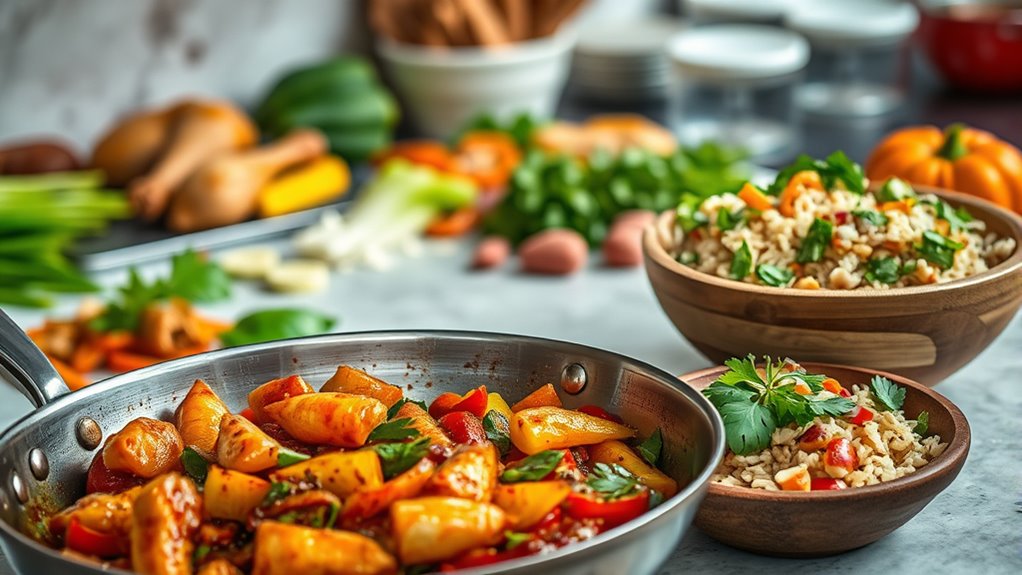
Ever wondered how to turn yesterday’s leftovers into exciting new meals? It’s easier than you think, especially when you understand some simple strategies like meal pairing and storage tips. The key is to get creative with what you already have, transforming plain leftovers into fresh, flavorful dishes that feel new and satisfying. Start by evaluating what’s in your fridge—whether it’s roasted chicken, cooked rice, or roasted vegetables—and think about complementary ingredients that can elevate those flavors. For example, leftover grilled chicken can become the filling for a tasty wrap or be tossed into a vibrant stir-fry with some fresh vegetables and a splash of soy sauce. When you’re planning to repurpose leftovers, consider meal pairing to create harmony in your dish. Pairing ingredients that share common flavors or textures ensures your new meal feels intentional and balanced. A handful of shredded cheese, a squeeze of lemon, or a sprinkle of herbs can tie everything together effortlessly. Incorporating proper storage techniques helps keep your leftovers fresh and safe to eat, preserving their flavor and quality. Storage tips are equally important, as they help keep your leftovers fresh and safe to eat. Always store leftovers in airtight containers and label them with the date they were cooked. This way, you avoid confusion and reduce food waste. Make sure to refrigerate leftovers promptly—ideally within two hours of cooking—to prevent bacteria growth. When reheating, ensure the dish reaches a safe internal temperature, usually 165°F (74°C), to kill any lingering bacteria. Proper storage and reheating techniques preserve flavor and quality, making your leftover makeover not only quick but also safe and delicious. You can also get inventive with sauces, spices, and toppings to give leftovers a new twist. A dollop of sour cream or a drizzle of hot sauce can turn a bland dish into something exciting. If you have pasta leftovers, toss them with fresh vegetables, olive oil, garlic, and a sprinkle of Parmesan cheese for a quick pasta salad. For roasted vegetables, consider blending them into a hearty soup or spreading them on a sandwich with some fresh greens and a spread of hummus or mustard. The goal is to see your leftovers as a blank canvas, ready for a quick transformation. With a little planning—keeping storage tips in mind—and thoughtful meal pairing, you can turn yesterday’s meals into fresh, vibrant creations. It saves you time, reduces waste, and keeps your meals exciting. Next time you face leftover blues, remember these simple tricks and give your leftovers a second life that’s just as tasty as a freshly made dish.
Frequently Asked Questions
How Long Can Leftovers Be Stored Safely?
You can typically store leftovers safely for 3 to 4 days, but always prioritize food safety. Keep leftovers in airtight containers and refrigerate promptly to prevent bacteria growth. If you’re unsure about the storage duration, check for any signs of spoilage like off smells or mold. For longer storage, consider freezing leftovers, which can extend their safety and quality for up to 3 months.
Are There Foods That Shouldn’t Be Repurposed?
Think of some foods as fragile treasures that shouldn’t be repurposed. You shouldn’t reuse cooked seafood, rice, or eggs because they’re prone to bacteria growth, risking food safety. These items spoil quickly and can cause illness if mishandled. To prevent spoilage, always prioritize freshness and proper storage, and avoid reusing foods that show signs of spoilage or have been left out too long. Your health depends on respecting these boundaries.
Can Leftovers Be Frozen for Later Use?
Yes, leftovers can be frozen for later use. Use proper freezing techniques like airtight storage containers or heavy-duty freezer bags to prevent freezer burn and maintain freshness. Label the containers with dates to track storage time. Make sure to cool leftovers completely before freezing, and leave some space for expansion. Properly stored, most leftovers stay good for 3-4 months, making them easy to reheat and enjoy later.
What’s the Best Way to Reheat Leftovers?
Did you know that improper reheating can cause foodborne illnesses? To reheat leftovers safely, use microwave tips like stirring halfway through and covering the dish to guarantee even heating. Always check that the internal temperature reaches 165°F for reheating safety. For best results, reheat in small portions to prevent overcooking and preserve flavor. This way, you keep your leftovers tasty and safe to enjoy!
How Can I Prevent Leftovers From Spoiling?
To prevent leftovers from spoiling, you should practice proper food storage. Wrap leftovers tightly in airtight containers or aluminum foil, and store them in the refrigerator within two hours of cooking. Keep your fridge at 40°F (4°C) or lower to slow spoilage. Label leftovers with dates, and consume them within 3-4 days. These steps help guarantee freshness and minimize spoilage, keeping your food safe to enjoy later.
Conclusion
Now, with these quick makeover ideas, your leftovers become more than just reheated meals—they’re opportunities for creativity and flavor. Don’t let your culinary efforts go to waste; instead, turn yesterday’s leftovers into tomorrow’s delicious surprise. After all, isn’t it wonderful how a little imagination can transform the ordinary into the extraordinary? So, next time you face leftovers, remember: you hold the power to turn simple scraps into a feast worth celebrating.