
During winter, incorporating superfoods like kale, sweet potatoes, and Brussels sprouts can markedly boost your immunity and overall health. These seasonal ingredients are packed with antioxidants, vitamins, like C and A, and fiber that help fight off colds and flu. They also support your energy and recovery during colder months. Using these nutrient-rich foods in your meals not only enhances flavor but also helps you stay healthy all season long. Keep exploring to discover delicious ways to include them in your diet.
Key Takeaways
- Incorporate seasonal vegetables like kale, Brussels sprouts, and sweet potatoes rich in antioxidants, vitamins, and fiber to strengthen immunity.
- Use winter superfoods in hearty soups, roasted sides, and mashings to boost nutritional value and seasonal flavor.
- Maintain active outdoor habits such as brisk walks and snowshoeing to support circulation and overall wellness during cold months.
- Nourish your body with nutrient-dense foods that provide steady energy and aid recovery from winter activities.
- Enhance holiday dishes with seasonal ingredients to promote immune health and satisfy seasonal cravings.
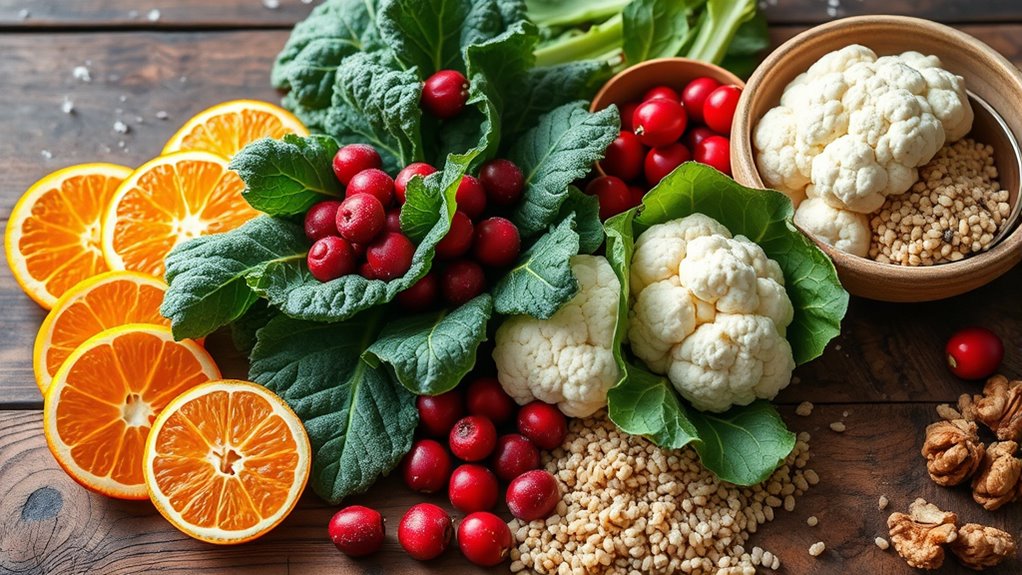
Have you ever wondered which foods can keep you healthy during the coldest months? Winter is a time when your immune system needs extra support, and choosing the right seasonal ingredients makes a big difference. Winter superfoods are packed with nutrients that help boost your immunity and keep your energy levels steady. They also lend themselves well to comforting dishes, especially during the holidays when holiday comfort foods often revolve around hearty, warming meals. Incorporating these seasonal ingredients into your diet can elevate your health while satisfying your craving for cozy, satisfying dishes.
Many winter superfoods like kale, Brussels sprouts, and sweet potatoes are rich in antioxidants, vitamins, and fiber. These nutrients help fight off colds and flu, keeping you healthier throughout the season. For example, kale is loaded with vitamin C and calcium, supporting your immune function and bone health. Sweet potatoes are a fantastic source of beta-carotene, which your body converts into vitamin A to help maintain your skin and mucous membranes, essential barriers against illness. When preparing holiday comfort foods, consider roasting Brussels sprouts with a drizzle of olive oil and garlic or mashing sweet potatoes with a sprinkle of cinnamon for a nutritious twist on classic dishes.
Winter superfoods like kale, Brussels sprouts, and sweet potatoes boost immunity with antioxidants, vitamins, and fiber.
Staying active during colder months is key, and cold weather exercise tips can help keep you motivated. Layering your clothing, warming up properly, and choosing outdoor activities like brisk walking or snowshoeing can make exercise enjoyable despite the chill. Incorporate these activities into your routine to boost circulation and energy levels, which are often lower in winter. Eating nutrient-dense winter superfoods can also support your workouts by providing steady energy and speedy recovery.
The combination of nourishing foods and active habits creates a powerful approach to winter wellness. Think of hearty soups loaded with vegetables and lean proteins, or stir-fries packed with winter greens, as both comfort foods and health boosters. These dishes are satisfying without being overly indulgent, helping you enjoy the season without sacrificing your health. Plus, they’re versatile—you can customize them with your favorite seasonal ingredients.
Frequently Asked Questions
Can Winter Superfoods Help With Seasonal Affective Disorder?
Yes, winter superfoods can help with seasonal affective disorder by boosting your mood and increasing vitamin D levels. Many winter superfoods, like fatty fish, eggs, and fortified foods, are rich in vitamin D, which supports mood enhancement. Incorporating these into your diet may help combat feelings of depression and improve overall well-being during darker months. Eating a variety of seasonal ingredients guarantees you get essential nutrients to stay balanced.
Are Winter Superfoods Suitable for All Dietary Restrictions?
Winter superfoods can suit most dietary restrictions, with about 20% of people worldwide avoiding gluten or animal products. You’ll find many gluten-free options like sweet potatoes and kale, along with vegan-friendly choices such as chia seeds and citrus fruits. These foods not only fit your needs but also pack essential nutrients. So, yes, winter superfoods are versatile and accessible, helping you stay healthy regardless of your dietary restrictions.
How Can I Incorporate Winter Superfoods Into Everyday Meals?
You can easily incorporate winter superfoods into your daily meals by adding them to smoothie recipes or planning meal prep ideas. Toss kale or Brussels sprouts into your morning smoothie for extra nutrients, or roast root vegetables to enjoy throughout the week. These versatile ingredients boost your health and make meal prepping more efficient, ensuring you get the benefits of winter superfoods every day.
Do Winter Superfoods Have Any Specific Cooking Tips?
To maximize the flavor of winter superfoods, focus on gentle cooking techniques like roasting, steaming, or sautéing, which preserve nutrients. Pair them with complementary ingredients like citrus, garlic, or herbs to enhance their natural taste. Don’t forget to experiment with seasoning and textures—adding crunch or creaminess can elevate your dishes. These tips help you enjoy the best flavors and benefits of winter superfoods in every meal.
Are There Any Superfoods to Avoid During Winter?
You should be cautious with certain winter fruits, as some may pose warnings like potential winter fruit allergies or spoil quickly. Avoid superfoods with known allergy risks and always check for freshness. If you’re prone to allergies, consult your doctor before adding new superfoods. While winter offers nutritious options, staying mindful of winter fruit warnings helps you enjoy superfoods safely and maximize their health benefits during the colder months.
Conclusion
Now that you know the winter superfoods, think of them as your seasonal armor—protecting you like a cozy blanket on a chilly day. Incorporate these nutrient-packed ingredients into your meals, and you’ll feel energized and vibrant all season long. Don’t wait for spring to boost your health; embrace winter’s bounty and give your body the nourishment it craves. Stay warm, stay healthy, and let these superfoods be your winter secret.