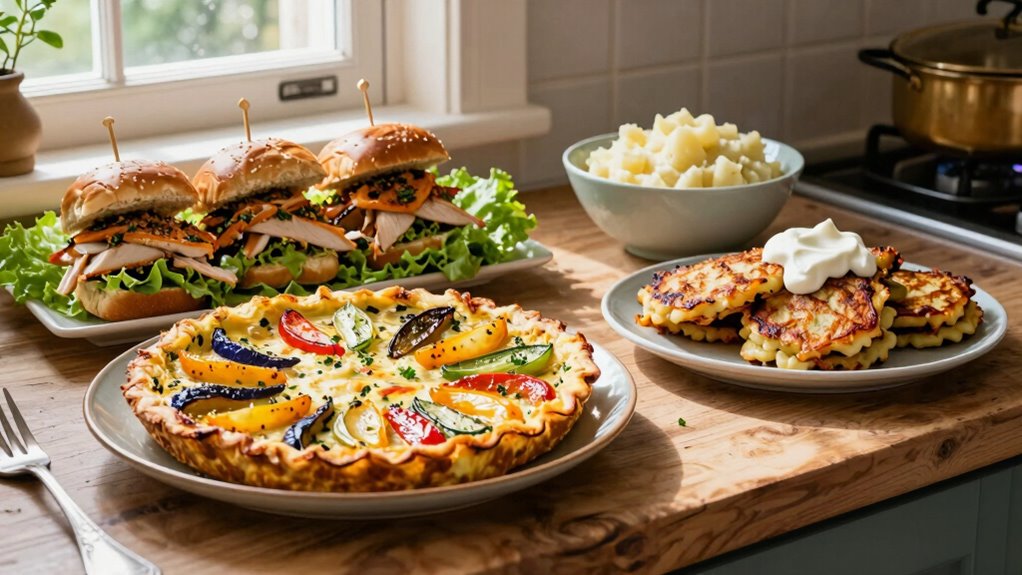

Transform your holiday leftovers into creative dishes to cut down on waste and keep the festive spirit alive. Turn turkey or ham into hearty sandwiches, salads, or grain bowls, and repurpose roasted vegetables into soups or frittatas. Get inventive with desserts by making bread puddings or trifles from holiday cookies. Embracing these ideas helps you enjoy your favorites while practicing sustainability. Keep exploring for more inspired ways to reinvent your leftovers and extend the joy of your celebration.
Key Takeaways
- Transform leftover meats into hearty sandwiches, wraps, or grain bowls to maximize ingredient use and minimize waste.
- Repurpose roasted vegetables into soups, stews, or frittatas to extend their flavor and reduce leftovers.
- Reinvent holiday desserts as bread pudding, trifles, or layered parfaits to savor treats without waste.
- Embrace sustainable practices by using energy-efficient appliances and creative recipes to reduce environmental impact.
- Create new, exciting meals from leftovers to prevent spoilage, honor traditions, and promote mindful, eco-friendly consumption.
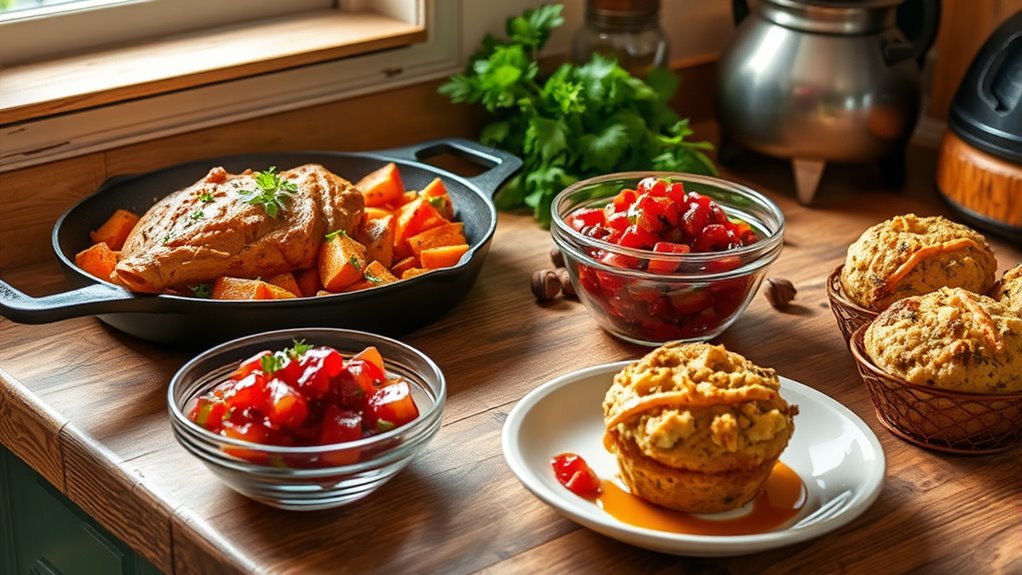
After the holiday feast, leftovers often end up in the back of the fridge, but they don’t have to be boring or wasted. Instead, you can transform those remnants into exciting new meals that honor your festive traditions while embracing sustainable practices. Think of leftovers not as mere scraps but as ingredients with potential—ready to inspire your next culinary creation. By doing so, you reduce waste and make the most of what you’ve already prepared, all while keeping the spirit of the holiday alive through inventive dishes.
One effective way to reinvent holiday leftovers is to turn turkey or ham into hearty sandwiches or wraps. Layer slices of meat with fresh greens, a smear of mustard or cranberry sauce, and wrap it all up in a tortilla or bread. It’s a quick, satisfying meal that uses what you already have, preventing leftovers from languishing in the fridge. You can also dice the meat and add it to salads or grain bowls, pairing it with roasted vegetables or quinoa for a nutritious, filling lunch. These practices align with sustainable principles by minimizing waste and maximizing the use of ingredients you’ve already purchased.
Turn holiday meats into hearty wraps and salads, reducing waste and savoring festive flavors creatively.
Vegetables from your holiday table, like roasted squash, Brussels sprouts, or candied carrots, can be repurposed into soups, stews, or casseroles. Puree roasted vegetables with broth for a velvety soup, or toss them into a skillet with some eggs for a frittata. These options not only cut down on food waste but also preserve the festive spirit by incorporating familiar flavors into new formats. Plus, making a big batch of soup or stew allows you to enjoy the holiday flavors days after the celebration, extending your festive traditions.
Desserts can also get a creative twist with leftovers. If you have holiday cookies or cakes, consider turning them into bread pudding or trifle. Crumbled cookies layered with whipped cream and fruit make for a delightful, resourceful dessert, reducing the need to toss crumbs and scraps. This approach keeps your holiday traditions alive while practicing sustainability—using what you have instead of tossing it out.
In the end, reinventing holiday leftovers isn’t just about saving food; it’s about embracing a mindset of mindful consumption and sustainability. You honor your traditions by keeping their flavors alive, but you also respect the environment by reducing waste. With a little creativity, your leftover bounty can become a fresh, exciting part of your holiday season, proving that sustainable practices and festive traditions can go hand in hand. Incorporating energy-efficient appliances in your kitchen can further support sustainable cooking habits and reduce your environmental impact.
Frequently Asked Questions
How Can I Store Leftovers to Maximize Freshness?
To maximize freshness, you should follow food storage tips like using airtight containers and labeling leftovers with dates. Store hot leftovers in shallow containers to cool quickly, and keep them in the fridge at or below 40°F. For longer preservation, freeze leftovers in freezer-safe bags or containers. Proper storage helps preserve flavor and texture, ensuring your leftovers stay fresh and tasty for later use.
What Are Some Budget-Friendly Leftover Recipe Ideas?
You can turn leftovers into budget-friendly meals by doing some simple meal prep and ingredient swaps. Use leftover turkey or ham in quesadillas or pasta dishes, or transform roasted veggies into hearty soups. Incorporate affordable staples like rice or beans to stretch your leftovers further. These quick ideas help you save money, reduce waste, and enjoy delicious, creative meals without extra cost.
How Long Can Leftovers Safely Be Kept?
Like a wise owl guarding its treasures, you should consume leftovers within 3 to 4 days for food safety. Proper storage tips include storing leftovers in airtight containers and keeping your fridge at 40°F (4°C). If leftovers sit longer, bacteria may grow, risking health. Always reheat thoroughly and trust your senses—if it smells or looks off, discard it to keep your meals safe and fresh.
Are There Specific Leftovers That Shouldn’T Be Reused?
Some leftovers shouldn’t be reused due to food safety concerns and spoilage prevention. Avoid reusing cooked rice, seafood, and creamy dishes like mayonnaise-based salads, as they harbor bacteria that can cause illness even after reheating. Also, discard any leftovers that develop an off smell, slimy texture, or mold. Always refrigerate leftovers promptly and consume them within safe timeframes to prevent spoilage and make sure you’re eating safely.
How Can I Involve Children in Leftover Cooking?
Getting kids involved in leftover cooking is like opening a treasure chest—fun and rewarding! You can involve children by choosing kid-friendly recipes that let them measure, mix, or decorate. Encourage their creativity with simple dishes like mini quesadillas or fun salads. Their participation not only makes mealtime exciting but also teaches them about reducing food waste. Plus, they’ll be proud to help turn leftovers into delicious, new creations!
Conclusion
Now that you’ve discovered how to turn holiday leftovers into delicious new dishes, it’s time to put these ideas into action. Don’t let good food go to waste—think of it as hitting two birds with one stone: saving money and reducing waste. With a little creativity, you’ll find that leftovers can be a blank canvas for tasty, satisfying meals. So, roll up your sleeves and make the most of what’s on hand!