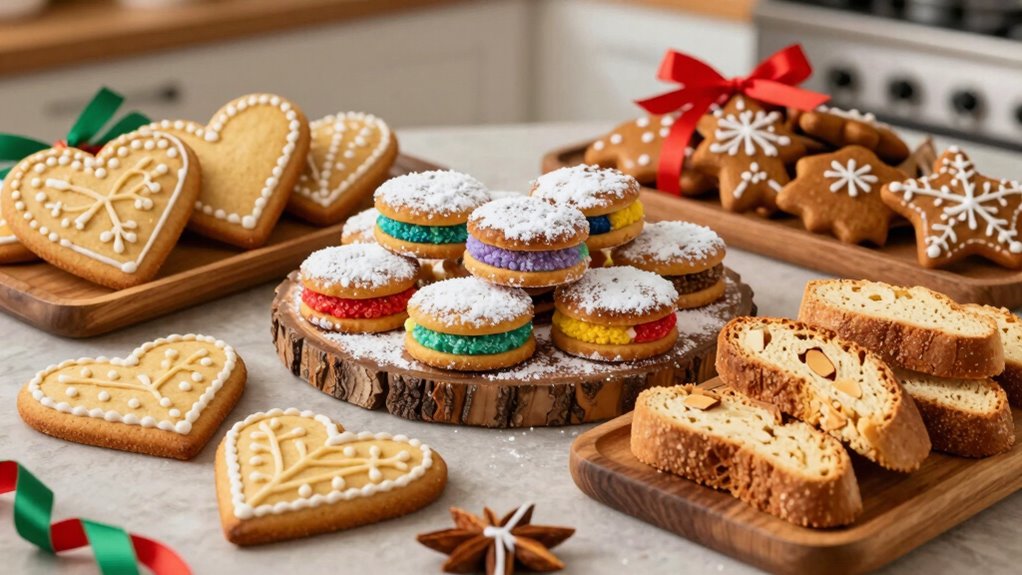

Around the world, holiday baking reflects rich cultural traditions, from German stollen and Italian panettone to Mexican buñuelos and Swedish spritz cookies. These treats often symbolize celebration, togetherness, and history, passed down through generations. Baking techniques and regional ingredients shape unique flavors and designs, making each country’s customs special. If you want to discover more about these festive sweets and their fascinating stories, you’ll find plenty of delightful details to explore.
Key Takeaways
- Different cultures have unique holiday cookies and treats, such as Italian biscotti, German stollen, and Mexican buñuelos.
- Traditional recipes and baking techniques are passed down through generations, reflecting regional influences.
- Festive treats like gingerbread houses symbolize holiday cheer and represent craftsmanship and cultural heritage.
- Baking during holidays fosters family bonding and preserves cultural customs around the world.
- Innovations in baking tools and methods have enriched the variety and complexity of holiday confections globally.
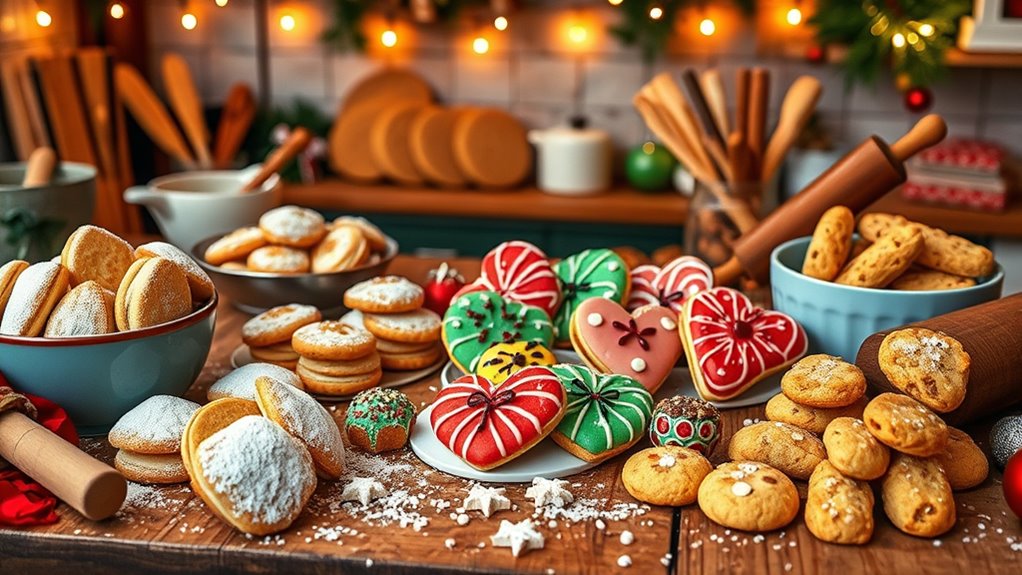
Have you ever wondered why certain baked treats become essential parts of holiday celebrations? It’s because they carry stories, traditions, and a sense of togetherness that spans generations. Take gingerbread houses, for example. These intricate edible creations have become a symbol of Christmas cheer, but their origins date back centuries. Originally, gingerbread was a delicacy enjoyed in medieval Europe, often shaped into figures or decorated elaborately. Over time, bakers began crafting gingerbread into the form of houses, inspired by fairy tales and legends. Today, building gingerbread houses is a cherished holiday activity, bringing families and friends together to decorate and share in the joy of creation. These treats aren’t just festive; they’re a tribute to craftsmanship and tradition, passed down through generations. The history of baking techniques also highlights how craftsmanship and cultural influences shaped these iconic treats. Additionally, the cultural significance of holiday foods underscores how recipes and customs evolve while maintaining their symbolic meaning. Exploring the evolution of recipes reveals how influences from different regions and eras have enriched holiday baking traditions. Furthermore, the development of baking tools has played a crucial role in enabling bakers to create more elaborate and precise holiday confections.
Frequently Asked Questions
What Are the Origins of Popular Holiday Cookie Recipes?
You can trace the origins of popular holiday cookie recipes to centuries-old traditions, often shaped by regional ingredients and cultural influences. Cookie shapes, like stars or bells, reflect local symbolism, while ingredient substitutions, such as honey instead of sugar, show adaptations to available resources. These recipes evolved through generations, blending history and creativity, making each cookie a tasty story of cultural exchange and holiday cheer.
How Do Baking Traditions Vary Between Different Cultures?
You’ll notice that baking traditions vary widely across cultures, reflecting unique cultural flavor profiles and baking etiquette customs. In some places, you might use specific spices or ingredients tied to local history, while others follow strict etiquette customs for sharing and presenting treats. These differences add richness to holiday baking, allowing you to explore new flavors and customs, making your celebrations truly special and culturally meaningful.
What Are Some Common Ingredients Used Worldwide in Holiday Treats?
Imagine a world where sugar alternatives and allergen considerations unite to create sweet harmony. You’ll find common ingredients like sugar, flour, eggs, and butter in holiday treats worldwide. Spices like cinnamon and nutmeg add warmth, while nuts and dried fruits bring richness. You adapt recipes to meet dietary needs by using sugar substitutes and allergen-friendly options, ensuring everyone can enjoy the festive joy. These ingredients connect us all in celebration.
Are There Specific Utensils or Tools Unique to Certain Countries’ Baking?
You’ll discover that regional pastry tools and cultural baking implements vary widely across countries. For example, you might use a French pâtisserie mold for intricate shapes, while Italians often rely on specialized pasta cutters for their festive cookies. In Japan, bamboo whisks are common for preparing traditional sweets. These unique utensils enhance authenticity and facilitate specific techniques, making each country’s treats distinct and culturally rich.
How Have Modern Baking Techniques Influenced Traditional Holiday Recipes?
Modern baking techniques, like mastering sourdough starters and embracing gluten-free baking, profoundly shape traditional holiday recipes. You now experiment more, blending bold flavors with improved textures, making treats more tempting and inclusive. These innovations inspire inventive interpretations, allowing you to adapt cherished classics for diverse diets. As a result, your holiday baking becomes a harmonious harmony of heritage and modern mastery, creating cookies and treats that delight everyone’s palate.
Conclusion
As you bake, remember you’re weaving a tapestry of traditions, each cookie telling a story from around the world. Imagine your kitchen as a bustling market, filled with the aroma of spices and sweetness, connecting you to generations past. Just like a family recipe passed down, your treats become a symbol of love and unity, transforming your holiday celebration into a delicious journey across cultures. Keep baking—your tradition is creating memories that will last for years to come.