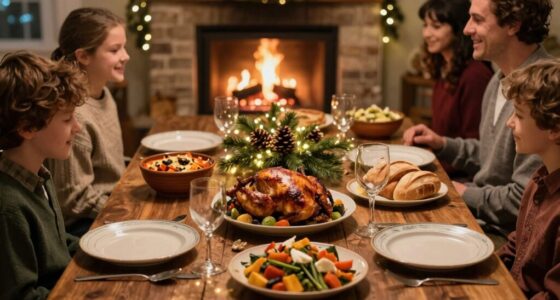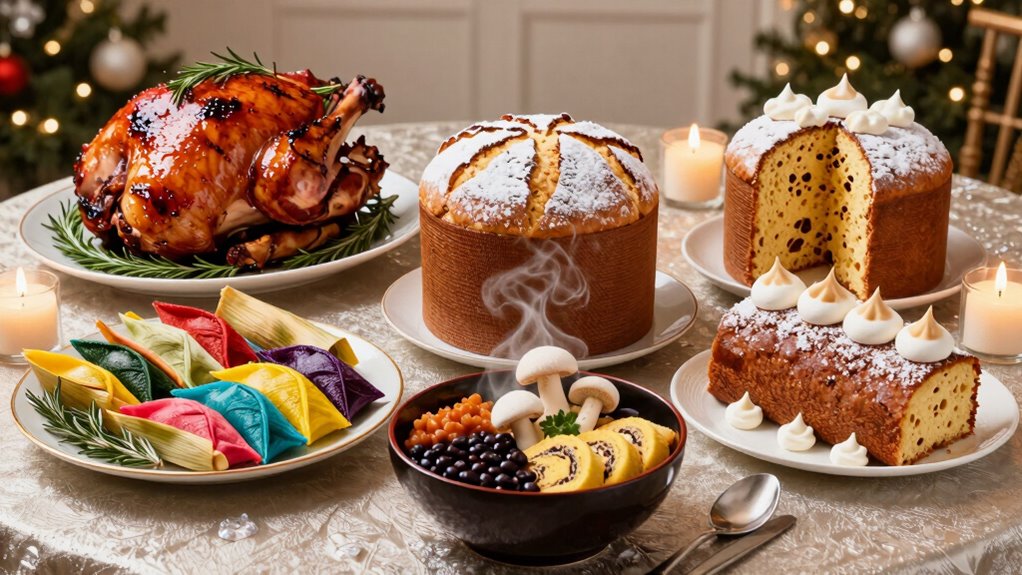

Explore festive dishes from around the world and discover how different cultures celebrate Christmas. You might try Germany’s roasted goose or duck with red cabbage, Mexico’s flavorful tamales, the Philippines’ whole roasted lechon, Sweden’s warm spiced glögg, or Latin America’s crispy buñuelos. Each dish reflects local traditions, history, and community spirit. By exploring these colorful flavors, you gain a deeper understanding of holiday customs worldwide—keep going to uncover even more delicious traditions.
Key Takeaways
- Explore traditional European dishes like German roasted goose or Swedish glögg to experience festive flavors rooted in history.
- Try Latin American favorites such as tamales and buñuelos to enjoy vibrant, spice-infused holiday treats.
- Savor Filipino specialties like lechon and rice cakes to celebrate communal feasts and cultural heritage.
- Understand how holiday dishes reflect each country’s history, climate, and values, enriching your festive experience.
- Embrace international cuisines during Christmas to connect with diverse traditions and enhance the holiday celebration.
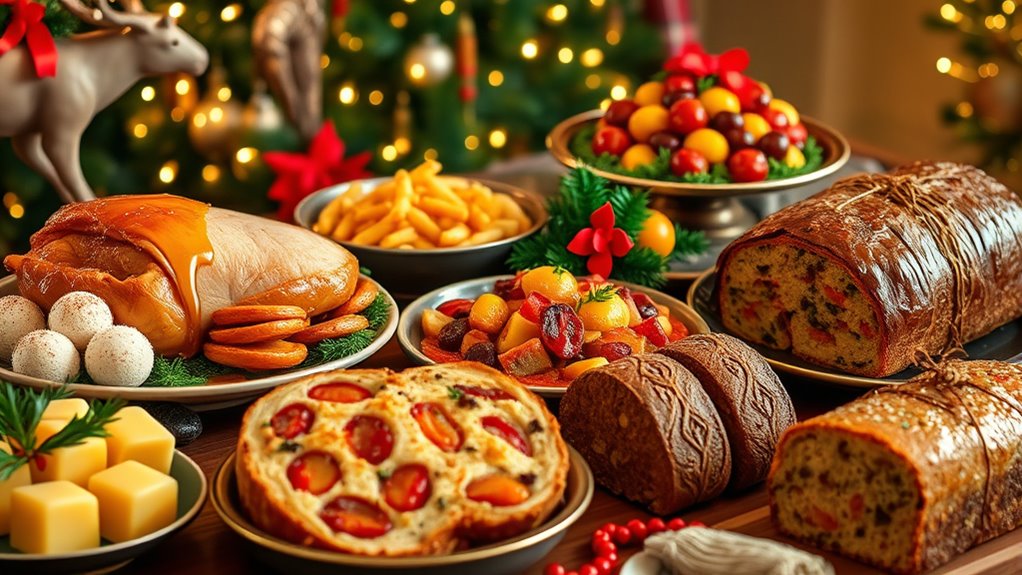
Have you ever wondered how Christmas is celebrated differently around the world? Every country brings its own unique holiday traditions and dishes to the table, creating a vibrant tapestry of festive flavors. When you explore these cultural differences, you get a glimpse of how deeply food is intertwined with holiday cheer. From sweet pastries to savory roasts, each nation’s cuisine reflects its history, climate, and values, making the holiday season a delicious educational journey.
In many European countries, like Germany and Sweden, Christmas meals are rooted in centuries-old holiday traditions. Germans often enjoy a hearty feast featuring roasted goose or duck, accompanied by red cabbage and potato dumplings. Swedish families might indulge in glögg, a warm spiced wine, and serve traditional dishes like ham with pickled vegetables. These meals are more than just food; they’re symbols of family, heritage, and community. Sharing these holiday dishes helps keep traditions alive, even as modern influences blend into the celebrations.
Across the Atlantic, in Mexico and Central America, Christmas festivities are infused with vibrant flavors. Mexican cuisine offers a variety of holiday treats like tamales, which are wrapped in corn husks and filled with meats, cheeses, or chilies. The sweet scents of buñuelos—crispy fritters dusted with cinnamon sugar—fill the air during Christmas Eve. These dishes are often part of Las Posadas, a tradition that reenacts Mary and Joseph’s search for shelter. The use of bold spices and colorful presentation underscores the lively spirit of these celebrations, making holiday meals a feast for both the senses and the soul.
Moving east, in Asian countries like the Philippines, Christmas is celebrated with a focus on communal gatherings and hearty dishes. Here, lechon—whole roasted pig—is a centerpiece, symbolizing abundance and togetherness. Filipinos also prepare sticky rice cakes called bibingka and puto, which are enjoyed after midnight masses. These foods showcase the influence of local ingredients and historical traditions, blending indigenous flavors with colonial influences. Sharing these dishes during Christmas not only nourishes the body but also strengthens bonds, emphasizing the importance of family and faith.
Whether you’re savoring German roast meats, Mexican tamales, or Filipino lechon, each dish reflects a deep-rooted holiday tradition and a unique take on global cuisines. Exploring these festive dishes allows you to appreciate how diverse cultures celebrate Christmas through their culinary heritage. No matter where you are, embracing these global cuisines makes the holiday season richer and more meaningful, reminding you that food is a universal language of celebration.
Frequently Asked Questions
What Are the Origins of Christmas Dishes in Different Cultures?
You might notice that Christmas dishes have diverse origins rooted in Christmas culinary history and cultural food symbolism. For example, roast meats symbolize abundance, while fruitcakes reflect fertility. These traditions evolved from ancient pagan customs, religious rituals, and regional ingredients. As you explore different cultures, you’ll see how each nation’s festive foods embody their history, beliefs, and local resources, creating a rich tapestry of seasonal culinary traditions worldwide.
How Do Regional Ingredients Influence Festive Recipes Worldwide?
Did you know that over 60% of festive recipes change based on regional produce? You can see how regional ingredients shape holiday dishes, making each one unique. When certain regional produce isn’t available, ingredient substitutions help keep traditions alive. Your local climate and agriculture influence these choices, so you get a diverse and flavorful holiday experience that reflects your environment and cultural heritage.
Are There Any Common Christmas Food Traditions Across Countries?
You’ll notice that many countries share common Christmas food traditions, like enjoying a special holiday beverage such as mulled wine or eggnog, which adds warmth and festivity. Gift-giving customs also influence festive meals, with families sharing dishes that symbolize generosity and togetherness. These traditions create a sense of unity, regardless of where you are, making the holiday season feel familiar and joyful across different cultures.
How Do Dietary Restrictions Impact Traditional Christmas Menus Globally?
Dietary restrictions substantially impact traditional Christmas menus worldwide. You might find vegan alternatives replacing meat dishes or gluten-free options offered to accommodate guests with allergies or intolerances. Hosts often adapt recipes to guarantee everyone can enjoy the celebration. This inclusivity fosters a festive atmosphere where all guests feel considered. By incorporating these options, you make the holiday meal more accessible and enjoyable for everyone, respecting diverse dietary needs.
What Are Some Unique Christmas Desserts From Lesser-Known Regions?
Discover delightful desserts from distant domains with holiday fusion and unusual ingredients. In the Philippines, try Bibingka, a baked rice cake topped with salted eggs, blending tradition and taste. In Ethiopia, enjoy Dabo Kolo, crunchy, spiced snack bites perfect for festive sharing. These unique treats showcase lesser-known regions’ rich culinary culture, inviting you to explore extraordinary flavors and celebrate Christmas with an adventurous, authentic touch.
Conclusion
As you explore these festive dishes from around the world, you’ll see how diverse and vibrant Christmas traditions are. Did you know that over 90% of Americans celebrate Christmas, often with unique regional foods? Trying these dishes not only brings new flavors to your holiday table but also connects you to different cultures’ ways of celebrating. So, why not embrace the holiday spirit by adding a global twist to your Christmas feast this year?