
To enhance your wellness routine, you’re adding recovery tools like foam rollers, massage balls, and stretching bands to ease muscle tension and boost circulation. These tools help prevent stiffness and soreness after long hours in the kitchen. Using heat packs and cold compresses can also manage discomfort effectively. Incorporating these simple techniques makes your cooking sessions more comfortable and sustainable. Keep exploring to discover how these tools can transform your wellness journey and support your overall health.
Key Takeaways
- Incorporating foam rollers and massage balls to release muscle tension and improve circulation post-cooking.
- Using heat packs and cold compresses to manage soreness and reduce inflammation.
- Implementing stretching routines and self-massage during breaks to enhance flexibility and prevent stiffness.
- Employing stretching bands to support muscle recovery and maintain flexibility throughout the cooking process.
- Regularly utilizing recovery tools to prevent injuries and promote overall muscle and circulatory health.
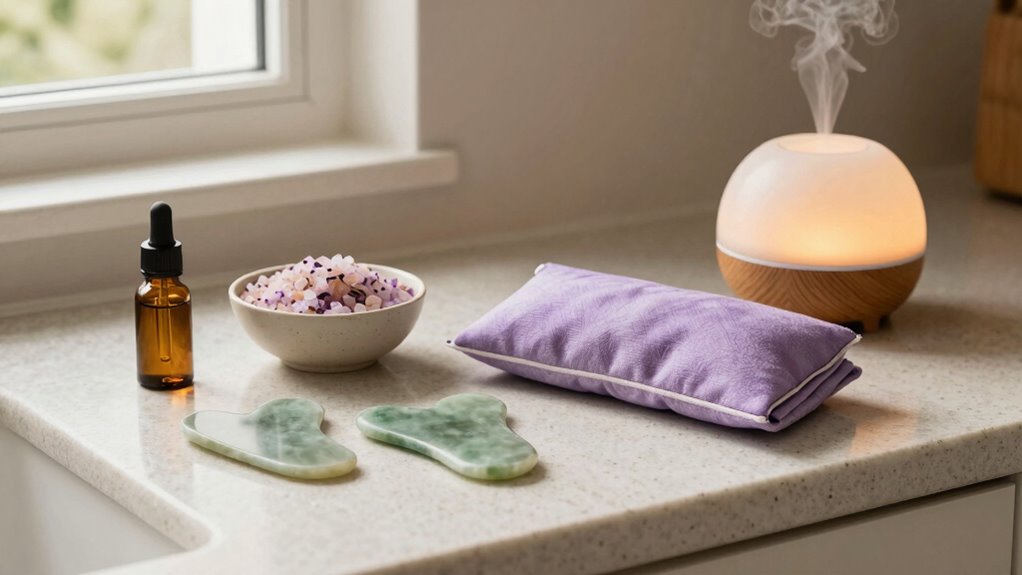
Cooking at home can be rewarding, but it often leads to physical strain and mental fatigue if you’re not careful. As a home cook, you spend hours on your feet, bending over countertops, reaching for utensils, and multitasking between chopping, stirring, and plating. Over time, these repetitive movements and awkward postures can take a toll on your body. That’s why many wellness-focused home cooks are turning to recovery tools that prioritize both physical relief and mental clarity. These tools help you maintain your energy, prevent injuries, and foster a more mindful approach to cooking.
One key aspect of recovery involves paying attention to kitchen ergonomics. You start by evaluating your workspace: ensure your countertops are at a comfortable height to avoid bending or hunching over, and use supportive mats to reduce strain on your feet and legs. Adjustable stools or chairs can give you a break from standing, especially during longer prep sessions. Incorporating ergonomic tools like anti-fatigue mats, cushioned gloves, and tools with comfortable grips can make a significant difference. These adjustments encourage better posture and reduce repetitive stress, helping you stay energized and pain-free.
Alongside ergonomic improvements, mindful eating plays an essential role in your overall wellness routine. When you’re mindful during meals, you’re more aware of your body’s hunger and fullness cues, which can prevent overeating and promote digestion. This awareness extends to your cooking process as well. Being mindful means paying attention to how you move in the kitchen, noticing when you start to feel fatigued or strained, and taking steps to rest or stretch. It’s about cultivating a sense of presence that prevents you from rushing through your tasks, which often leads to poor posture and burnout. Incorporating mindful movement can further enhance your recovery and prevent overexertion. Additionally, incorporating body awareness practices can help you identify and correct postural issues before they lead to injury. Developing a routine that includes regular stretching can also improve flexibility and reduce the risk of muscle strain.
In addition to ergonomic tools and mindful eating practices, many home cooks are adopting recovery tools like foam rollers, massage balls, and stretching bands. These help release muscle tension, improve circulation, and reduce soreness after long cooking sessions. Incorporating short stretching routines or gentle self-massage during breaks can prevent stiffness and promote recovery. Some also find that using heat packs or cold compresses on sore areas helps manage discomfort and speeds up recovery. Using recovery tools consistently can also help prevent injuries and enhance your overall comfort in the kitchen.
Ultimately, wellness recovery tools for home cooks aren’t just about fixing pain—they’re about creating a sustainable, enjoyable cooking experience. By combining kitchen ergonomics, mindful eating, and targeted recovery tools, you set yourself up for a healthier relationship with your kitchen. You’ll find that your body thanks you with increased energy, less discomfort, and a clearer mind, making every meal preparation more pleasurable and nourishing for both body and soul.

TriggerPoint Grid 1.0 Foam Roller – 13" Multi-Density Massage Roller for Deep Tissue & Muscle Recovery – Relieves Tight, Sore Muscles & Kinks, Improves Mobility & Circulation – Targets Key Body Parts
IMPROVE MUSCLE RECOVERY – Multi-density GRID features a three-dimensional surface that provides more efficient muscle recovery by promoting…
As an affiliate, we earn on qualifying purchases.
As an affiliate, we earn on qualifying purchases.
Frequently Asked Questions
How Do Recovery Tools Improve Mental Health for Home Cooks?
Recovery tools help improve your mental health by encouraging mindfulness techniques and stress reduction. When you use these tools, like meditation aids or calming routines, you become more aware of your thoughts and feelings, which reduces anxiety and promotes relaxation. Incorporating recovery tools into your cooking routine allows you to pause, breathe, and focus on the present moment, ultimately enhancing your mental well-being and making cooking a more restorative experience.
Are Recovery Tools Suitable for All Age Groups?
Think of recovery tools like a versatile kitchen knife—some are perfect for beginners, while others suit seasoned chefs. Age appropriateness varies, so you should consider safety considerations and your specific needs. For kids or seniors, choose tools designed with safety features to prevent accidents. Always consult with a healthcare professional if unsure, ensuring the tools support your health goals safely regardless of age.
Can Recovery Tools Replace Professional Therapy or Counseling?
Recovery tools can’t fully replace professional therapy or counseling, but they can complement your journey. By practicing mindfulness and building emotional resilience, you take active steps toward managing stress and emotional health. These tools empower you to develop self-awareness and coping skills, yet professional guidance offers personalized support and diagnosis. Think of recovery tools as helpful additions, not substitutes, in your overall mental wellness routine.
What Budget Options Are Available for Recovery Tools?
Did you know that over 60% of people seek affordable alternatives for health and wellness? You can explore budget options like foam rollers, massage balls, or resistance bands as DIY recovery methods. These tools are cost-effective, easy to use at home, and help with muscle relief and flexibility. You don’t need expensive equipment—simple, affordable recovery tools can make a significant difference in your wellness routine.
How Often Should Recovery Tools Be Incorporated Into Routines?
You should incorporate recovery tools into your routine regularly, ideally several times a week, to support your sleep hygiene and maintain nutritional balance. Using tools like foam rollers or massage devices after workouts helps reduce muscle tension and improves sleep quality. Consistency is key, so listen to your body and adjust frequency based on your activity level, ensuring you’re fostering overall wellness and recovery without overdoing it.

Massage Lacrosse Balls for Myofascial Release, Trigger Point Therapy, Muscle Knots, and Yoga Therapy. Set of 2 Firm Balls (Blue and Red)
IMMEDIATE BENEFITS – Self myofascial release eliminates muscle knots and tension. Trigger point therapy massage lacrosse balls relieve…
As an affiliate, we earn on qualifying purchases.
As an affiliate, we earn on qualifying purchases.
Conclusion
By incorporating wellness recovery tools into your routine, you’re investing in your health and happiness. Think of it as tending to a garden—nurture your body, and it’ll flourish. When you prioritize self-care, you’re planting seeds for a more balanced, energized life. Remember, even the strongest oak needs time to recover after a storm. Embrace these tools, and watch your well-being grow stronger each day, proving that taking care of yourself is always worth the effort.

Pull Up Bands, Resistance Bands, Pull Up Assistance Band Exercise Bands for Men & Women Working Out, Body Stretching, Physical Therapy, Muscle Training – Black
100% Natural Latex
As an affiliate, we earn on qualifying purchases.
As an affiliate, we earn on qualifying purchases.

Ice Packs for Injuries Reusable (3-Piece Set) – Hot and Cold Ice Pack Therapy Gel Wrap Support – Supports Recovery, Joint and Muscle Pain – Knees, Back & More (3 Piece Set – Classic)
Effective Relief: Cold packs for injuries provide immediate soothing comfort; ice bags for injuries help reduce swelling and…
As an affiliate, we earn on qualifying purchases.
As an affiliate, we earn on qualifying purchases.