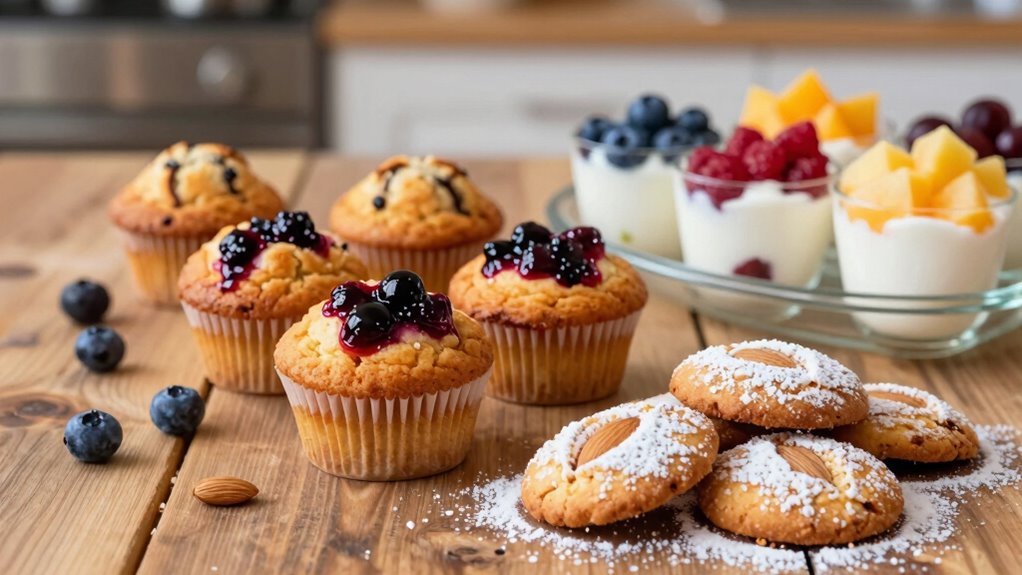

To enjoy low-sugar sweets guilt-free, choose natural substitutes like stevia, erythritol, or monk fruit to sweeten your baked goods without the extra calories. Use techniques like reducing liquids, adding flavor enhancers, and adjusting baking times to improve texture and appearance. Incorporate ingredients like nuts or dark chocolate to boost flavor and crunch. Keep experimenting with quality ingredients and techniques to create healthier treats you’ll love—there’s much more to discover!
Key Takeaways
- Use natural sweeteners like stevia, erythritol, monk fruit, or xylitol to reduce sugar without sacrificing flavor.
- Enhance sweetness perception with vanilla, cinnamon, or citrus zest to improve taste in low-sugar baked goods.
- Adjust baking techniques, such as increasing oven temperature or shortening baking time, to improve texture and browning.
- Incorporate texture-boosting ingredients like nuts, shredded coconut, or dark chocolate for satisfying treats.
- Choose high-quality sugar substitutes and experiment with recipes to create healthier, indulgent desserts without guilt.
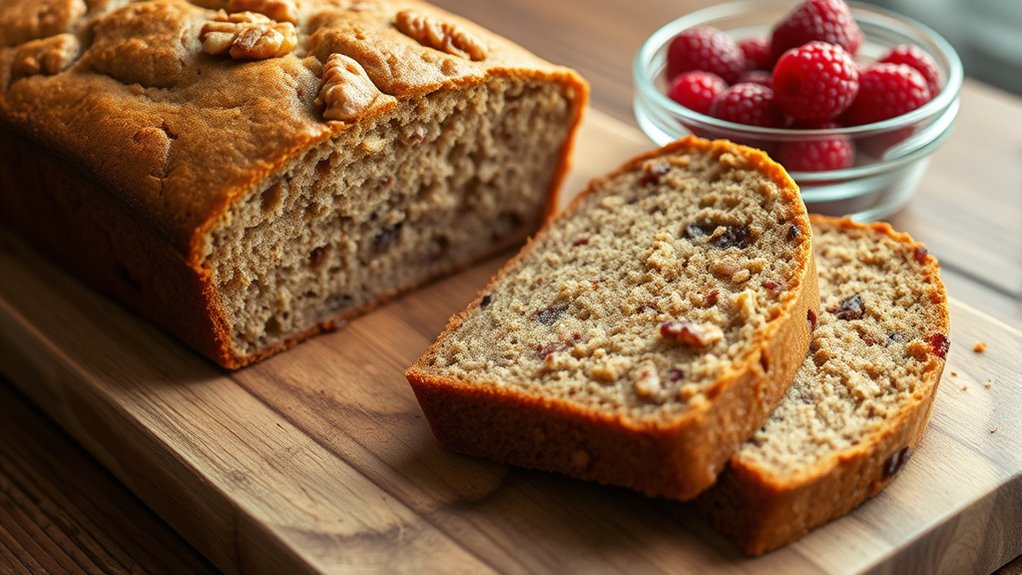
Have you ever wondered if you can enjoy delicious baked goods without overloading on sugar? The good news is, you absolutely can. With the right approach, you can create sweet treats that satisfy your cravings while keeping sugar intake in check. The key lies in exploring sugar alternatives and mastering effective baking techniques that preserve flavor and texture without relying heavily on traditional sugars.
Using sugar alternatives is a game-changer in low-sugar baking. Ingredients like stevia, erythritol, monk fruit, and xylitol provide the sweetness you crave without the added calories and spikes in blood sugar. These substitutes are versatile and can often be swapped directly for sugar in recipes, but it’s important to understand how each affects the overall outcome. For example, erythritol mimics sugar’s bulk and sweetness well, making it ideal for cookies and muffins, while stevia offers intense sweetness that requires less volume. Incorporating these alternatives not only reduces sugar content but also opens up possibilities for healthier baking. Additionally, understanding sugar substitute properties can help you choose the best option for specific recipes and desired textures.
Using sugar substitutes like stevia and erythritol can sweeten baked goods healthily and effectively.
Baking techniques also play a crucial role in achieving great results with less sugar. You don’t need to sacrifice moisture or flavor; instead, you adapt your approach. For instance, slightly reducing the liquid content can prevent baked goods from drying out, which can happen when using sugar substitutes that don’t caramelize or retain moisture like regular sugar. Additionally, balancing sweetness with natural flavor enhancers like vanilla, cinnamon, or citrus zest can amplify the perception of sweetness without adding more sugar. Using these techniques, you can craft desserts that are just as indulgent as their traditional counterparts. Moreover, experimenting with baking temperature adjustments can further improve texture and appearance.
Another effective method involves enhancing the texture of your baked goods. Since some sugar alternatives lack the browning and crisping properties of sugar, you might need to tweak your baking time or temperature. For example, a slightly higher oven temperature for a shorter period can help achieve a desirable crust or crumb. Incorporating ingredients like nuts, shredded coconut, or dark chocolate can also improve texture and flavor, making your low-sugar baked goods more satisfying. Interestingly, crispiness and browning can be influenced by these adjustments, helping replicate the appeal of traditional sweets.
Embracing the use of high-quality sugar substitutes ensures better flavor and texture, helping your baked goods closely mimic traditional recipes. Ultimately, the combination of choosing the right sugar alternatives and applying thoughtful baking techniques allows you to enjoy treats that are both delicious and healthier. It’s about experimenting and adjusting until you find what works best for your taste and lifestyle. With patience and a few simple tips, you can master the art of low-sugar baking and indulge in sweets without the guilt. So, next time you crave something sweet, remember that making mindful choices doesn’t mean sacrificing flavor—it means creating smarter, more nourishing desserts that everyone can enjoy.

Fellow Opus Conical Burr Coffee Grinder – Electric Espresso Grinder for Home Use, 41 Adjustable Settings for Drip, French Press, Cold Brew & More, 40mm Stainless Steel Burrs, Matte Black
THE DO-IT-ALL GRINDER: Opus is a powerful all-purpose grinder that grinds for the full range of coffee brewing...
As an affiliate, we earn on qualifying purchases.
Frequently Asked Questions
Can Low-Sugar Baking Recipes Be Adapted for Gluten-Free Diets?
Yes, you can adapt low-sugar baking recipes for gluten-free diets. Use gluten-free flours like almond, coconut, or rice flour as baking substitutions. These flours provide a great base and help maintain the texture and flavor of your treats. Just remember to adjust the liquid ingredients slightly, as gluten-free flours often absorb more moisture. With the right substitutions, you’ll enjoy delicious, guilt-free, gluten-free baked goodies.
What Are the Best Natural Sweeteners for Low-Sugar Baking?
Think of natural sweeteners as the secret spices in your baking arsenal. Stevia, monk fruit, and erythritol are top options, offering sweetness without the sugar crash. To boost flavor, try pairing these with vanilla or cinnamon and use ripe fruits like mashed bananas or dates for natural sweetness. These options help you craft delicious, low-sugar treats that satisfy cravings while keeping ingredients clean and wholesome.
How Do I Modify Baking Times for Low-Sugar Recipes?
To modify baking times for low-sugar recipes, start by lowering the baking temperature slightly, around 10-15°F, to prevent sugar crystallization and avoid over-browning. Keep an eye on your baked goods, as they may need a few minutes less or more depending on your oven. Use a toothpick test to check doneness, and remember that reduced sugar can affect moisture, so adjust baking times accordingly for the best results.
Are Low-Sugar Baked Goods Suitable for Diabetics?
Think of low-sugar baked goods as a balanced dance, perfect for diabetics when done right. They’re generally suitable if you use sugar substitutes for baking like stevia or erythritol and consider dietary restrictions. Always check labels and consult with a healthcare professional to confirm the treats fit your needs. With careful planning, you can enjoy sweet moments without the sugar rush, dancing to your health’s tune.
How Do Low-Sugar Ingredients Affect Texture and Flavor?
Using sugar substitutes in your baking can impact texture and flavor, often causing subtle texture changes like a denser crumb or drier finish. The flavor might also be slightly different, sometimes with a hint of bitterness or artificial taste, depending on the sweetener you choose. To minimize these effects, try balancing sugar substitutes with natural ingredients and experiment with small batches until you find the right combo that satisfies your taste buds and maintains good texture.

Hamilton Beach Fresh Grind Electric Coffee Grinder for Beans, Spices and More, Stainless Steel Blades, Removable Chamber, Makes up to 12 Cups, Black
REDUCE CLUTTER WITH HIDDEN CORD STORAGE: Hideaway cord storage under the base keeps cable neat, concealed when not...
As an affiliate, we earn on qualifying purchases.
Conclusion
So, with these low-sugar baking tips, you’re not just making treats—you’re revolutionizing your sweet tooth! Say goodbye to guilt and hello to guilt-free indulgence that tastes like a whole bakery’s worth of desserts in every bite. You’ll impress everyone with your healthier, delicious creations, transforming ordinary baking into a legendary feat. Get ready to conquer cravings, one guiltless, mouthwatering bite at a time—your taste buds and waistline will thank you forever!
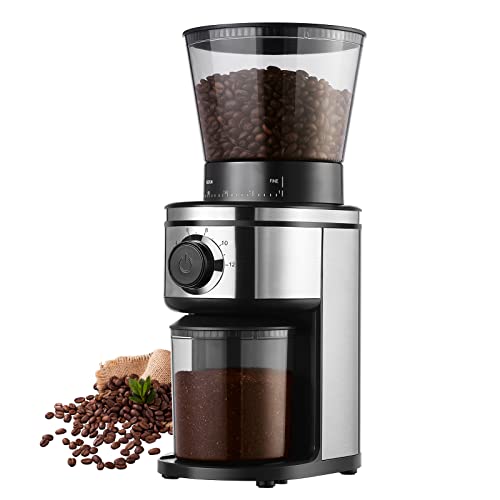
Ollygrin Burr Coffee Grinder, Electric Conical Coffee Bean Grinder With 30 Adjustable Grind Settings For 2-12 Cups, Sliver & Black
【Durable Conical Burr】With 40-millimeter stainless steel conical burrs, OLLYGRIN burr coffee grinder ensure optimal flavor extraction and create...
As an affiliate, we earn on qualifying purchases.
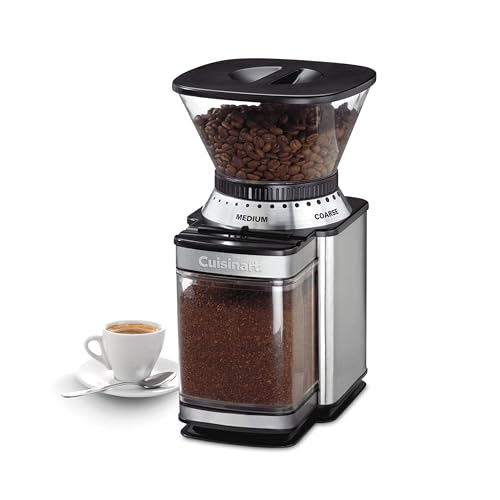
Cuisinart Coffee Grinder, Electric One-Touch Automatic Burr Coffee Grinder with 18-Position Grind Selector, Cup Size Selector for 4 – 18 Cups, DBM-8P1, Black Stainless
ENJOY OPTIMUM FLAVOR: The Cuisinart Coffee Grinder with 18-position slide-dial grind selector provides a uniform grind from ultra-fine...
As an affiliate, we earn on qualifying purchases.