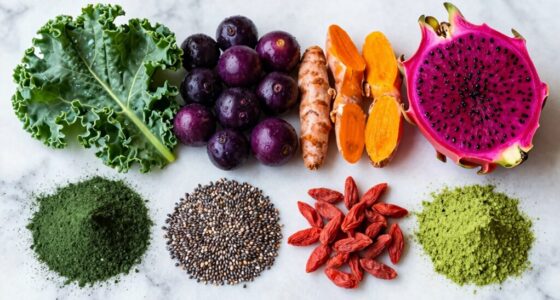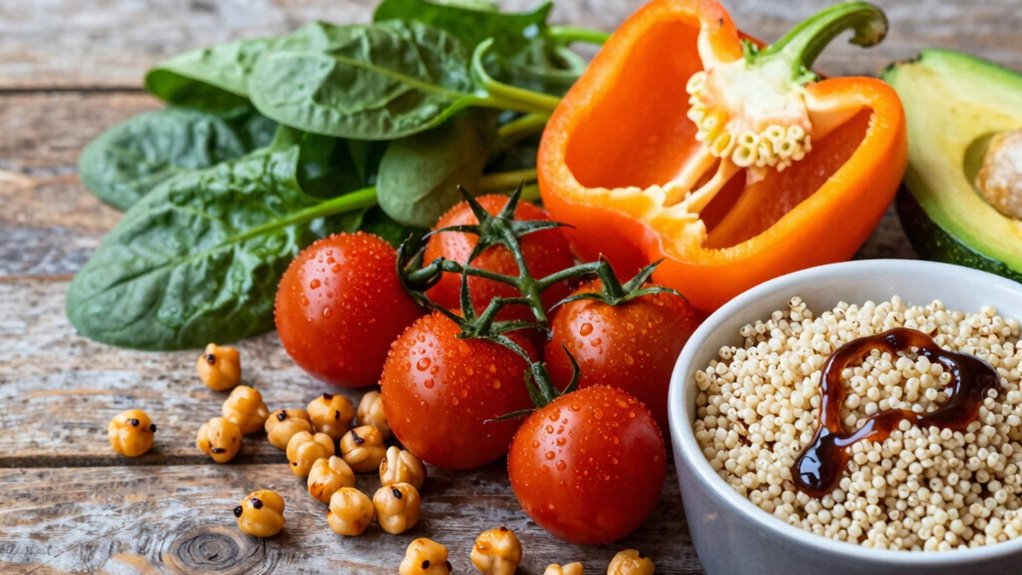

To build more satisfying vegetarian meals, focus on combining nutrient-rich plant-based proteins like beans, lentils, tofu, and tempeh with wholesome grains such as quinoa, brown rice, or farro. These pairings create complete proteins and add hearty texture, making your dishes more filling and flavorful. Incorporate vegetables and spices to boost nutrients and taste. If you keep exploring, you’ll discover even more tasty ways to make your vegetarian meals both satisfying and nutritious.
Listen free for 30 days with Audible
Thousands of audiobooks and originals — cancel anytime.
As an affiliate, we earn on qualifying purchases.
Key Takeaways
- Incorporate diverse plant-based proteins like lentils, tofu, and seitan for flavor and nutritional variety.
- Use whole grains such as quinoa, brown rice, and barley to add fiber, texture, and sustained energy.
- Combine proteins with nutrient-dense foods like vegetables and grains for balanced, satisfying meals.
- Pair beans with grains to create complete proteins and enhance meal fullness.
- Plan meals with rich textures and flavors to maximize satiety and enjoyment.
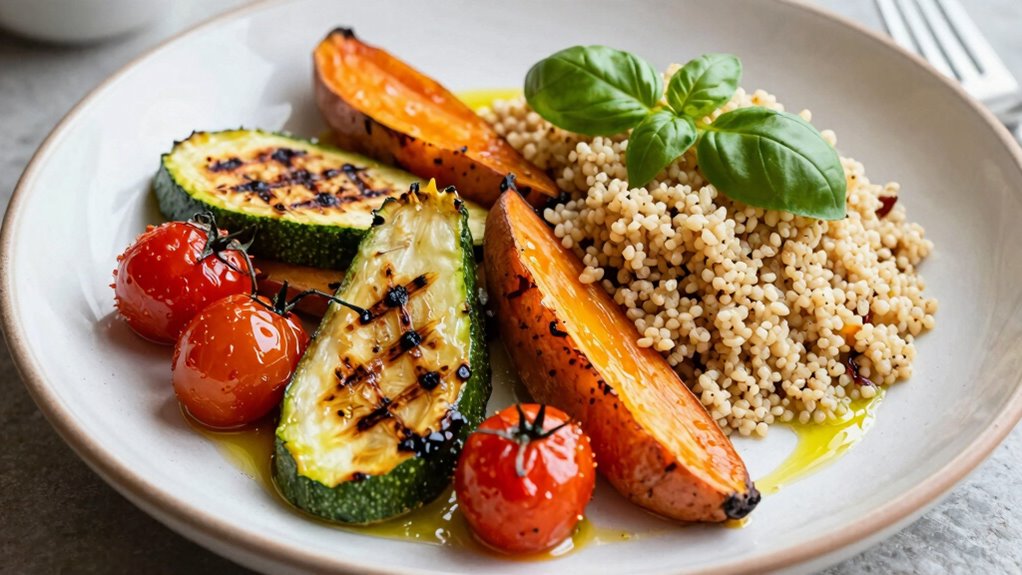
Are you looking to create delicious and nutritious vegetarian meals? If so, focusing on incorporating the right foods can make a big difference in how satisfying your dishes are. One key element is plant-based protein, which provides essential amino acids and keeps you feeling full longer. Legumes like lentils, chickpeas, and black beans are excellent sources of plant-based protein that add heartiness to salads, stews, and grain bowls. Tofu and tempeh are versatile options that absorb flavors well and can be sautéed, baked, or marinated to enhance any dish. Seitan is another protein-rich ingredient that mimics meat’s texture, perfect for creating hearty sandwiches or stir-fries. Including a variety of these plant-based proteins ensures your meals are balanced and satisfying without relying on animal products.
Plant-based proteins like lentils, chickpeas, tofu, and seitan make vegetarian meals satisfying and nutrient-rich.
In addition to protein, choosing whole grain options is vital for building fulfilling vegetarian meals. Whole grains like quinoa, brown rice, barley, and farro offer complex carbohydrates that provide sustained energy and fiber, which aids digestion and promotes satiety. Incorporating whole grains into your meals not only enhances flavor and texture but also supports overall health. Incorporating these grains, which are rich in nutrients and fiber, can help make your meals more satisfying and nourishing. When you incorporate nutrient-dense foods, you’re providing your body with essential vitamins and minerals that contribute to overall well-being. Incorporate these grains as the base for salads, grain bowls, or side dishes to add texture and nutritional value. For example, a quinoa salad with roasted vegetables and chickpeas creates a filling, nutrient-packed meal that keeps you satisfied for hours. When you choose whole grains over refined options like white rice or white bread, you not only boost nutrient intake but also add a satisfying chewiness and flavor to your dishes.
Combining plant-based proteins with whole grains is a powerful way to maximize the nutritional profile of your vegetarian meals. For instance, pairing beans with rice or lentils with bulgur creates complete proteins, ensuring you get all essential amino acids. These combinations are not only nutritious but also versatile and easy to prepare. You can make hearty burritos, veggie-packed soups, or nourishing Buddha bowls that feature a balanced mix of grains and proteins. By consciously selecting whole grains and plant proteins, you’ll find your meals more satisfying and fulfilling, helping you stay energized and satisfied throughout the day.
Ultimately, the secret to building more satisfying vegetarian meals lies in thoughtfully pairing plant-based proteins with wholesome grains. These ingredients work together to create meals that are both nutritious and filling, making it easier to maintain a balanced, plant-focused diet. With a little planning, you can turn simple ingredients into delicious, satisfying dishes that keep you full and fueled, all while enjoying the rich flavors and textures that plant-based eating offers.
As an affiliate, we earn on qualifying purchases.
Frequently Asked Questions
How Can I Add More Protein to Vegetarian Meals?
You can add more protein to your vegetarian meals by including plant-based proteins like beans, lentils, and tofu. Incorporate nutrient-dense grains such as quinoa or brown rice, which also boost your protein intake. Snack on nuts or seeds, and consider adding dairy or eggs if you eat them. These options help you create satisfying, balanced meals packed with plant-based proteins and nutrient-dense grains to meet your protein needs.
Which Vegetarian Foods Are Best for Energy Levels?
You might wonder if certain vegetarian foods genuinely boost your energy levels. Investigating this, plant-based energy boosters like nuts, seeds, and whole grains prove effective, providing sustained energy. Snack ideas such as trail mix, fruit with nut butter, or roasted chickpeas work well. These vegetarian snack ideas deliver essential nutrients, helping you stay energized throughout the day naturally and efficiently, supporting overall robustness without relying on caffeine or sugary options.
Are There Any Vegetarian Sources of Healthy Fats?
Yes, you can find plenty of vegetarian sources of healthy fats. Incorporate plant-based oils like olive oil and avocado oil into your diet for heart-healthy benefits. Nut butters, such as almond or peanut butter, are also excellent options packed with monounsaturated fats. These foods not only boost your energy but also support overall health. Including them regularly in your meals guarantees you’re getting the essential fats your body needs.
How Do I Make Vegetarian Meals More Filling?
To make vegetarian meals more filling, focus on vegetarian meal prep with hearty ingredients like beans, lentils, and whole grains. Add healthy fats such as avocado or nuts for satiety. Enhance flavors with spices, herbs, and umami-rich ingredients to boost taste without extra calories. Incorporate protein-rich foods and fiber, which help you stay full longer. These flavor enhancement techniques and nutritious staples create satisfying, well-rounded vegetarian meals that keep you energized.
What Are Quick and Easy Vegetarian Protein Options?
You can quickly boost your protein intake with plant-based supplements like protein powders or ready-made shakes. For easy vegetarian snack ideas, try roasted chickpeas, nut butter with apple slices, or Greek yogurt. Incorporate lentils or canned beans into salads or wraps for added protein. These options are simple, fast, and perfect for busy days, helping you stay energized and satisfied without much effort.
As an affiliate, we earn on qualifying purchases.
Conclusion
Just like the legendary recipes of old, your vegetarian meals can be legendary too. By incorporating these nutrient-rich foods, you’ll craft dishes that satisfy both your body and soul. Think of it as building your own culinary myth — where every ingredient plays a hero. So, embrace these foods with the spirit of a pioneer, and watch your meals transform into satisfying stories worth sharing around every table. Your flavorful adventure awaits!
As an affiliate, we earn on qualifying purchases.
As an affiliate, we earn on qualifying purchases.
College move-in / dorm season Picks
dorm essentials
As an affiliate, we earn on qualifying purchases.