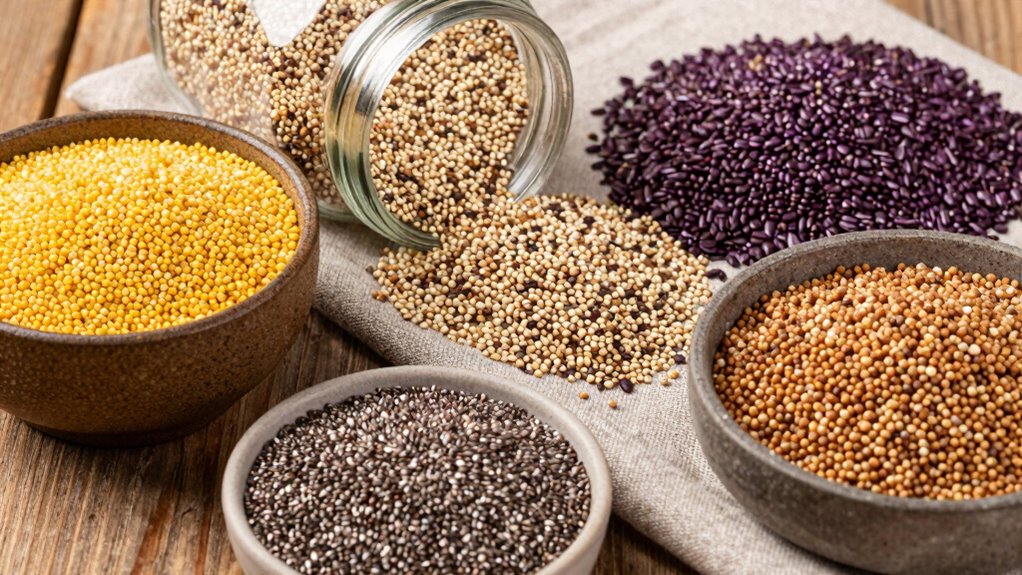
If you’re ditching wheat, consider trying quinoa, millet, sorghum, buckwheat, and amaranth. These gluten-free grains are packed with essential nutrients like protein, fiber, and antioxidants, supporting your digestion and overall health. They can be prepared in a variety of tasty ways, from salads to porridges and baked goods. Switching to these options adds variety and health benefits to your diet. Stay with us to explore how these grains can elevate your meals and well-being.
Key Takeaways
- Quinoa is a complete protein and versatile for salads, breakfast, and side dishes.
- Millet offers a mildly sweet flavor and fluffy texture, ideal for pilafs and warm salads.
- Sorghum provides a chewy texture, antioxidants, and can be used as rice or baking flour.
- Buckwheat is gluten-free, earthy, and great for pancakes, porridge, or stir-fry rice alternatives.
- These grains deliver essential nutrients, support health, and add variety to a gluten-free diet.
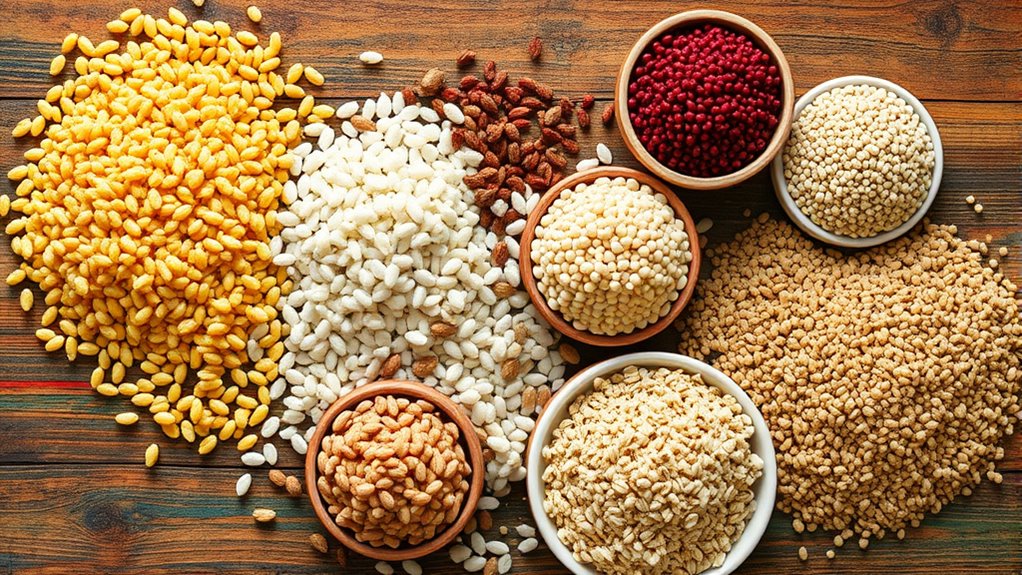
Have you ever wondered which grains are safe to eat if you’re avoiding gluten? Exploring the world of gluten-free eating can feel overwhelming, especially when you’re used to traditional wheat-based products. The good news is that there are plenty of grain alternatives that not only keep your diet exciting but also offer impressive nutritional benefits. These alternatives can help you maintain a balanced diet without sacrificing flavor or texture.
Quinoa is one of the most popular gluten-free grains, and for good reason. It’s a complete protein, meaning it contains all nine essential amino acids, making it a fantastic choice for vegetarians and vegans. Quinoa is also rich in fiber, magnesium, and antioxidants, which support digestion and overall health. Its versatility allows you to use it as a base for salads, side dishes, or even breakfast porridge. Because it cooks quickly and has a mild, nutty flavor, it’s easy to incorporate into your meals.
Quinoa is a versatile, nutrient-packed gluten-free grain perfect for salads, sides, and breakfast dishes.
Another excellent grain alternative is millet. This tiny seed packs a punch in terms of nutritional benefits. It’s a good source of magnesium, phosphorus, and B vitamins, all of which contribute to energy production and bone health. Millet has a slightly sweet, corn-like flavor and a fluffy texture once cooked, making it perfect for pilafs, warm salads, or as a side. Its natural resilience to pests and diseases also means it’s often less processed, offering you a more wholesome option.
Sorghum is gaining popularity as a gluten-free grain with remarkable nutritional benefits. It’s high in protein, fiber, and antioxidants, which help combat inflammation and support heart health. You can cook sorghum similarly to rice or use it as a flour in baking. Its chewy texture and slightly sweet flavor add depth to dishes, from hearty soups to grain bowls. Because sorghum is naturally gluten-free and minimally processed, it’s an excellent choice for those seeking a nutrient-dense alternative to wheat.
Finally, buckwheat deserves a mention, despite its misleading name. It’s gluten-free and actually a seed, not a grain, but it’s commonly used like one. Buckwheat provides a good amount of protein, fiber, and minerals like manganese and magnesium. Its earthy flavor and hearty texture make it ideal for pancakes, porridge, or as a rice substitute in stir-fries. Additionally, conscious eating includes choosing minimally processed grains to maximize health benefits.
Switching to these grain alternatives guarantees you don’t miss out on essential nutrients while avoiding gluten. They bring variety to your diet and can be prepared in numerous ways to keep your meals interesting. With their impressive nutritional benefits, these grains help you sustain a balanced, gluten-free lifestyle without sacrificing taste or health.
Frequently Asked Questions
Are Gluten-Free Grains Suitable for All Gluten Sensitivities?
Gluten-free grains can be suitable for most people with gluten sensitivity, but they may not work for those with a grain intolerance. If you’re sensitive to gluten, these grains often help decrease symptoms. However, if you have a grain intolerance, you should watch out, as reactions vary. Always check labels and consult with a healthcare professional to ensure the grains you choose are right for your specific needs.
How Do Gluten-Free Grains Compare Nutritionally to Wheat?
Think of gluten-free grains as hidden gems, offering a different nutritional landscape than wheat. Their nutritional differences often include higher fiber and mineral content, but can vary due to grain processing. While wheat is usually fortified, gluten-free options might lack certain nutrients. You’ll find these grains provide a wholesome alternative, but always check labels to understand how processing affects their nutrient profile, ensuring you get the most health benefits.
Can Gluten-Free Grains Be Used in Baking as Wheat?
You can definitely use gluten-free grains as a grain substitution in baking, but keep in mind their baking versatility varies. Some, like rice or oat flour, work well in certain recipes, while others, like millet or buckwheat, may require adjustments. Experimenting with different gluten-free grains will help you find the best combination for your baked goods, ensuring you enjoy delicious, gluten-free treats without sacrificing texture or flavor.
Are There Any Potential Allergens in Gluten-Free Grains?
Think of gluten-free grains as a colorful palette, but watch out for hidden shadows. Some can cause cross reactivity concerns if you’re sensitive, and allergen labeling accuracy isn’t always perfect. You might find traces of nuts, soy, or other allergens lurking, even if not listed. Always read labels carefully and consult your doctor to avoid surprises, ensuring your baking remains safe and delightful.
How Should Gluten-Free Grains Be Stored for Maximum Freshness?
To keep your gluten-free grains fresh, store them in airtight containers in a cool, dark place. Use glass jars or plastic bins to prevent moisture and pests from getting in. Follow these freshness tips: avoid humid environments and don’t leave grains exposed to sunlight. For long-term storage, consider refrigerating or freezing grains, especially if you buy in bulk, to maintain their quality and extend shelf life.
Conclusion
If you’re worried about missing out on familiar textures, these gluten-free grains can truly satisfy your cravings. Don’t let gluten intolerance or sensitivities hold you back from enjoying versatile, nutritious options. With a little experimentation, you’ll discover new favorites that keep your meals exciting and safe. Embrace these alternatives—your body will thank you for it, and you might even find they taste better than what you’re used to!