
To unseal authentic Indonesian sambal flavors, discover the secrets of fermentation, which deepens the spice’s complexity and adds tangy, savory notes. By controlling fermentation time and environment, you can craft regional varieties—from smoky Sumatra to sweet Java and pungent Sulawesi—each shaped by local ingredients like roasted peppers or fermented seafood. Mastering these techniques helps create vibrant, layered chili pastes that truly reflect Indonesian culinary tradition. Keep exploring to uncover more flavorful secrets.
Key Takeaways
- Fermentation deepens sambal flavor, adding tangy, savory complexity through natural microbial activity.
- Regional ingredients like smoked peppers, shrimp paste, or palm sugar define distinct sambal profiles.
- Sun-fermentation or controlled environments influence flavor development and fermentation duration.
- Traditional techniques and ingredient choices reflect Indonesia’s diverse culinary heritage.
- Mastering fermentation and ingredient selection enhances authenticity and customizable spice levels.
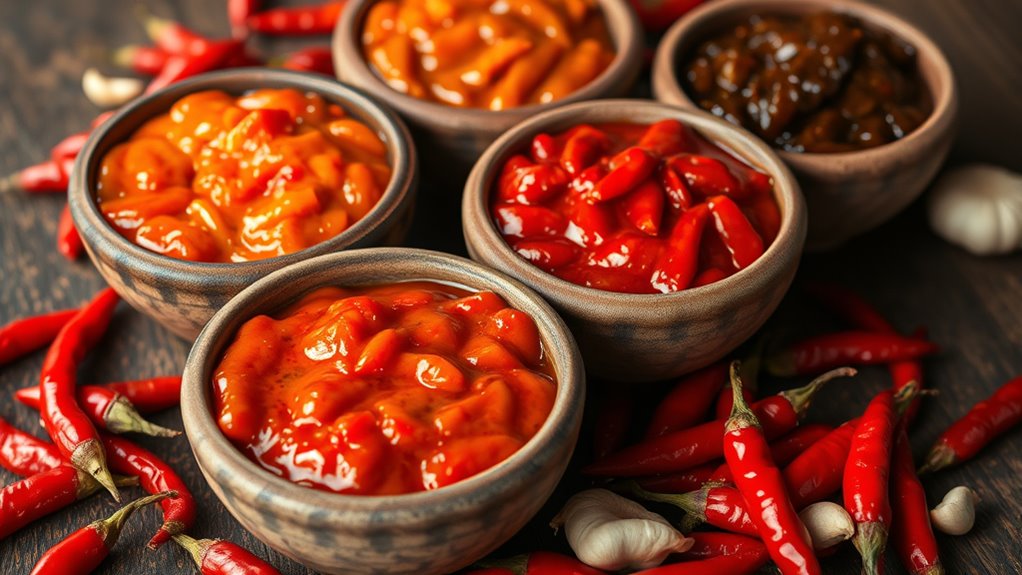
Have you ever wondered what makes sambal so irresistibly fiery and flavorful? The secret lies in the fermentation techniques and the unique regional flavor profiles that define each variation. When making sambal, fermentation isn’t just a step; it’s the magic that deepens its complexity and heightens its flavor. By allowing chili peppers, sometimes combined with other ingredients like shrimp paste or sugar, to ferment naturally, you reveal a rich, tangy undertone that balances the spice. This process can take anywhere from a few days to several weeks, depending on the desired intensity and regional tradition. During fermentation, beneficial microbes break down the chili’s sugars and proteins, resulting in a more savory and nuanced taste, which is why traditional recipes often rely on this age-old technique.
Different regions in Indonesia boast their own distinct flavor profiles, shaped by local ingredients, climate, and cultural influences. For example, in Sumatra, you might encounter sambal with earthy, smoky notes achieved through roasting peppers before blending, creating a more robust flavor. Conversely, in Java, the sambal tends to be milder and sweeter, often incorporating sugar or palm syrup to balance the heat. In Sulawesi, you’ll find a fiercer, more pungent profile, sometimes infused with fermented seafood or shrimp paste, adding a briny depth. These regional variations are not just about taste—they reflect the diverse culinary traditions and local ingredients available in each area. By understanding these regional flavor profiles, you can appreciate how sambal adapts to local tastes and ingredients, making each spoonful a reflection of its origin.
As you explore different sambal recipes, you’ll notice that fermentation techniques play an essential role in achieving authenticity. Some recipes call for fermenting chili paste in the sun, harnessing natural warmth and microbial activity, while others use controlled fermentation in cool, dark places to develop more refined flavors. This process is vital for developing the complex, layered taste that makes sambal so compelling. Whether you prefer a straightforward, fresh sambal or one with a deep, fermented richness, mastering these techniques will elevate your cooking. The beauty of sambal lies in its versatility and regional identity, so experimenting with fermentation methods and ingredient combinations allows you to craft a version that truly embodies your taste and honors Indonesian culinary traditions.
Frequently Asked Questions
What Are the Health Benefits of Eating Spicy Sambal?
Eating spicy sambal offers numerous health benefits, including an antioxidant boost that helps combat free radicals and supports your immune system. The chili peppers in sambal also enhance your metabolism, aiding in weight management and increased energy levels. Plus, capsaicin in the chili stimulates circulation and may reduce inflammation. Incorporating sambal into your meals adds flavor while positively impacting your health through these natural, beneficial compounds.
How Long Can Homemade Sambal Be Stored Safely?
You can store homemade sambal safely for up to two weeks in the refrigerator if you keep it in an airtight container. To prevent spoilage, always use clean utensils when serving and avoid cross-contamination. For longer storage, consider freezing it in small portions, which can extend its shelf life to several months. Regularly check for any signs of spoilage, such as mold or an off smell, to guarantee safety.
Are There Any Vegetarian or Vegan Sambal Options?
Yes, there are plenty of vegetarian options and vegan adaptations for sambal. You can make a delicious sambal using only vegetables, like tomatoes, onions, and chili peppers, with no animal products. For vegan adaptations, avoid fish sauce and shrimp paste, replacing them with soy sauce or tamari for depth. These plant-based versions are flavorful, spicy, and perfect for adding authentic Indonesian flair to your meals without any animal ingredients.
What Are Authentic Regional Variations of Sambal in Indonesia?
You’ll discover authentic regional variations of sambal across Indonesia, each boasting unique flavor profiles and traditional preparation methods. In Sumatra, you find sambal lado mudo with fresh green chilies and lime, while in Java, sambal terasi combines chili with shrimp paste for a smoky taste. Sulawesi’s sambal Roa features fermented fish, highlighting local ingredients. Exploring these regional differences enriches your understanding of Indonesia’s diverse culinary heritage.
How Can I Adjust the Spiciness Level of Sambal at Home?
To adjust the spiciness level of sambal at home, start by adding less or more chili peppers during preparation. For a milder, less pungent flavor, remove seeds from the chilies before blending. If you want more heat, incorporate extra chilies gradually. This allows you to perfect your spice calibration, ensuring your sambal maintains the desired pungent flavor without overpowering your dish. Taste frequently to achieve the ideal balance.
Conclusion
Now that you’ve uncovered the fiery secrets of Indonesian sambal, your taste buds are about to embark on a flavor explosion like no other. With each daring spoonful, you’ll feel the heat ignite your senses and transform your meals into legendary feasts. Get ready to become a chili connoisseur, wielding sambal like a spicy superhero. This isn’t just about heat — it’s a fiery adventure that will leave everyone begging for your secret recipe. Prepare to spice up your life forever!