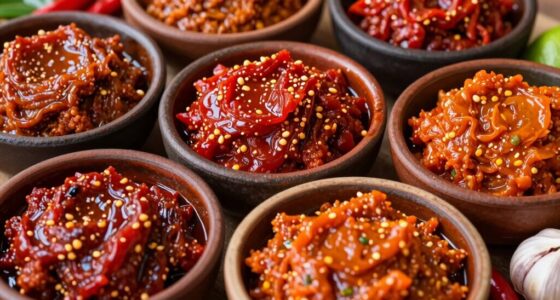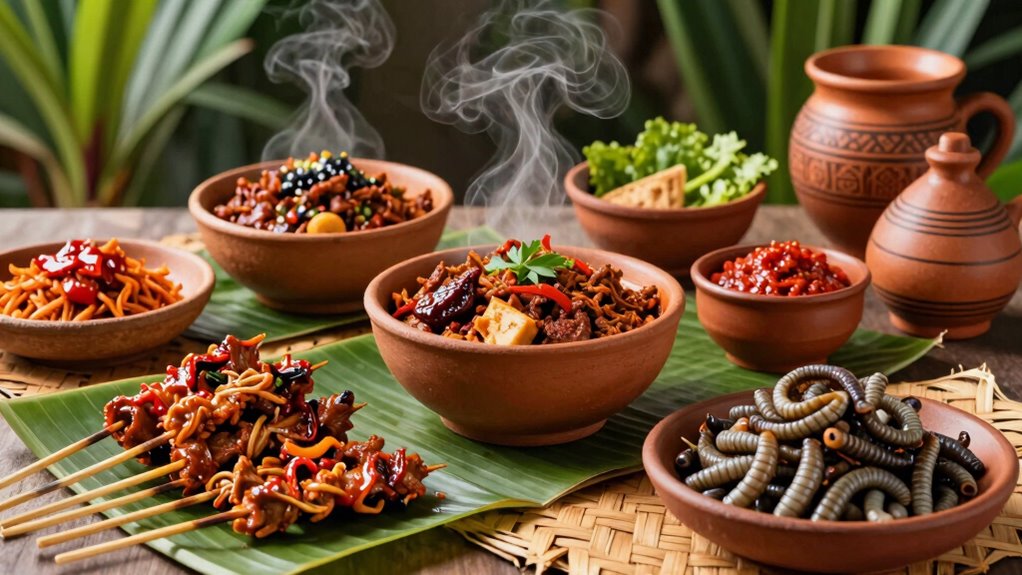

Indonesian regional cuisines showcase a rich diversity of flavors and cooking techniques. In Sumatra, you’ll find smoky grilled dishes like satay and bold spice blends, while Java emphasizes slow-cooked foods such as gudeg with layered flavors. Bali and Lombok use grilling and steaming with earthy spices, and Papua focuses on roasted meats and earthy herbs, highlighting local ingredients. Exploring these culinary styles reveals the country’s vibrant cultural tapestry—keep exploring to uncover more about Indonesia’s delicious diversity.
Key Takeaways
- Sumatra’s cuisine features smoky open-fire grilling and bold spice blends like turmeric and chili.
- Java emphasizes slow cooking and steaming, with spices such as coriander and nutmeg shaping its dishes.
- Bali and Lombok use charcoal grilling and steaming in banana leaves, highlighting earthy, smoky flavors.
- Papua’s cuisine centers on roasted or smoked meats, root vegetables, and simple, earthy spice blends.
- Regional cuisines reflect diverse techniques and ingredients, connecting modern cooks to Indonesia’s rich cultural heritage.
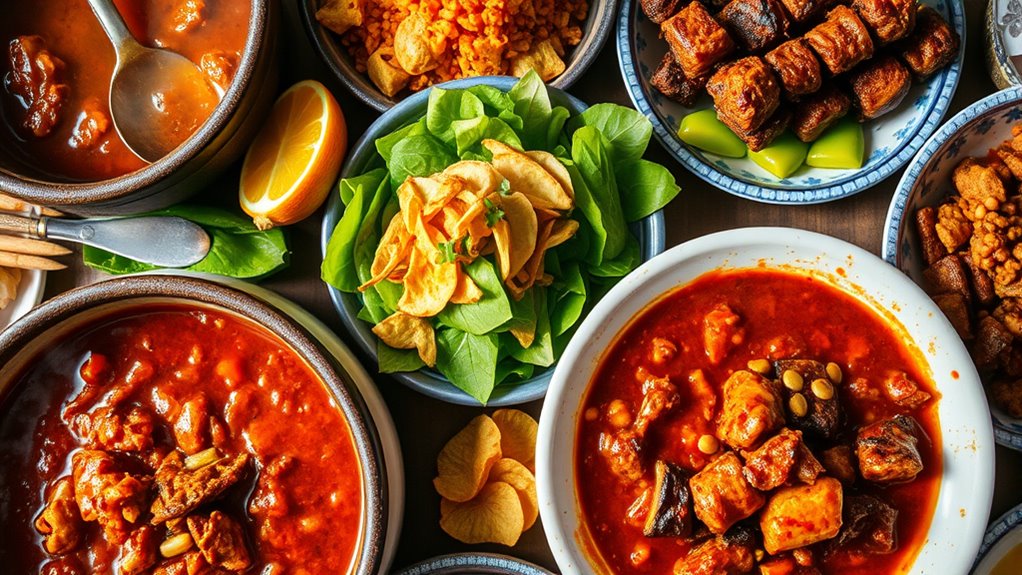
Have you ever wondered how diverse and vibrant Indonesian cuisine truly is? Each region offers a unique flavor profile, cooking techniques, and cultural influences that make the country’s food scene so enthralling. One of the most fascinating aspects is how traditional cooking methods and carefully crafted spice blends shape the flavors of local dishes. In Sumatra, for example, you’ll find that cooking often involves open-fire grilling or using bamboo tubes to infuse dishes with smoky flavors. These time-honored techniques help preserve the authenticity of the cuisine and connect modern cooks to their ancestral roots. Sumatra’s rich spice blends typically feature turmeric, ginger, lemongrass, and chili, creating bold, complex flavors that define dishes like rendang and satay. These spice mixes aren’t just thrown together; they’re carefully prepared, sometimes ground by hand using traditional tools, to ensure every dish bursts with depth and aroma.
Sumatra’s authentic dishes are crafted with hand-ground spice blends and smoky grilling techniques that preserve traditional flavors.
Moving east to Java, you’ll notice a different approach to cooking. Javanese cuisine tends to favor slow cooking and steaming, which helps tenderize ingredients and develop layered flavors. It’s common to see dishes like gudeg, a sweet jackfruit stew, prepared by simmering ingredients for hours, allowing the flavors to meld beautifully. The spice blends used here tend to be milder but still fragrant, incorporating coriander, shallots, garlic, and nutmeg. These blends are often toasted before being ground, enhancing their aroma and flavor. The use of traditional cooking methods like boiling and steaming ensures that each dish retains its delicate balance and cultural significance, reflecting the island’s historical trade influences and culinary traditions.
Further east, in Bali and Lombok, cooking techniques often involve grilling over charcoal or using banana leaves for steaming. These methods impart a smoky, earthy taste that’s characteristic of the region’s dishes. Spice blends in these areas might include turmeric, galangal, and kaffir lime leaves, which give dishes like lawar and ayam betutu their distinctive flavors. The preparation of spice mixes here is usually a communal activity, passed down through generations, emphasizing the importance of tradition and shared cultural identity.
In Papua, the cuisine is equally diverse, often featuring roasted or smoked meats and root vegetables. The spice blends are simpler but no less flavorful, relying heavily on local ingredients like sago, yams, and various wild herbs. Traditional cooking methods like open-flame roasting highlight the raw, earthy essence of Papuan dishes. Across all these regions, what remains consistent is how traditional techniques and spice blends play a crucial role in shaping each area’s unique culinary identity, inviting you to explore Indonesia’s rich, flavorful tapestry one bite at a time.
Top picks for "regional cuisin indonesia"
Open Amazon search results for this keyword.
As an affiliate, we earn on qualifying purchases.
Frequently Asked Questions
How Do Regional Spices Influence Indonesian Cuisine Flavors?
Regional spices remarkably influence Indonesian cuisine flavors by creating unique flavor profiles through distinct spice blends. You’ll notice how Sumatra’s bold, spicy notes differ from Papua’s milder, earthy tones. These spice blends add depth and character to dishes, making each region’s cuisine special. When you explore Indonesian dishes, you’re experiencing the diverse influence of regional spices, which shape the vibrant and varied flavors that define Indonesian culinary traditions.
What Are the Traditional Cooking Methods Unique to Each Region?
You’ll find that traditional cooking techniques vary widely across Indonesia. In Sumatra, you might use traditional grilling styles like burning coconut shells for smoky flavor. In Java, you’ll often see methods like simmering in clay pots. Papua features unique techniques such as roasting root vegetables underground. These traditional cooking methods give each region’s dishes distinct flavors and textures, reflecting local ingredients and cultural practices.
How Has Indonesian Cuisine Evolved Over Centuries?
You’ve seen how Indonesian cuisine has evolved through centuries, blending traditional flavors with new influences. Fusion dishes and culinary innovations now combine local ingredients with international techniques, creating exciting flavors. This evolution reflects Indonesia’s diverse culture and history, allowing you to experience a dynamic food scene. Over time, recipes adapt and expand, making Indonesian cuisine a vibrant tapestry that celebrates both tradition and modernity.
Are There Specific Dietary Restrictions in Different Regional Cuisines?
You’ll notice that regional cuisines often follow religious dietary laws, so vegetarian options are common in places with Hindu or Buddhist influences, like Bali. In Muslim-majority areas, pork is avoided, and halal practices are observed. These restrictions shape the flavors and ingredients used, making each region’s dishes unique. So, whether you’re exploring Sumatra or Papua, you’ll find diverse culinary traditions that respect local beliefs and dietary needs.
How Do Cultural Festivals Impact Regional Food Traditions?
During cultural festivals, you’ll notice that festival food plays a central role, showcasing traditional dishes unique to each region. These celebrations strengthen local identities, encouraging communities to prepare special foods that reflect their heritage. As you participate in cultural celebrations, you experience how festival food preserves traditions and promotes regional pride, making these events essential for maintaining and sharing Indonesia’s diverse culinary heritage across all regions.
Conclusion
As you explore Indonesia’s diverse regional cuisines, you’re like a traveler wandering through a vibrant tapestry of flavors, each thread telling a story of culture and tradition. From Sumatra’s spicy heat to Papua’s earthy richness, every dish is a unique brushstroke on this culinary canvas. Embrace the journey, letting these flavors guide you through a symphony of tastes that bind the archipelago together in delicious harmony.