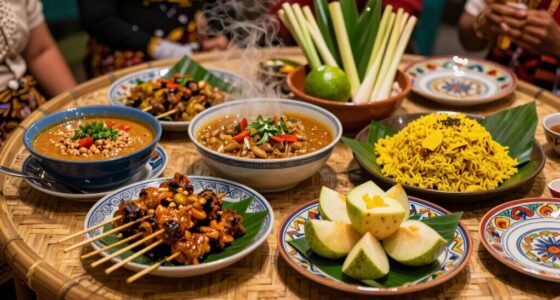
At night markets in Indonesia, you can’t miss exploring their vibrant street foods, which blend centuries-old recipes with lively vendor culture. Try classic dishes like nasi goreng, a flavorful fried rice, or martabak, a sweet or savory pancake crafted with simple ingredients. Vendors take pride in their craftsmanship, preserving traditions and passing down secret techniques. The bustling atmosphere makes every bite a cultural experience—stay with us, and you’ll uncover even more culinary delights worth tasting.
Key Takeaways
- Savor authentic Nasi Goreng, Indonesia’s iconic fried rice flavored with spices, soy sauce, and topped with a fried egg.
- Try Martabak, a versatile sweet or savory pancake made from simple ingredients like flour, eggs, and sugar.
- Experience the vibrant atmosphere of night markets, where traditional recipes are crafted with skill and passed down through generations.
- Discover vendor-crafted dishes that emphasize authenticity, halal practices, and unique regional twists.
- Enjoy the lively social setting, where food is a cultural expression, fostering community and appreciation for Indonesian heritage.
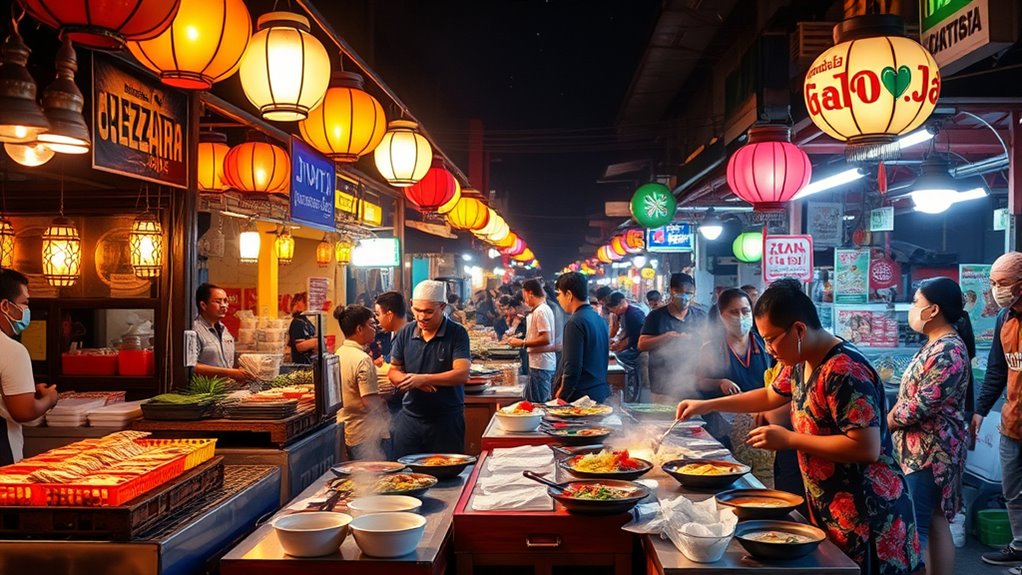
Have you ever wondered what makes Indonesian street foods so irresistible? It’s a blend of rich traditional recipes and a vibrant food vendor culture that brings these flavors to life. When you wander through a night market in Indonesia, you’re stepping into a lively world where centuries-old recipes are passed down from generation to generation, each vendor offering their own unique twist. These traditional recipes form the backbone of Indonesian street food, combining simple ingredients into dishes bursting with flavor. From tender satays glazed with peanut sauce to savory bakso meatballs served in fragrant broth, every bite tells a story of heritage and community. The food vendor culture is the heartbeat of these markets, where vendors set up their stalls with pride, often shouting out to attract hungry passersby. It’s a social scene as much as it is a culinary experience, with vendors exchanging tips and locals gathering to catch up over steaming plates of food. This lively atmosphere makes tasting Indonesian street foods not just about the flavors but about immersing yourself in the culture.
The beauty of these traditional recipes lies in their simplicity and authenticity. Many dishes are crafted from recipes that have stood the test of time, preserved through careful preparation and a love for tradition. For example, nasi goreng, Indonesia’s famous fried rice, is cooked with a mix of spices, soy sauce, and sometimes a fried egg on top, all made from ingredients that are staples in Indonesian households. Similarly, martabak, a sweet or savory pancake, combines basic ingredients like flour, eggs, and sugar, but results in a dish that’s both comforting and addictive. These recipes have been adapted over generations, but the core ingredients and techniques remain unchanged, offering a taste of history in every bite. Additionally, understanding halal dietary practices can enrich the experience for Muslim travelers seeking to enjoy authentic Indonesian street foods in accordance with their dietary guidelines.
The food vendor culture adds another layer of authenticity to the experience. Vendors often have their own secret recipes or special techniques that make their dishes stand out. They take pride in their craft, meticulously preparing each item to ensure quality and flavor. Many vendors have been in the business for decades, passing down their skills and recipes to family members, creating a sense of continuity and tradition. As you walk through night markets, you’ll notice the camaraderie among vendors and the anticipation of hungry customers. It’s a culture rooted in community, where food is a shared passion and a way to connect with others. Sampling these dishes allows you to experience Indonesian tradition firsthand, through the skillful hands of vendors who keep these recipes alive. It’s a delicious journey into Indonesia’s culinary soul, made all the more special by the vibrant, bustling atmosphere of the night market.
A deep appreciation for cultural traditions enhances the enjoyment of these authentic street foods, allowing you to fully embrace the rich heritage that each dish represents.
Frequently Asked Questions
What Are the Most Popular Night Market Snacks in Indonesia?
You’ll love trying popular Indonesian night market snacks like satay, with skewered grilled meat, and martabak, a sweet or savory pancake. Don’t forget to sample local delicacies like bakso, meatball soup, and kue cubit, tiny pancakes. Remember street food etiquette—be respectful, use hand sanitizer, and follow local customs. These snacks offer authentic flavors, and embracing local etiquette makes your experience even more enjoyable.
Are Indonesian Street Foods Safe to Eat for Tourists?
Like a seasoned traveler, you can enjoy Indonesian street foods safely if you follow food safety tips. Trust vendors who look clean, eat freshly cooked dishes, and avoid raw ingredients. Remember, just as a sailor checks the weather before setting sail, always observe local hygiene standards and choose busy stalls with high turnover. These traveler tips help guarantee your culinary adventure remains delightful and safe.
How Do Indonesian Street Food Prices Compare to Restaurants?
You’ll find that Indonesian street food prices are considerably more affordable than restaurant meals. The pricing differences make street foods a budget-friendly choice, allowing you to enjoy authentic flavors without overspending. Compared to restaurants, street vendors offer tasty dishes at a fraction of the cost, giving you an excellent affordability comparison. This way, you get delicious, authentic Indonesian cuisine without breaking the bank while exploring vibrant night markets.
Which Indonesian Street Foods Are Suitable for Vegetarians?
You’ll find plenty of vegetarian options at Indonesian street markets, like gado-gado, a fresh veggie salad with peanut sauce, and tempeh-based dishes. Look for food stalls that focus on vegetarian food preparation, ensuring no cross-contamination. These options are flavorful, affordable, and authentic, making it easy to enjoy Indonesian street food without meat. Just ask vendors about vegetarian choices to get the best experience.
When Is the Best Time to Visit Indonesian Night Markets?
You should visit Indonesian night markets during the best time, which is typically in the evening when the vibrant lights flicker against the bustling crowds. Plan your trip around festive seasons like Ramadan and Chinese New Year, when the markets burst with lively energy and special treats. During these times, the aroma of spices fills the air, making every moment unforgettable. So, mark your calendar for these lively, colorful nights!
Conclusion
As you savor these vibrant street foods, remember they’re more than just flavors—they’re stories of tradition, community, and resilience. While the night market’s lively chaos can overwhelm, it also offers a comforting reminder of Indonesia’s rich cultural tapestry. In every bite, there’s a balance between the bustling energy and the quiet history behind each dish. Embrace both the chaos and the calm, and let these flavors deepen your appreciation for Indonesia’s lively culinary soul.