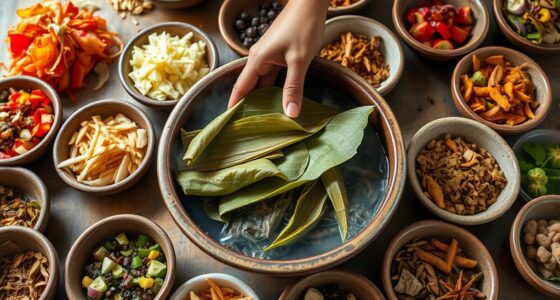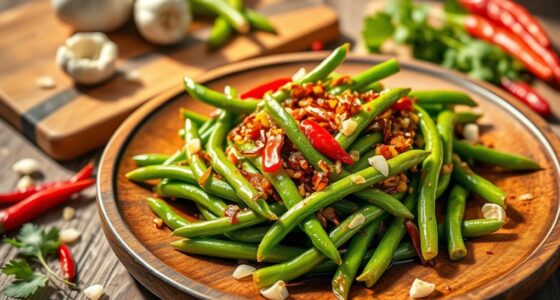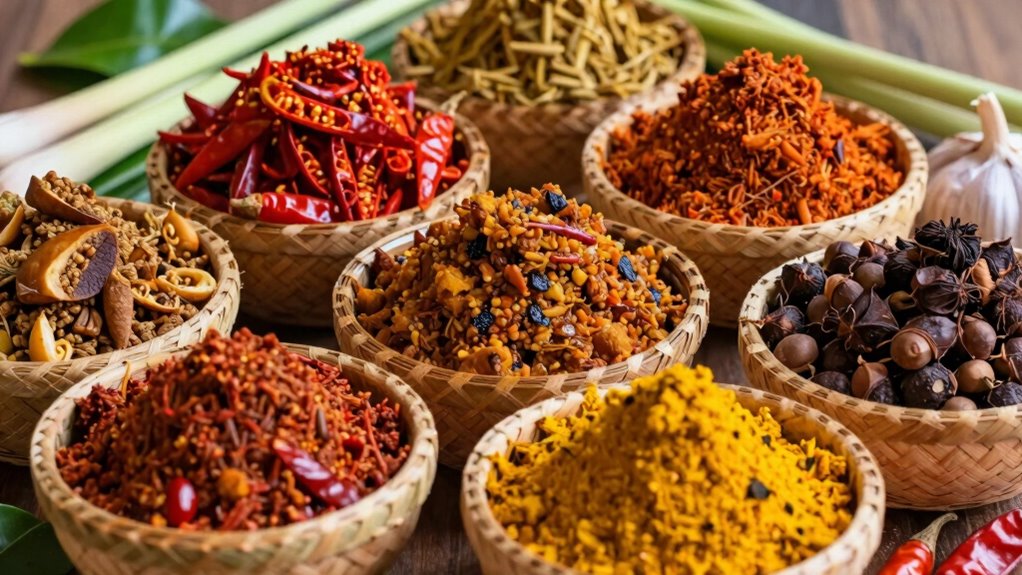

Indonesian spice pastes form the flavorful backbone of many dishes, blending herbs like ginger, galangal, turmeric, lemongrass, and Kaffir lime leaves to create vibrant, aromatic bases. These pastes can be customized or store-bought, helping you craft authentic rendang, sambal, and satay with ease. Each region has its unique variation, reflecting local ingredients and traditions. To discover more about these essential culinary tools and how they elevate Indonesian cuisine, keep exploring this flavorful world.
Key Takeaways
- Indonesian spice pastes serve as flavor bases for dishes like rendang, satay, and sambal, infusing them with complex, bold flavors.
- Key ingredients include ginger, galangal, turmeric, lemongrass, and garlic, defining regional culinary profiles.
- Regional variations, such as Balinese or Javanese pastes, reflect local ingredients and cultural influences.
- Traditional techniques like blending and slow simmering enhance flavor depth and authenticity.
- Spice pastes embody Indonesia’s culinary diversity and cultural heritage, making them essential in many dishes.
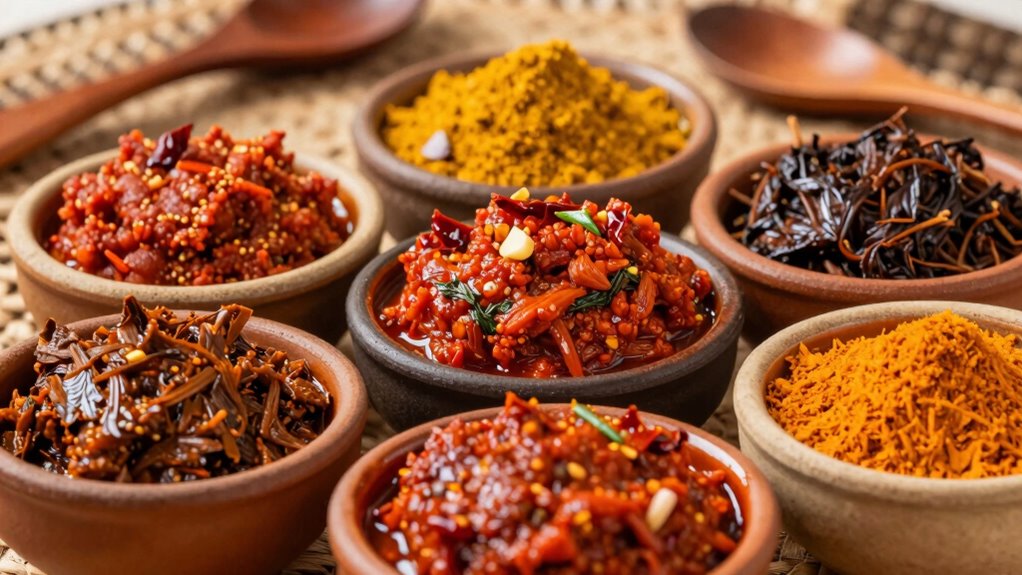
Spice pastes are essential ingredients that can elevate your dishes with vibrant flavor and depth. When you explore Indonesian cuisine, you’ll quickly realize how these pastes serve as the backbone of countless dishes, infusing them with complex layers of taste. Central to this are herbs and aromatics—ginger, galangal, turmeric, lemongrass, and Kaffir lime leaves—that form the foundation of many Indonesian spice pastes. These ingredients aren’t just flavor enhancers; they’re crucial components that define regional flavor profiles, giving each dish its unique character. When you blend herbs and aromatics into a paste, you’re capturing the essence of Indonesian culinary tradition, which emphasizes fresh, fragrant, and bold flavors. Understanding the importance of regional ingredients helps you appreciate how each paste reflects local ecosystems and cultural influences. Regional flavor profiles play a significant role in how these pastes are crafted and used. For example, Balinese spice pastes tend to incorporate a generous amount of turmeric and chili, creating dishes that are vibrant and spicy with a hint of earthiness. In contrast, Javanese pastes might focus on sweeter, milder flavors, often including palm sugar or shallots to balance the heat. You’ll find that each region’s pastes reflect its local ingredients and cultural influences, making them a versatile tool for cooking dishes that are distinct yet interconnected. When you use these pastes, you’re not just adding flavor—you’re embracing a culinary identity rooted in regional traditions. Making your own Indonesian spice pastes allows you to tailor the flavors to your preference, but store-bought options also offer convenience without sacrificing authenticity. To prepare a basic paste, you blend herbs and aromatics like garlic, shallots, turmeric, and chili with a splash of oil until smooth. This mixture then becomes the base for dishes like rendang, sambal, or satay, where it’s cooked down to develop deeper flavors. By understanding the regional flavor profiles, you learn how to balance heat, sweetness, and acidity, creating a harmonious taste that’s true to Indonesian cuisine. The use of traditional cooking techniques such as slow simmering and grilling further enhances the depth of flavor in these dishes. Incorporating regional culinary practices into your cooking can help you achieve more authentic results. Using spice pastes in your cooking is more than just adding flavor; it’s about capturing the spirit of Indonesia’s diverse culinary landscape. They bring together herbs and aromatics in a way that’s both practical and flavorful, allowing you to create authentic dishes with ease. Whether you’re simmering a rich beef rendang or tossing vegetables with a spicy sambal, these pastes help you channel the essence of Indonesian flavors. Once you understand how regional profile influences the paste’s ingredients, you’ll find yourself crafting dishes that are both delicious and culturally rich. Recognizing the regional flavor profiles also helps you experiment and adapt recipes to suit your taste and available ingredients. Incorporating traditional cooking techniques further enhances the authenticity of your dishes and deepens your appreciation for Indonesian culinary heritage.

bamboe – RENDANG – INDONESIAN DRY CURRY PASTE – INDONESIAN INSTANT SPICES – 6 x 1.2 OZ /36 g – Product of Indonesia by Bamboe
- Authentic Padang Flavor: True Indonesian rendang taste with aromatic spices
- Easy Preparation: Sauté, add beef and coconut milk, simmer
- Trustworthy Ingredients: No artificial colors, crafted in Indonesia
As an affiliate, we earn on qualifying purchases.
As an affiliate, we earn on qualifying purchases.
Frequently Asked Questions
How Long Do Indonesian Spice Pastes Stay Fresh?
Indonesian spice pastes typically stay fresh for up to two weeks in the refrigerator if stored properly. To maximize flavor variations and freshness, use an airtight container and keep the paste submerged in oil. For longer storage, freeze small portions in ice cube trays, which can last up to three months. Follow these storage tips to preserve the vibrant flavors and guarantee your dishes remain flavorful each time you cook.
Can Spice Pastes Be Made Gluten-Free?
Yes, you can make spice pastes gluten-free by using gluten-free ingredients and avoiding cross-contamination concerns. Opt for fresh herbs, spices, and gluten-free condiments, and prepare your paste in a clean environment to prevent contamination from gluten-containing products. Many stores now offer gluten-free options or pre-made spice pastes labeled safe for gluten sensitivities. Always double-check labels and consider making your own to guarantee it’s entirely gluten-free and safe for your diet.
What Are Traditional Storage Methods for Spice Pastes?
Storing spice pastes is like tucking a treasure safely away. You typically use airtight glass jars or ceramic containers, which keep out air and moisture, preserving flavor. Fermentation techniques sometimes involve storing pastes in cool, dark places to develop deeper flavors. Avoid metal containers, as they can react with the paste. Proper storage guarantees your spice pastes stay fresh and vibrant, ready to elevate your dishes anytime.
Are There Vegetarian or Vegan Spice Pastes Available?
Yes, you can find vegetarian or vegan spice pastes, offering delicious vegan alternatives that suit plant-based diets. These pastes often feature flavor variations with ingredients like lemongrass, galangal, and chili, without animal products. You’ll find many brands now craft vegan spice pastes, making it easy to enjoy authentic Indonesian flavors while keeping your meals entirely plant-based. Exploring these options adds variety and depth to your vegetarian or vegan dishes.
How Can I Adjust Spice Paste Heat Levels?
Think of spice paste heat levels as a dial you can turn down or up like a volume knob. To adjust spice intensity, add more coconut milk or yogurt to mellow the heat, balancing flavors and reducing spice sharpness. Conversely, for more heat, incorporate extra chili or spice paste gradually. This heat balancing technique allows you to customize each dish, making it perfect for your preferred spice tolerance.

Tean's Gourmet Malaysian Style Tumisan Curry Paste for Chicken, 7 Oz x 2 Pouches
- Nutritional facts may vary by package: Packaging may affect nutritional information
As an affiliate, we earn on qualifying purchases.
As an affiliate, we earn on qualifying purchases.
Conclusion
Now that you know the magic behind Indonesian cuisine, aren’t you eager to try making these spice pastes yourself? With a few simple ingredients and a little effort, you can bring authentic flavors into your kitchen and impress your friends and family. Why settle for store-bought when you can create vibrant, aromatic dishes from scratch? Embark on the world of Indonesian spices and transform your cooking into an unforgettable culinary adventure.

As an affiliate, we earn on qualifying purchases.
As an affiliate, we earn on qualifying purchases.