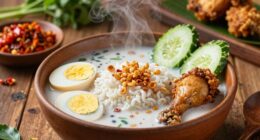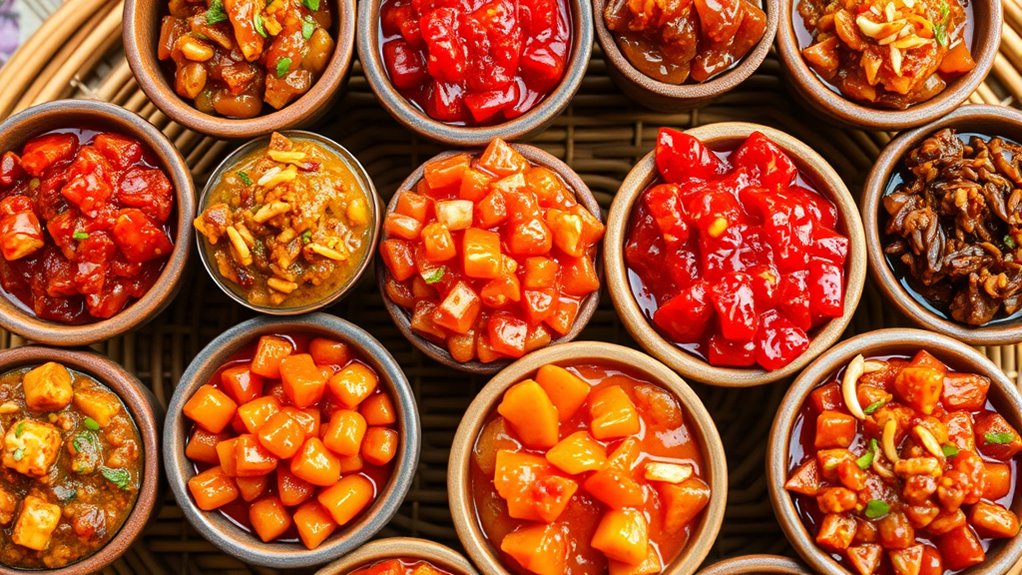

Discover Indonesia’s vibrant sambal varieties, each showcasing regional flavors and local ingredients. From Sumatra’s spicy sambal lado mudo to Java’s savory sambal terasi with fermented shrimp paste, there’s a flavor for every palate. Some are simple fiery pastes, while others blend citrus, sugar, and fermentation for complexity. Exploring these condiments reveals Indonesia’s rich culinary culture—if you want to learn more about their distinct tastes and uses, keep exploring these flavorful chili sauces.

Get kitchen staples and gadgets delivered free — and shop member deals
- Fast, free delivery on millions of items
- Access to Prime Big Deal Days deals on October 6–7
- Prime Video, Amazon Music and more included
Key Takeaways
- Indonesia offers diverse sambal varieties, each reflecting regional ingredients and culinary traditions, from Sumatra to Java.
- Popular types include Sambal oelek, Sambal terasi, and Sambal lado mudo, each with unique flavor profiles.
- Ingredient choices like shrimp paste, fermented soybeans, or fresh chilies greatly influence flavor, aroma, and texture.
- Variations range from simple, fiery chili pastes to complex, fermented condiments with sweet or tangy notes.
- Sambal plays a vital role in Indonesian cuisine, used as a condiment, marinade, or cooking ingredient, embodying local culinary heritage.

Have you ever wondered how many different types of sambal there are? Indonesia’s beloved chili condiments come in an astonishing variety, each showcasing unique regional flavors and ingredient variations that reflect local tastes and traditions. Whether you prefer something fiery and robust or tangy and sweet, sambal offers a flavor profile for every palate. The diversity of sambal is rooted in the country’s vast geography, cultural influences, and available ingredients, which means no two varieties are exactly alike.
Indonesia’s sambal varieties reflect diverse regional flavors and culinary traditions.
In many regions, sambal is more than just a condiment—it’s a cultural staple. For example, in Sumatra, you’ll find sambal lado mudo, made with young green chilies, lime leaves, and sometimes shrimp paste, giving it a fresh, citrusy zest. Meanwhile, in Java, sambal terasi is popular, featuring fermented shrimp paste that lends a deep, umami flavor. Each regional flavor brings a distinct character to the table, highlighting local ingredients and culinary traditions. The ingredient variations are endless: some sambals incorporate shallots, garlic, or tomatoes, while others focus solely on chilies and salt. This adaptability allows home cooks and chefs alike to create their own signature versions, tailoring the spice level and flavor complexity to their preferences.
Whether you’re stirring together a simple sambal oelek or preparing a complex sambal bajak, understanding the ingredient variations helps you appreciate the nuances of each type. For instance, adding sugar or lime juice can transform a fiery chili paste into a sweet and tangy sauce, perfect for dipping or mixing into rice dishes. The use of fermented ingredients like shrimp paste or fermented soybeans adds depth and richness, elevating the sambal from a basic chili paste to a culinary centerpiece. Additionally, quality ingredients significantly influence the final flavor and texture, making it essential to choose carefully. As you explore different varieties, you’ll notice how regional ingredients influence taste, aroma, and texture, making each sambal a reflection of local landscapes and culinary history.
In essence, the world of sambal is a vibrant tapestry woven from regional flavors and ingredient variations. Each jar or spoonful tells a story of place and tradition, inviting you to discover new tastes with every serving. As you experiment with different recipes and ingredient combinations, you’ll gain a deeper appreciation for Indonesia’s rich culinary heritage. Whether used as a condiment, marinade, or cooking ingredient, sambal’s diversity guarantees that you’ll never run out of exciting ways to spice up your meals.
Frequently Asked Questions
What Is the History Behind Indonesian Sambal?
You might find it fascinating that Indonesian sambal has roots in ancient spice trade routes, where chili cultivation began influencing local cuisine. As chili peppers were introduced through trade, Indonesians embraced them, creating vibrant sambal varieties that reflect regional flavors. Over centuries, sambal evolved into a staple condiment, symbolizing Indonesia’s rich history of spice exchange and its love for bold, fiery flavors.
Can Sambal Be Made Gluten-Free?
Yes, you can make sambal gluten-free by using gluten-free ingredients like fresh chili, garlic, shallots, and vinegar. Just be mindful of cross-contamination concerns, especially if using store-bought or pre-made ingredients. Always check labels to verify no wheat or gluten-containing additives are included. Making your own sambal at home gives you control over ingredients, ensuring it remains safe for those avoiding gluten.
How Long Does Homemade Sambal Last?
Homemade sambal can last up to two weeks when stored properly. To keep its vibrant flavor, follow storage tips like sealing it tightly in an airtight container and refrigerating. Think of it as a treasure chest—protect its freshness to preserve its fiery kick and rich aroma. Regularly check for signs of spoilage, and always use clean utensils to maintain flavor preservation and extend its shelf life.
Are There Vegetarian Options for Sambal?
Yes, you can find vegetarian options for sambal by using ingredient substitutions. Instead of shrimp paste or fish sauce, opt for soy sauce, mushroom sauce, or salt to add umami flavor. You can also include roasted tomatoes, bell peppers, or other vegetables to create delicious vegetarian sambal varieties. These substitutions keep the sambal flavorful and suitable for vegetarians, allowing you to enjoy this spicy condiment without compromising your dietary choices.
What Are the Health Benefits of Eating Sambal?
Eating sambal offers spicy health benefits, as the chili peppers in it contain capsaicin, which can boost your metabolism and reduce inflammation. It’s also rich in sambal antioxidants that help fight free radicals, supporting your immune system. Plus, the spicy kick can improve circulation and elevate your mood. Incorporating sambal into your meals not only enhances flavor but also provides these natural health perks.
Conclusion
Now that you’ve explored Indonesia’s vibrant sambal varieties, you’re like a traveler with a colorful map of fiery trails. Each sambal is a spicy brushstroke on the canvas of Indonesian cuisine, adding zest and warmth to every dish. So, next time you reach for that jar, remember you hold a tiny volcano, ready to ignite your senses with a burst of fiery passion. Embrace the heat—your culinary adventure has just begun.
NFL season / tailgating Picks
team gear
As an affiliate, we earn on qualifying purchases.