
Pickles and acar are essential Indonesian condiments that add vibrant, tangy flavors to your meals. They develop through fermentation, using natural microbes, which create probiotic-rich, flavorful toppings for dishes like satay and rice bowls. Their crisp texture and lively acidity help balance rich, oily foods and brighten your palate. Whether you customize them at home or enjoy traditional varieties, these sides offer diverse flavors and health benefits that can elevate any meal—discover how their unique tang can transform your cuisine.
Key Takeaways
- Pickles and acar add vibrant, tangy flavors that complement and brighten Indonesian dishes like satay and rice bowls.
- Their fermentation process develops probiotic-rich, sour profiles that enhance flavor and provide health benefits.
- Home fermentation allows customization of ingredients and fermentation duration for tailored taste experiences.
- These condiments balance rich, oily foods with lively acidity, serving as refreshing side dishes or snacks.
- The diverse ingredients and fermentation techniques create versatile, flavorful sides that elevate Indonesian cuisine.
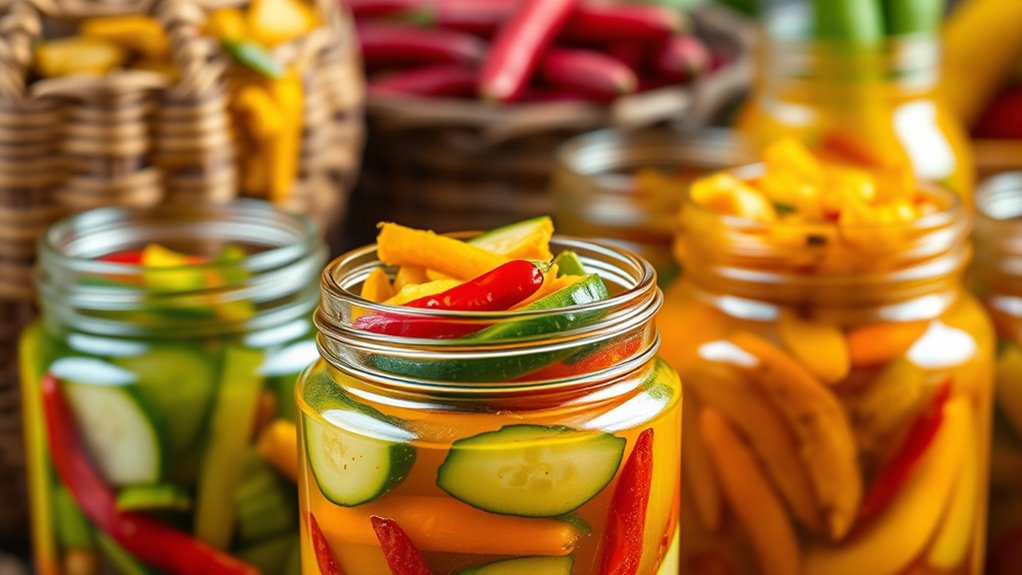
Pickles and acar are vibrant, tangy condiments that add zest to a variety of dishes. As you explore these flavorful accompaniments, you’ll notice the fermentation process plays a vital role in developing their distinctive tang and depth. During fermentation, natural microbes interact with vegetables, transforming them into deliciously sour and probiotic-rich delights. This process not only enhances flavor but also preserves the vegetables, making them an excellent addition to your meals over time. You might find that different fermentation techniques or the length of fermentation lead to various flavor profiles, from mildly tart to sharply tangy, giving you a range of flavor variations to suit your palate.
When you prepare pickles or acar at home, you gain control over the fermentation process, allowing you to experiment with ingredients and timing. For instance, using different types of vinegar, spices, or vegetables can considerably influence the final taste. Some prefer the milder, slightly sweet notes of pickled cucumbers, while others enjoy the more complex, layered flavors of acar made with carrots, cabbage, or green beans. These flavor variations come from the combination of fermentation time, added spices, and the types of vegetables used. As fermentation progresses, the flavors become more pronounced and tangier, giving you the flexibility to enjoy your condiments at different stages of readiness.
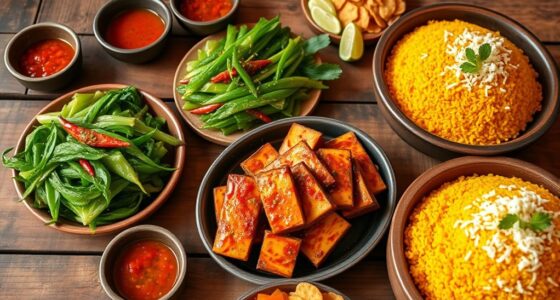
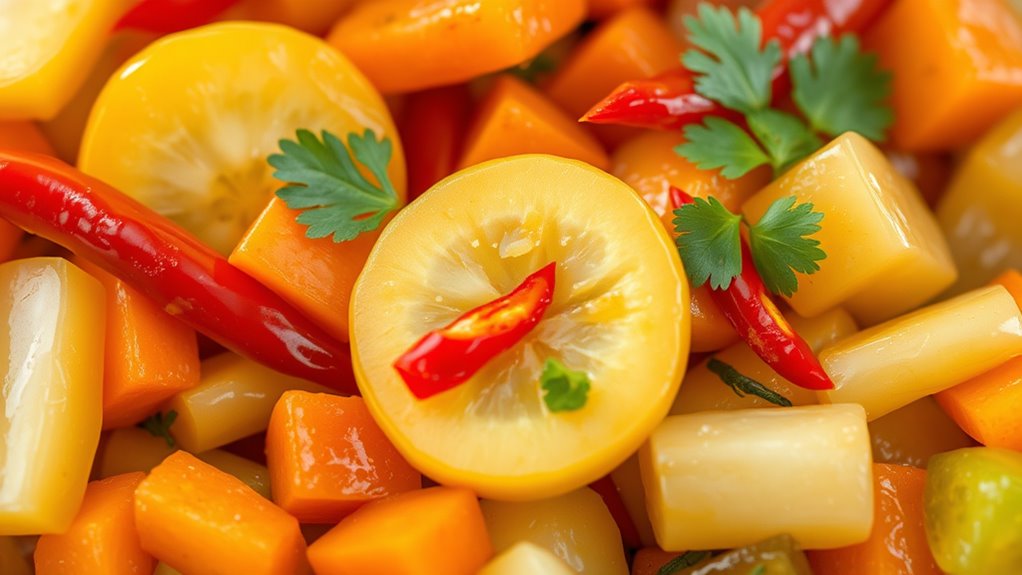
In Indonesian cuisine, acar is often prepared with a mixture of vegetables, vinegar, sugar, and spices, giving it a bright, invigorating taste that complements hearty dishes like satay or rice bowls. Pickles, on the other hand, are typically crisper and can be served as a side or snack. Both condiments bring a lively acidity that cuts through rich, oily dishes, balancing the flavors and providing a palate-cleansing effect. Whether enjoyed immediately after fermentation or after aging for a few days, their flavor profiles continue to evolve, offering new nuances with each bite.
You’ll appreciate how versatile pickles and acar can be, fitting seamlessly into various meals and culinary styles. Their fermentation process and resulting flavor variations mean you can customize them to match your preferences. From mildly tangy to sharply fermented, these condiments elevate the taste of your dishes while offering the added benefit of probiotics. As you experiment with making your own, you’ll discover how simple ingredients and patience can lead to vibrant, tangy sides that truly brighten Indonesian meals.
Frequently Asked Questions
What Are the Traditional Indonesian Ingredients Used in Pickles and Acar?
You’ll find that traditional Indonesian pickles and acar use ingredients like cucumbers, carrots, and cabbage, combined with spices such as turmeric, garlic, and chili. They often undergo a fermentation process that enhances their tangy flavor, reflecting regional flavor profiles across Indonesia. These ingredients create vibrant, flavorful sides that brighten meals and showcase local culinary traditions, offering a delightful balance of acidity and spice that complements main dishes perfectly.
How Long Can Pickles and Acar Be Stored Without Losing Flavor?
Your pickles and acar can last up to several months if stored properly, but keep an eye on the fermentation process and use airtight storage containers. Usually, their flavor stays vibrant for 2-3 months, though some enthusiasts say they develop even better with age. Make sure to refrigerate them once fermentation slows and always check for signs of spoilage before enjoying. Proper storage keeps that tangy burst alive!
Are There Regional Variations of Pickles and Acar Across Indonesia?
You’ll find regional variations of pickles and acar across Indonesia, showcasing diverse regional flavors and ingredient diversity. In Java, they often use sweeter, spiced pickles, while in Sumatra, you might encounter tangier, more chili-infused versions. Each area adapts the recipes to local ingredients and tastes, so exploring these regional differences lets you experience the rich culinary diversity Indonesia has to offer.
Can Pickles and Acar Be Made Vegan or Gluten-Free?
You can totally make pickles and acar vegan and gluten-free! Just swap fish sauce with vegan substitutes like soy sauce or coconut aminos, and use rice vinegar or lime juice instead of gluten-containing ingredients. These changes are so simple, they might just revolutionize your kitchen! Now, everyone can enjoy these tangy, bright sides without worries—delicious, inclusive, and bursting with flavor, no matter your diet.
What Are Some Modern Twists on Traditional Indonesian Pickle Recipes?
You can add fusion flavors to traditional Indonesian pickle recipes by experimenting with ingredients like citrus zest or chili-infused vinegar. Incorporate modern fermentation techniques such as controlled temperature fermentation or quicker pickling methods to create unique textures and flavors. You might also try blending local spices with international ones, like ginger or cumin, to craft innovative, vibrant pickles that elevate your dishes while respecting traditional roots.
Conclusion
Don’t let the tanginess scare you away—pickles and acar actually enhance your Indonesian meals with vibrant flavors. If you’re worried about the acidity or unfamiliar taste, start small and savor the balance of sweet, sour, and spicy. Once you give them a try, you’ll see how these tangy sides brighten every bite and add a delightful complexity. Embrace the bold flavors; your palate might just thank you for the exciting new experience.