In Indonesia, holiday foods go beyond Eid, showcasing regional flavors, cultural symbols, and shared rituals. You’ll find dishes like rendang in Java, lawar in Bali, and nasi padang in Sumatra, each reflecting local traditions. Special foods like ketupat and zongzi symbolize unity, prosperity, and community bonds. The preparation of these dishes often involves meaningful rituals that celebrate heritage and faith. Explore further to discover how these traditions maintain Indonesia’s vibrant cultural identity.
Key Takeaways
- Indonesian holidays feature diverse traditional dishes like rendang, lawar, and nasi padang, reflecting regional cultural identity.
- Food preparation during festivals involves communal activities that reinforce social bonds and cultural values.
- Festive foods such as ketupat and zongzi symbolize unity, prosperity, and gratitude in various celebrations.
- Ingredients like spices and coconut milk are essential for preserving authentic flavors and culinary heritage.
- Rituals surrounding food, including special cooking practices, highlight the cultural and spiritual significance of holiday feasts.

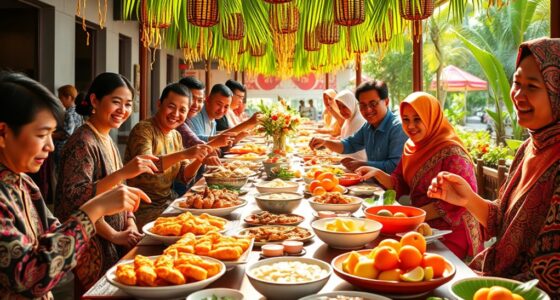
Indonesia’s rich cultural diversity is vividly reflected in its holiday foods and traditions, which bring communities together to celebrate special occasions. When you participate in these celebrations, you’ll notice how food becomes a powerful expression of identity, history, and unity. Traditional recipes play a central role in these festivities, each dish carrying a story that links generations. Whether it’s a simple dish shared among family or a grand communal feast, these foods symbolize more than sustenance—they embody cultural pride and collective memory.
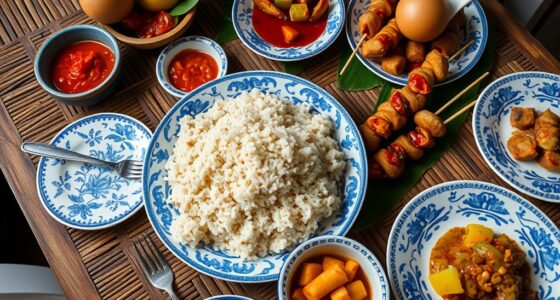
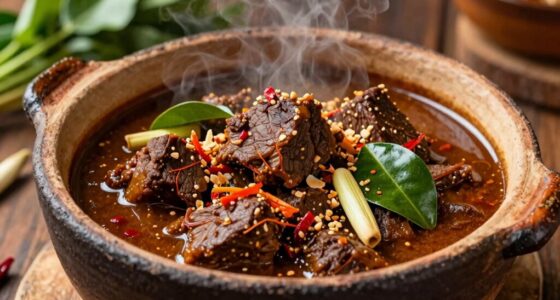
During various cultural celebrations, you’re likely to encounter an array of traditional recipes that vary across regions. For example, in Java, you might savor rendang, a rich, slow-cooked beef curry flavored with spices and coconut milk, often served during important gatherings. In Bali, lawar—a colorful mix of vegetables, grated coconut, and minced meat—makes an appearance during temple festivals and ceremonies. Sumatra offers its signature dishes like nasi padang, a spread of rice accompanied by a variety of flavorful side dishes, perfect for communal sharing. These recipes aren’t just about taste; they’re about preserving cultural heritage and passing down customs from one generation to the next.
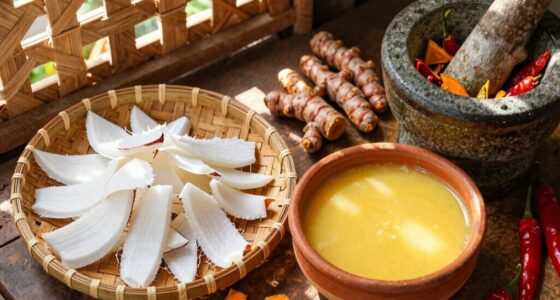
Celebrating these traditions isn’t solely about the food itself but also about the rituals surrounding them. During religious and cultural festivals, you might find families preparing traditional recipes together, turning cooking into a meaningful activity that strengthens bonds. For instance, during Eid al-Fitr, Indonesians prepare special dishes like ketupat (rice cakes wrapped in woven palm leaves) and opor ayam (chicken in coconut milk), which are essential to the celebration. These foods symbolize gratitude and togetherness, reminding everyone of the importance of community and faith. Similarly, during Chinese New Year, you might enjoy zongzi—sticky rice dumplings filled with meat or sweet fillings—symbolizing unity and prosperity. Additionally, the use of traditional high-quality ingredients like spices and coconut milk enhances the authenticity and flavor of these dishes, emphasizing the importance of ingredient selection in preserving culinary traditions.
Frequently Asked Questions
How Do Indonesian Holiday Foods Vary Across Different Regions?
You’ll notice Indonesian holiday foods vary across regions due to regional ingredient variations and cooking method differences. In Java, you might enjoy sweet, coconut-based dishes, while in Sumatra, spicy, chili-infused foods dominate. Some areas favor grilling, steaming, or frying, which influences flavors and textures. These regional differences reflect local ingredients, climate, and cultural influences, making each area’s holiday cuisine unique and vibrant for you to explore.
Are There Specific Rituals Associated With Preparing Traditional Dishes?
Preparing traditional Indonesian dishes is like orchestrating a symphony, each ritual adding harmony to the final masterpiece. You’ll find specific cooking rituals that honor the ingredients and cultural significance, from meticulous food plating to precise timing. These rituals aren’t just about flavor; they’re a spiritual dance that preserves tradition, ensuring each dish embodies respect, love, and the deep-rooted history woven into every bite you create.
What Are the Origins of Popular Indonesian Festive Desserts?
You might find that the origins of popular Indonesian festive desserts blend various dessert history and flavor influences, reflecting the country’s diverse culture. Many desserts, like kue lapis or klepon, trace back to ancient trade routes and local traditions, incorporating ingredients from Chinese, Indian, and indigenous Indonesian cuisines. These flavor influences create rich, colorful treats that celebrate Indonesia’s cultural tapestry during festive seasons.
How Do Indonesian Holiday Foods Influence Modern Culinary Trends?
Indonesian holiday foods shape modern culinary trends by inspiring fusion cuisines and street food innovations. You’ll notice chefs blending traditional flavors with international techniques, creating exciting dishes that honor heritage while appealing to global tastes. Street vendors innovate by reimagining classic snacks, making them more accessible and trendy. These influences encourage you to explore diverse flavors, fostering a dynamic food scene that celebrates Indonesia’s rich culinary culture in contemporary ways.
Are There Any Unique Dietary Restrictions Observed During Celebrations?
You’ll notice that during Indonesian celebrations, many observe unique dietary restrictions, such as fasting practices during Ramadan. Approximately 80% of Indonesians are Muslim, so vegetarian dishes and fasting are common, especially during religious events. These traditions influence holiday menus, with special vegetarian dishes prepared for those fasting or avoiding certain foods. Such customs foster a sense of community and respect, shaping Indonesia’s vibrant culinary landscape during festive seasons.
Conclusion
As you immerse yourself in Indonesia’s vibrant holiday foods and traditions, you’ll find yourself transported to a world bursting with flavors and history. These celebrations are more than just meals—they’re a feast for the senses that could rival the grandest festivals in the universe. Embrace the rich aromas, colorful displays, and heartfelt rituals, knowing you’re part of a cultural tapestry so rich, it could outshine even the brightest star in the sky.