Discover how Indonesia beautifully blends tradition and innovation through its culinary and textile arts. In modern Indonesian cuisine, chefs combine classic spice blends with cutting-edge techniques like molecular gastronomy, creating dishes that honor heritage while delighting your senses. Similarly, contemporary artisans reinterpret traditional textiles such as batik and ikat with digital art and bold designs, reflecting a dynamic cultural evolution. Explore how these creative expressions keep Indonesia’s vibrant identity alive in exciting new ways.
Key Takeaways
- Modern Indonesian cuisine blends traditional spice blends with innovative techniques like sous-vide and molecular gastronomy.
- Fusion dishes elevate flavors by combining local ingredients with contemporary presentation styles.
- Contemporary textile arts incorporate digital printing and mixed media into traditional batik and ikat designs.
- Textiles and food both serve as mediums for storytelling, honoring heritage while embracing artistic and culinary innovation.
- Indonesia’s cultural landscape reflects a dynamic balance of preserving traditions and reimagining them through modern creative expressions.

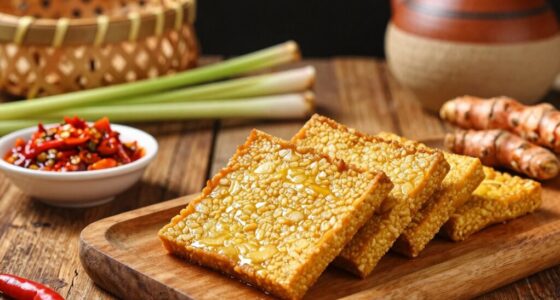
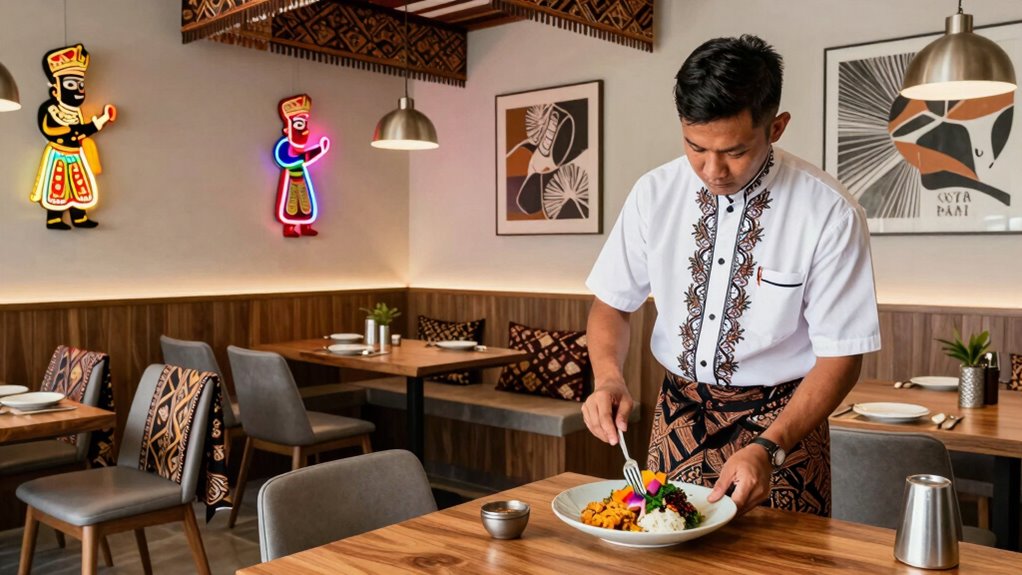
Have you ever tasted a dish that seamlessly blends traditional Indonesian flavors with modern culinary techniques? If so, you’ve experienced the vibrant essence of modern Indonesian fusion. It’s a culinary journey that respects age-old recipes while embracing innovation, creating a dynamic experience for your palate. Indonesian cuisine is renowned for its rich use of Indonesian spice blends, which form the backbone of many dishes. These spice blends, carefully curated with ingredients like turmeric, coriander, galangal, and lemongrass, have been passed down through generations. Now, chefs and home cooks alike are reimagining these flavors, pairing them with contemporary cooking methods like sous-vide, molecular gastronomy, or fusion plating. The result is a dish that pays homage to tradition but surprises with its presentation and texture. Think spicy sambal drizzled over a meticulously crafted modern seafood platter or a nasi goreng reinterpretation that uses locally sourced ingredients and innovative techniques to elevate flavor profiles. It’s a testament to how traditional Indonesian spice blends serve as a foundation for culinary creativity, bridging the past and present.
Beyond the kitchen, modern Indonesian fusion extends into the domain of contemporary textile art, where tradition meets innovation visually. Indonesian textile arts, such as batik and ikat, have a long history rooted in symbolism and craftsmanship. Artists today blend these traditional motifs with contemporary design principles, creating textiles that are both culturally significant and artistically fresh. They experiment with new materials, digital printing, and mixed media, pushing the boundaries of conventional textile art. Imagine a batik piece that incorporates metallic threads or a digital print overlay that transforms a classic motif into a modern statement. This fusion of old and new in textile art mirrors the culinary approach, emphasizing respect for heritage while exploring new aesthetic territories. As you observe these textiles, you notice how they tell stories—sometimes honoring ancestral techniques, sometimes challenging them with bold colors or abstract forms. This ongoing dialogue between tradition and innovation reflects Indonesia’s evolving identity, where artisans and designers craft pieces that resonate with contemporary sensibilities while honoring their cultural roots. Both the culinary and textile worlds illustrate how Indonesia’s rich heritage continues to inspire creativity. In the kitchen, traditional spice blends are being used to craft bold, inventive dishes; in the studio, traditional motifs are reinterpreted through modern techniques to produce enthralling textiles. Together, these developments showcase a nation that values its history but isn’t afraid to experiment and redefine its artistic and culinary boundaries. Whether you’re tasting a new dish or admiring a piece of textile art, you’re witnessing the vibrant intersection where Indonesia’s timeless traditions meet innovative expression.
Frequently Asked Questions
How Do Chefs Choose Which Traditional Dishes to Fuse?
You choose traditional dishes for fusion by considering ingredient pairing and flavor balancing. You look for complementary flavors that can blend well, ensuring the dish remains harmonious. You also consider the cultural significance and culinary techniques, adapting them creatively. By experimenting with spices, herbs, and textures, you craft innovative dishes that respect tradition while adding a modern twist, making each fusion dish unique and exciting for your diners.
What Are the Key Ingredients in Modern Indonesian Fusion Cuisine?
You’ll find that key ingredients in modern Indonesian fusion cuisine include fresh, sustainably sourced herbs and spices like lemongrass, turmeric, and galangal, which bring authentic flavors. Coconut milk and rice serve as versatile bases, while innovative elements like exotic fruits and vegetables add vibrant twists. To perfect your dishes, focus on flavor balancing, combining traditional tastes with modern influences, ensuring each ingredient complements the others and highlights Indonesian culinary heritage.
How Has Local Culture Influenced Fusion Food Styles?
Think of your plate as a canvas where local culture acts as the palette, blending tradition with culinary experimentation. You’re inspired by cultural preservation, which guides authentic flavors, yet you’re also adventurous, mixing spices and techniques from different regions. This fusion reflects Indonesia’s rich heritage, symbolizing unity in diversity. Your dishes become stories—each bite honoring history while embracing innovation, creating a vibrant tapestry of flavors that celebrate both past and present.
What Challenges Do Chefs Face When Innovating Traditional Recipes?
When you innovate traditional recipes, you face challenges like ingredient substitution, which can alter authentic flavors. You need to carefully balance flavors to maintain the dish’s essence while adding a modern twist. It’s a delicate process that requires understanding cultural significance and culinary techniques. If you don’t pay attention to flavor balancing, your dish might lose its traditional appeal or become unrecognizable, making it hard to satisfy purists and adventurous eaters alike.
Are There Regional Differences in Fusion Approaches Within Indonesia?
Yes, there are regional differences in fusion approaches across Indonesia. You’ll notice that regional diversity influences culinary variations, with each area blending local ingredients and flavors with international influences uniquely. For example, in Bali, you might see tropical fruits paired with spices, while in Sumatra, traditional herbs merge with global techniques. These regional nuances shape how chefs experiment and innovate, creating a vibrant mosaic of modern Indonesian cuisine that reflects local identities.
Conclusion
As you immerse yourself in modern Indonesian fusion, you’ll find yourself caught in a whirlwind of colors, flavors, and rhythms so vibrant they could light up the entire universe. Tradition and innovation collide like crashing waves, creating a spectacle so breathtaking it could make the stars jealous. This culinary and cultural revolution isn’t just a trend; it’s a firestorm of creativity that will leave your senses forever transformed. Prepare to be dazzled, because this is a tapestry so alive, it practically breathes!