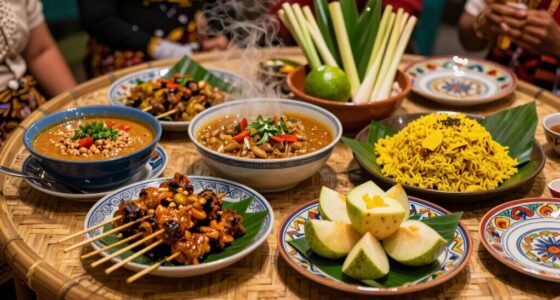
In Indonesia, food sharing is guided by customs that emphasize respect, humility, and community. You’ll notice the use of the right hand for eating, serving guests first, and communal dishes around a central spread. Respectful gestures like accepting food with both hands and offering prayers deepen connections. These traditions celebrate harmony, gratitude, and spiritual bonds during meals. Continuing to explore these customs will reveal even more about the rich cultural values behind Indonesian dining.
Play games included with Prime
Start a Prime free trial and play with Amazon Luna on your devices.
As an affiliate, we earn on qualifying purchases.
Key Takeaways
- Communal eating around a central spread fosters social bonds and collective harmony during meals.
- Using the right hand for eating signifies respect, purity, and good manners.
- Serving guests first and accepting food with both hands demonstrate politeness and humility.
- Rituals like prayers, offerings, and gratitude deepen spiritual and social connections.
- Regional culinary influences and customs reflect Indonesia’s diverse cultural and religious values.

Indonesia’s rich cultural diversity is vividly reflected in its food customs, which play an essential role in social and religious gatherings. As you experience Indonesian meals, you’ll notice how traditional dining etiquette guides every step, emphasizing respect, humility, and togetherness. For example, it’s customary to use your right hand for eating, especially when sharing dishes with others, as this gesture symbolizes purity and good manners. You might find that communal eating is the norm, where everyone gathers around a central spread of dishes, encouraging a sense of unity. This practice not only nurtures relationships but also reflects the Indonesian value of collective harmony. Recognizing the significance of cultural practices can deepen your understanding of how these customs foster social bonds.
Regional culinary influences deeply shape how meals are prepared and shared across the archipelago. In Java, you’ll encounter dishes like gudeg—sweet jackfruit stew—highlighting the island’s rich spice blends and slow-cooking techniques. Moving to Sumatra, the flavors become bolder with dishes such as rendang, a spicy, slow-cooked beef curry that reflects the influence of Malay and Indian flavors. Bali, on the other hand, showcases dishes like lawar, which combine herbs, vegetables, and sometimes meat, showcasing the island’s unique blend of local and Hindu influences. These regional variations influence not only the ingredients used but also the way meals are served and enjoyed. You’ll notice that in some regions, meals are accompanied by rice, which is considered sacred and central to Indonesian cuisine, symbolizing life and sustenance. Additionally, cultural diversity significantly impacts the variety of dishes and customs found throughout Indonesia. This diversity enriches the culinary landscape, making each region’s food traditions uniquely vibrant.
During social or religious occasions, specific customs are observed, reinforcing respect for tradition. For instance, before eating, it’s common to say a prayer or express gratitude for the food, reinforcing spiritual connection. Guests are often served first, and it’s polite to accept food with both hands, showing appreciation and humility. You might also see offerings or small rituals associated with meals, especially during religious festivals like Hari Raya or Nyepi. These customs serve as reminders of the importance of harmony, respect, and gratitude in Indonesian culture. Additionally, understanding the cultural significance behind these customs enhances your appreciation of the meal and the community’s shared values. Such practices help maintain a sense of spiritual and social cohesion among communities.
As you partake in Indonesian meals, you’ll find that the blend of regional influences and adherence to traditional dining etiquette creates a dining experience that’s both warm and meaningful. It’s not just about nourishing your body but also honoring the cultural values that bring people together. Understanding these customs gives you a deeper appreciation of Indonesia’s diverse culinary landscape, making every meal more than just food — it’s a celebration of community, tradition, and shared identity.
Indonesian communal dining serving set
As an affiliate, we earn on qualifying purchases.
As an affiliate, we earn on qualifying purchases.
Frequently Asked Questions
How Do Indonesian Food Customs Vary Across Different Regions?
You’ll notice that Indonesian food customs vary across regions through differences in regional spice preferences and traditional food presentation. In Sumatra, bold spices like turmeric and chili dominate, while in Bali, sweeter and milder flavors are common. Traditional food presentation also varies, with some areas serving meals on banana leaves, and others using intricate dishes or communal plates. These regional customs reflect Indonesia’s rich cultural diversity and influence how meals are shared.
What Utensils Are Traditionally Used in Indonesian Meals?
You’ll find that traditional utensil varieties like hands, particularly the right hand, are commonly used to eat rice and dishes, emphasizing a tactile connection to the food. Spoons and forks are also popular, especially for soups and curries. Modern utensil adaptations include stainless steel spoons and forks, but many still value traditional methods. Using your hands for certain dishes connects you to Indonesian culinary customs, enriching your dining experience.
Are There Specific Etiquette Rules for Communal Eating?
Ever wondered how Indonesian dining manners reflect cultural significance? Yes, there are specific etiquette rules for communal eating. You should use your right hand to eat, pass dishes politely, and avoid wasting food, respecting shared responsibilities. These customs foster harmony and show respect to others. Do you realize how these simple actions deepen connections and honor tradition, making every meal more meaningful and preserving Indonesia’s rich cultural heritage?
How Do Religious Beliefs Influence Indonesian Dining Practices?
Religious beliefs deeply influence Indonesian dining practices through religious fasting and sacred food rituals. During fasting, you abstain from food and drink at specific times, reflecting spiritual discipline. Sacred food rituals, like offerings in Hindu or Buddhist ceremonies, emphasize respect for spiritual traditions, shaping how you prepare and share meals. These practices foster community bonds, reinforce faith, and remind you of spiritual values while dining.
What Are Common Food Sharing Rituals During Festivals?
During festivals, you participate in traditional banquets where food is shared generously among guests. A key ritual involves food donation, symbolizing community spirit and gratitude. You’ll often see offerings of rice, fruits, and special dishes, which are prepared with care. These customs foster unity, respect, and harmony, as everyone shares in the celebration and the blessings of the festival, strengthening social bonds through collective participation.
right hand eating utensils for Indonesian cuisine
As an affiliate, we earn on qualifying purchases.
As an affiliate, we earn on qualifying purchases.
Conclusion
By understanding Indonesia’s food customs, you get a glimpse into the heart of its culture — where sharing a meal is more than just eating; it’s about building bonds and respecting traditions. Embrace these customs, and you’ll see that food becomes a bridge connecting people, not just a source of nourishment. Remember, when in Rome, do as the Romans do — immerse yourself in these traditions and truly savor the spirit of Indonesian hospitality.
traditional Indonesian rice serving bowl
As an affiliate, we earn on qualifying purchases.
As an affiliate, we earn on qualifying purchases.
Indonesian spice blend for rendang
As an affiliate, we earn on qualifying purchases.
As an affiliate, we earn on qualifying purchases.
NFL season / tailgating Picks
team gear
As an affiliate, we earn on qualifying purchases.