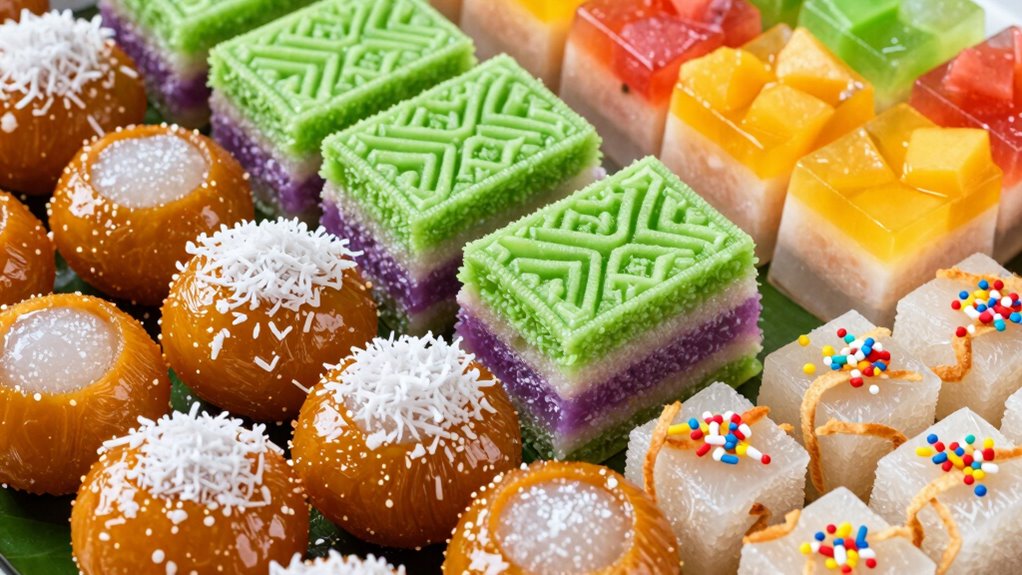
If you have a sweet tooth, Indonesia offers a rich variety of desserts to try. You can enjoy colorful, layered kue lapis, chewy dodol caramel treats, and flavorful onde-onde filled with mung bean paste and coated in sesame seeds. Each dessert reflects regional ingredients and traditions, showcasing vibrant flavors and textures. Exploring these treats gives you a taste of Indonesia’s cultural heritage. Keep exploring to discover more delicious Indonesian sweets that will satisfy your cravings.
Key Takeaways
- Sample traditional Indonesian desserts like kue lapis, dodol, and lawar, showcasing rich flavors and vibrant colors.
- Discover regional variations that highlight local ingredients and unique culinary techniques across Indonesia.
- Learn about the cultural significance and craftsmanship behind each sweet, reflecting Indonesia’s heritage.
- Experience diverse textures and flavors, from chewy dodol to layered, glossy kue lapis.
- Explore the authentic methods that preserve Indonesia’s culinary traditions and showcase its rich cultural mosaic.
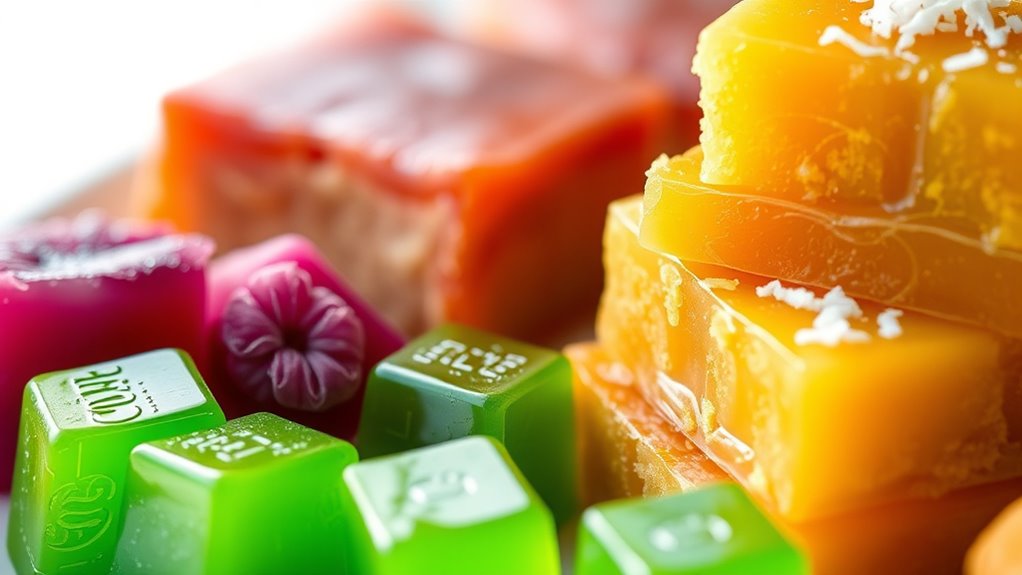
Indonesian desserts offer a vibrant mix of flavors, textures, and colors that reflect the country’s rich cultural heritage. When you explore these sweets, you’ll notice how traditional preparation methods and unique regional variations shape each treat, giving you a true taste of Indonesia’s diverse culinary landscape. Across the archipelago, each region brings its own twist, blending local ingredients and customs into familiar desserts, making every bite a new discovery.
Indonesian desserts showcase vibrant flavors, regional variations, and traditional craftsmanship that reflect the country’s rich cultural heritage.
You’ll find that many Indonesian desserts are crafted using time-honored techniques passed down through generations. For example, making kue lapis involves layering colorful rice flour batter, carefully steaming each layer to achieve a glossy, multi-hued effect. These traditional methods not only preserve the authentic flavors but also highlight the craftsmanship behind each dessert. In Bali, you might encounter lawar, a colorful mixture of grated coconut, sugar, and herbs that’s traditionally prepared using manual grinding and mixing, emphasizing community and ritual significance. Meanwhile, in Sumatra, the process of creating dodol involves boiling coconut milk, sugar, and sticky rice flour for hours until it thickens into a chewy, caramel-colored delight—an artisan process that demands patience and skill. Traditional techniques are essential in maintaining the integrity and authenticity of these desserts.
Regional variations are what make Indonesian desserts so fascinating. In Java, onde-onde are deep-fried glutinous rice balls filled with sweet mung bean paste, coated in sesame seeds, and often flavored with pandan. In contrast, the North Sulawesi version might incorporate local ingredients like sago or tropical fruits, giving it a distinctive regional character. The island of Bali offers its own twist with jaja Bali, a collection of colorful, layered rice cakes flavored with coconut and palm sugar, reflecting the local taste for rich, sweet flavors. Each variation uses regional ingredients and techniques, so you get a different experience depending on where you are in Indonesia.
Whether it’s the traditional methods that give these desserts their authenticity or the regional differences that provide unique flavors and textures, Indonesian sweets invite you to explore a culinary culture that’s as diverse as its landscape. When you indulge in these treats, you’re not just satisfying a sweet tooth—you’re immersing yourself in a rich heritage of craftsmanship, local ingredients, and regional pride. From the meticulous layering of kue lapis to the chewy richness of dodol, each dessert tells a story of Indonesia’s history and cultural mosaic, making your journey through Indonesian sweets both delicious and enlightening. Additionally, many of these desserts are authentically crafted using techniques that have been preserved over centuries, reflecting the country’s dedication to culinary tradition.
Frequently Asked Questions
What Are the Most Popular Traditional Indonesian Desserts?
You’ll find that popular traditional Indonesian desserts like klepon, dodol, and lapis legit have rich dessert history, blending flavors like coconut, palm sugar, and pandan. These treats often feature sweet, savory, and fragrant flavor profiles that reflect Indonesia’s diverse culture. By exploring these desserts, you get a taste of history and tradition, making each bite a delightful journey into the country’s culinary heritage.
Are Indonesian Desserts Suitable for Vegetarians?
Ever wondered if Indonesian desserts suit vegetarians? Many are indeed suitable, as they often use vegetarian ingredients like coconut milk, palm sugar, and rice flour. You can also find dairy alternatives such as coconut-based creams. However, some desserts may include non-vegetarian ingredients like gelatin or animal-based toppings. Always check the ingredients or ask if you’re unsure—this way, you can enjoy these sweet treats guilt-free and without compromise.
How Are Indonesian Desserts Traditionally Prepared?
You’ll find that Indonesian desserts are traditionally prepared through a mix of traditional cooking methods and careful ingredient sourcing. You often start with simple, fresh ingredients like coconut milk, rice, and palm sugar, which are then simmered, steamed, or fried to create rich flavors. The process emphasizes balance, patience, and local techniques, ensuring each dessert captures authentic tastes rooted in Indonesia’s culinary heritage.
Which Indonesian Desserts Are Gluten-Free?
Imagine a treasure chest of gluten-free snacks waiting to be discovered. You’ll find Indonesian desserts like Kue Lapis without wheat, made from rice flour, and Klepon, sweet rice cake balls filled with palm sugar. These traditional gluten-free recipes let you indulge without worry. You can enjoy authentic flavors while sticking to your dietary needs, discovering a delightful world of naturally gluten-free treats that feel like a warm, sweet embrace.
Where Can I Find Authentic Indonesian Desserts Abroad?
You can find authentic Indonesian desserts abroad at fusion flavor restaurants, Asian markets, and specialty dessert festivals. Look for events that celebrate Southeast Asian cuisine; they often feature traditional treats like kue lapis or pandan cakes. Fusion flavors are common in modern Indonesian-inspired desserts, so exploring diverse culinary festivals is your best bet. These venues connect you with genuine flavors and authentic recipes, making your culinary journey memorable and delicious.
Conclusion
As you indulge in Indonesian desserts, you’ll find sweetness that soothes your soul yet surprises your palate. The rich, traditional flavors stand in contrast to modern confections, reminding you of a vibrant culture rooted in history. Each bite offers a moment of nostalgia and discovery, blending the familiar with the exotic. So, embrace these desserts—delight in their complexity and simplicity alike—and let them take you on an unforgettable culinary journey through Indonesia’s vibrant dessert heritage.