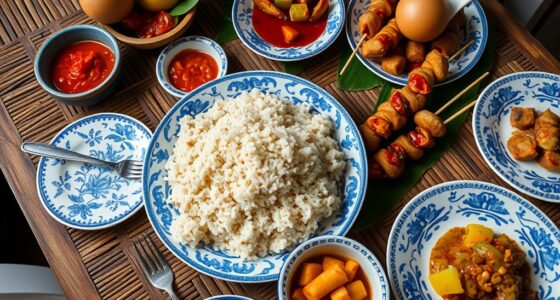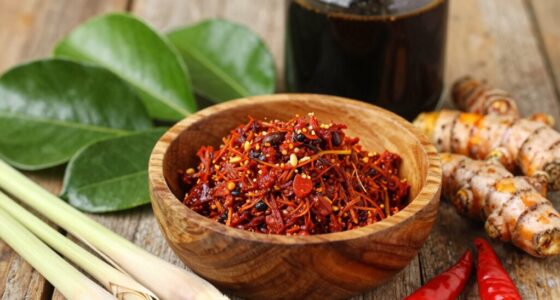
If you’re looking for Indonesian comfort foods that feel instantly welcoming, dishes like Soto Ayam and Nasi Goreng are perfect choices. These dishes are rich in flavors, with fragrant herbs, spices, and hearty ingredients that evoke warmth and familiarity. They often connect you to family, tradition, and cultural heritage, making every bite a comforting escape. Exploring these dishes further can reveal even more about Indonesia’s diverse and soul-nourishing cuisine.

Get kitchen staples and gadgets delivered free — and shop member deals
- Fast, free delivery on millions of items
- Access to Prime Big Deal Days deals on October 6–7
- Prime Video, Amazon Music and more included
Key Takeaways
- Traditional soups like Soto Ayam evoke warmth and cultural pride through aromatic spices and tender ingredients.
- Regional variations in dishes like Nasi Goreng create familiar, personalized flavors that foster a sense of belonging.
- Indonesian comfort foods connect families and communities during gatherings and celebrations, reinforcing social bonds.
- Rich, soulful flavors in these dishes offer emotional nourishment alongside physical sustenance.
- Preserving traditional recipes and ingredients maintains cultural identity and enhances the welcoming experience.

As you indulge in a steaming bowl of Soto Ayam, you experience a symphony of regional flavors that evoke feelings of warmth and belonging. This traditional chicken soup, with its fragrant turmeric broth, is a staple across many Indonesian households. The recipe varies slightly from place to place, but the essence remains the same: a hearty, flavorful soup that instantly makes you feel at home. The rich aroma of herbs, spices, and tender chicken makes each spoonful a comforting escape from the hustle of everyday life. When you prepare this dish, you’re not just cooking—you’re reviving a cherished piece of Indonesian heritage. Gadget reviews and tech tips can help you find the best kitchen gadgets to make cooking traditional dishes easier and more enjoyable.
Another classic that captures the heart of Indonesian comfort foods is Nasi Goreng. This iconic fried rice dish showcases the country’s love for bold, layered flavors. It’s often cooked with leftover rice, seasoned with sweet soy sauce, garlic, shallots, and chili, then topped with a fried egg. The regional flavors of Nasi Goreng can differ greatly; in Jakarta, it might include shrimp, while in Bali, it could be served with local spices and fresh herbs. The simplicity of the dish hides its depth—each bite delivers a satisfying combination of savory, smoky, and slightly sweet notes. Incorporating regional ingredients can elevate your homemade Nasi Goreng and bring authentic flavors to your table. Additionally, understanding the importance of local biodiversity can inspire you to choose ingredients that support sustainable farming practices and preserve Indonesia’s rich culinary heritage. Recognizing the variety of regional cuisines can also deepen your appreciation for Indonesia’s diverse culinary landscape. Exploring cultural influences can further enrich your understanding of how these dishes developed across different regions.
No matter which dish you choose, Indonesian comfort foods are more than just satisfying meals—they’re a way to connect with tradition and regional flavors that make each bite memorable. They remind you of family gatherings, celebrations, and quiet evenings at home. When you eat these dishes, you’re not just feeding your body; you’re nourishing your soul with the timeless flavors of Indonesia.
Frequently Asked Questions
Which Indonesian Comfort Food Is the Most Popular Nationwide?
You’ll find that nasi goreng is the most popular Indonesian comfort food nationwide. It’s a flavorful fried rice dish topped with spicy sambal, often accompanied by a fried egg and fresh vegetables. The dish’s balance of savory, spicy, and sweet flavors makes it incredibly comforting. For a sweet treat, many enjoy kue lapis, a layered cake. Its vibrant colors and sweet, sticky texture perfectly complement the hearty nasi goreng.
Are Indonesian Comfort Foods Suitable for Vegetarians?
Yes, Indonesian comfort foods can be suitable for vegetarians with some flavor adaptations. You can use vegetarian substitutions like tofu or tempeh, which absorb the rich spices beautifully. Many dishes, such as Gado-Gado or Sayur Lodeh, are naturally vegetarian, but you might need to adjust recipes to suit your preferences. With these modifications, you’ll enjoy the warm, delicious flavors of Indonesian cuisine without compromising your vegetarian lifestyle.
How Are Traditional Indonesian Comfort Foods Prepared?
Traditional Indonesian comfort foods are prepared through a mix of spice blending and specific cooking techniques. You start by blending spices like turmeric, galangal, and lemongrass to create rich flavors. Then, you use techniques such as braising, simmering, or stir-frying to develop depth and aroma. These methods guarantee the dishes, like rendang or soto, are hearty, flavorful, and truly comforting, capturing the essence of Indonesian home cooking.
What Are Regional Variations of Indonesian Comfort Foods?
You’ll find regional variations of Indonesian comfort foods rich in street food flavors and rooted in diverse culinary traditions. In Java, dishes like gudeg are sweet and savory, while in Sumatra, spicy rendang reflects Malay influences. Bali offers hearty lawar, and Sulawesi features unique seafood dishes. These regional differences showcase local ingredients, cooking styles, and cultural influences, making each area’s comfort foods uniquely delicious and deeply connected to its culinary heritage.
Can Indonesian Comfort Foods Be Made Gluten-Free?
Yes, Indonesian comfort foods can be made gluten-free. About 8% of the population has gluten sensitivities, so it’s practical to utilize gluten-free substitutions for soy sauce, noodles, or breadcrumbs. However, be mindful of cross-contamination concerns, especially in shared kitchens or restaurants. Using tamari instead of soy sauce, rice noodles, or fresh vegetables guarantees you enjoy these dishes safely without sacrificing authentic flavors.
Conclusion
Indonesian comfort foods have a way of making you feel right at home. Whether it’s the warm embrace of nasi goreng or the soothing richness of soto, these dishes connect you to a rich cultural tapestry. Did you know that Indonesia has over 300 distinct ethnic groups, each with their own unique culinary traditions? Exploring these foods not only satisfies your taste buds but also offers a glimpse into the country’s vibrant diversity and warm hospitality.
NFL season / tailgating Picks
team gear
As an affiliate, we earn on qualifying purchases.