
🔍 Read the full analysis: Autumn Bruschette: Mushroom, Squash, And New-Oil Toasts on Mad Tasting

Get kitchen staples and gadgets delivered free with Prime
- Fast, free delivery on millions of items
- Prime Video, Amazon Music and more included
- Member-only deals all year
TL;DR
With Tuscany’s November olive harvest underway, freshly pressed olio nuovo — cloudy, peppery new olive oil — is at its aromatic peak from mid-November through December. A guide to mushroom and squash bruschette shows how the seasonal tradition works: cooked toppings on charred bread, finished with raw new oil at the table.
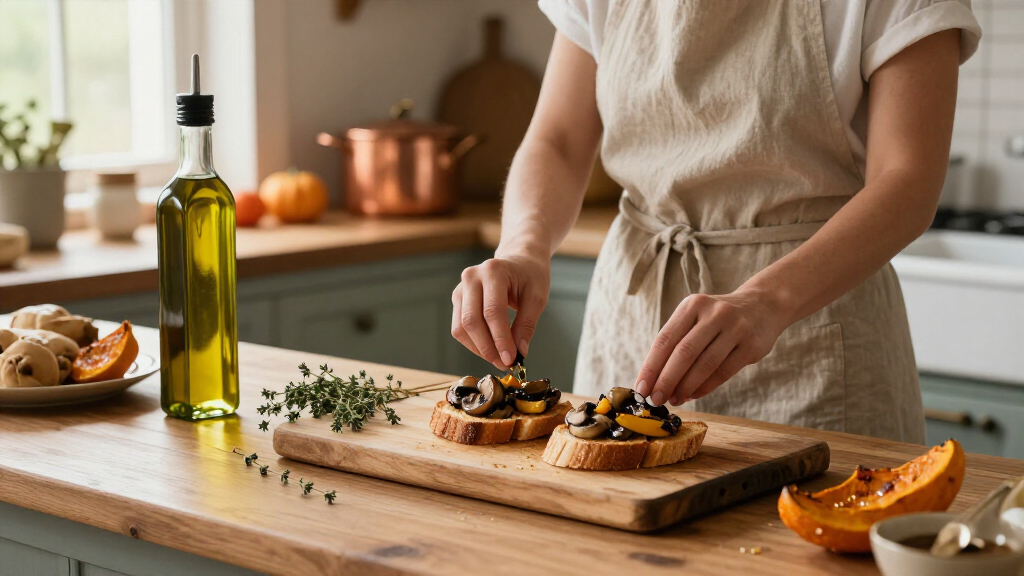
Olio nuovo — Italy’s freshly pressed, unfiltered olive oil — has returned to Tuscan mills and kitchens for its short annual window from roughly mid-November through December, and the classic way to taste it is autumn bruschette: thick charred bread piled with garlicky sautéed mushrooms or caramelized squash, finished with a raw drizzle of the new oil at the table. The dish, rooted in Tuscan tradition, turns three or four ingredients into the season’s defining plate. For cooks outside Italy, the guide from Mad Tasting lays out what new oil actually is, how to source it (or substitute for it), and how to build both classic versions.
New oil is pressed within days of the November harvest, bottled unfiltered, and meant to be consumed within weeks, according to the guide. It is cloudy, vividly green, and aggressively peppery — a good one makes you cough slightly, which Italians regard as proof of high polyphenol content and freshness. That peppery bite fades within two to three months because the polyphenols and volatile aromatic compounds oxidize steadily from the moment of pressing. The window for true new oil is not regulated; it exists because that is when the aromatics peak.
The unfiltered cloudiness that most supermarkets filter out carries much of the flavor — the suspended particles hold the fruitiest aromas, at the cost of a shorter shelf life. Italians, the guide notes, accept that trade without hesitation: flavor now, because flavor does not keep.
The structural rule of the dish: olio nuovo is never cooked. Heat volatilizes the delicate aromatics that justify its premium price, and its relatively low smoke point makes it uneconomical as a cooking fat. Instead, mushrooms are sautéed in ordinary extra-virgin oil, and the new oil is drizzled raw over the finished toast — the contrast between the cooked, savory base and the sharp raw finish is, in the guide’s words, the entire architecture of the dish.
Why the New-Oil Toast Matters
For readers planning seasonal cooking, the timing is the point: this is a dish with a genuine deadline. The new-oil window of roughly six to eight weeks cannot be extended, and much exported oil arrives after its aromatic peak, according to the guide. That makes November and December the only months when the dish can be made as intended.
The guide is also direct about substitution. Real olio nuovo is difficult to obtain outside Italy during its window; the recommended fallback is the best finishing-quality extra-virgin available — ideally a Toscano IGP or single-estate Umbrian oil with a harvest date on the bottle. The harvest date matters more than price: supermarket olive oil can legally sit in warehouses for over a year, so an inexpensive oil pressed three months ago will outperform an expensive one pressed two years ago, the guide states.
The bread choices carry the same practical stakes. Bruschetta comes from bruscare, “to char” in Roman dialect — it is a charred-bread dish, not an open-faced sandwich. The loaf should be rustic, open-crumbed, and at least a day old, sliced about 1 inch (2.5 cm) thick. Fresh bread holds too much moisture and turns soft rather than crisp; enriched breads with fat or sugar brown too fast and burn. The char itself is functional: bitter, smoky carbon bridges the bread and the raw oil, which is why pale sweet toast makes new oil taste harsh rather than balanced.
Tuscan Mill Tradition Behind the Dish
In Tuscany and Umbria, the arrival of new oil is a genuine event. Frantoiani — millers — open their frantoi (pressing facilities) for tastings, and families drive home with unlabeled bottles. The guide’s author recalls a first taste at a mill outside Montepulciano: a plastic cup, a shard of bread, and an oil so grassy it smelled like cut fields after rain — served without ceremony, because nobody treats it as precious.
The traditional base is pane toscano, Tuscany’s famously saltless loaf. The saltlessness stems not from preference but from medieval salt taxes, which Tuscans turned into a regional identity. The saltless loaf exists to let strongly flavored toppings and oil dominate completely; elsewhere in Italy a salted country-style loaf works, and, the guide concedes, most people prefer it.
Cooking method shapes the result. A charcoal grill gives smoky, striped authenticity suited to weekend cooking in dry weather; a cast-iron grill pan delivers good char indoors year-round.
“You never cook with olio nuovo. This isn’t stubbornness; it’s chemistry. Heat volatilizes exactly the delicate aromatics you paid a premium for.”
— Mad Tasting guide
Sourcing Limits Outside Italy
The guide is explicit that real olio nuovo is hard to get outside Italy during its two-month window, and much of what is exported arrives after its aromatic peak. It does not specify which producers or retailers reliably ship oil within the fresh window, so buyers will need to rely on harvest dates printed on bottles. The exact peak dates of each year’s pressing vary with the harvest and are not fixed by regulation.
Making the Toasts This Season
Cooks aiming to make the dish as intended should source new oil or a dated finishing extra-virgin in November or December, a day-old rustic loaf, mixed mushrooms or a hard squash, and garlic. Toast the thick slices over charcoal or a cast-iron grill pan until charred, sauté the mushrooms or roast and caramelize the squash in ordinary extra-virgin, assemble, and finish with the raw new oil at the table. Both versions, the guide notes, suit vegetarian tables, and the dish is vegan as long as no cheese finishing is added. After December, the peppery peak of the oil fades and the dish shifts to its year-round form with standard finishing oil.
Key Questions
What is olio nuovo?
It is olive oil pressed within days of the November harvest, bottled unfiltered, and consumed within weeks. It is cloudy, green, and peppery; the peppery bite — which can make you cough — comes from high polyphenol levels and fades within two to three months.
Can I cook with new olive oil?
No. According to the guide, heat destroys the delicate aromatics that make new oil worth its price, and its relatively low smoke point makes it uneconomical as a cooking fat. Sauté mushrooms in ordinary extra-virgin and drizzle the new oil on raw at the table.
What if I can’t find olio nuovo outside Italy?
Substitute the best finishing-quality extra-virgin you can buy — ideally a Toscano IGP or single-estate Umbrian oil. Check the harvest date on the bottle; it matters more than price, since supermarket oil can legally be warehoused for over a year.
What bread works best for bruschette?
A rustic, open-crumbed loaf at least a day old, sliced about 1 inch (2.5 cm) thick. Pane toscano, the saltless Tuscan loaf, is traditional; a salted country-style loaf works elsewhere. Avoid sandwich bread, baguettes, and enriched breads, which collapse or burn.
Are these bruschette vegan?
Yes, in their basic form — bread, mushrooms or squash, olive oil, and garlic contain no animal products. The guide identifies them as suitable for vegetarian and vegan tables, with finishing options left to the cook.
Source: Mad Tasting
NFL season / tailgating Picks
team gear
As an affiliate, we earn on qualifying purchases.