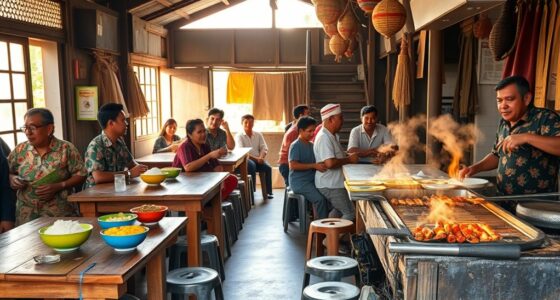
In Indonesia, breakfast is a lively cultural experience filled with colorful dishes and traditional drinks. You can start your day with aromatic nasi uduk, flavorful lontong, or hearty soto soup. Street stalls often serve warm beverages like bandrek or cool drinks like es cendol, adding to the vibrant atmosphere. Sharing these meals with locals makes breakfast more than just food—it’s a social tradition. Curious to explore more of Indonesia’s unique morning delights?
Key Takeaways
- Indonesian breakfast features a variety of traditional dishes like nasi uduk, lontong, and soto, served at lively street stalls.
- Popular morning beverages include warm bandrek and cool es cendol, enhancing the breakfast experience.
- Breakfast often involves sharing meals with community, emphasizing social bonding and cultural tradition.
- Street vendors prepare quick, affordable, and flavorful dishes, reflecting Indonesia’s rich culinary heritage.
- Breakfast in Indonesia is more than a meal; it’s a vibrant cultural ritual rooted in local customs.
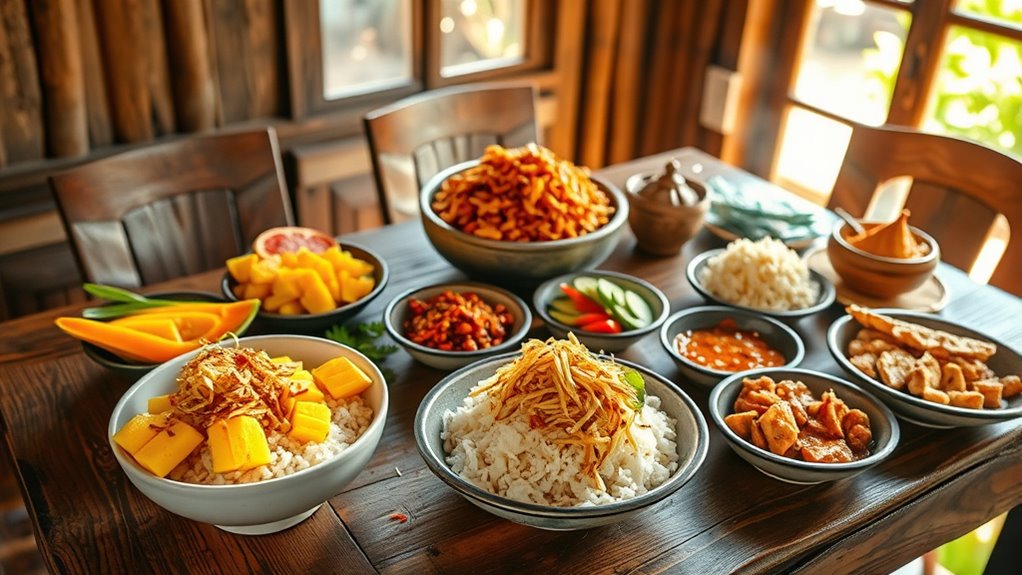
Have you ever wondered what a typical Indonesian breakfast looks like? If you find yourself wandering through bustling streets early in the morning, you’ll notice that breakfast isn’t just a meal—it’s a lively cultural experience. Local breakfast street stalls line the sidewalks, offering a vibrant array of sights, smells, and tastes. These stalls are where many Indonesians start their day, gathering around small tables with steaming bowls and cups in hand. One of the first things you’ll notice is the variety of traditional beverages served alongside breakfast dishes. You might be offered warm cups of sweet bandrek, a ginger-based drink infused with spices, or cool glasses of es cendol, a invigorating mixture of green rice flour jelly, coconut milk, and palm sugar syrup. These traditional beverages are more than just invigorating—they’re integral to the breakfast experience, warming you up or cooling you down as needed.
At these street stalls, breakfast is typically quick, affordable, and full of flavor. You’ll see vendors expertly preparing dishes like nasi uduk—aromatic rice cooked in coconut milk served with fried chicken, eggs, and spicy sambal—or lontong, compressed rice cakes paired with savory vegetables and peanut sauce. The aroma of freshly grilled satay sticks or frying tempeh fills the air, enticing passersby to stop for a quick bite. Many stalls also serve soto, a hearty soup with meat, noodles, and herbs, perfect for those who prefer a warm, filling start. The beauty of these street stalls is that they reflect the local palate—simple yet flavorful, with an emphasis on invigorating and tradition.
As you settle into the lively scene, you’ll notice that Indonesians often start their day with these traditional meals and beverages, valuing the communal aspect of breakfast. Sharing a meal at a street stall isn’t just about eating; it’s about connecting with the community. The vendors are friendly, often calling out to regular customers, and the atmosphere is buzzing with energy. Whether you prefer a quick snack like pisang goreng (fried bananas) or a more substantial dish like gudeg (sweet jackfruit stew), the breakfast street stalls offer a glimpse into Indonesia’s rich culinary heritage. Here, breakfast isn’t just fuel for the day—it’s a tradition rooted in history, shared among friends and neighbors, and celebrated with every steaming bowl and sip of traditional beverage.
Frequently Asked Questions
What Are Common Beverages Served With Indonesian Breakfast?
When you have breakfast in Indonesia, you’ll often enjoy traditional coffee or herbal teas to start your day. The traditional coffee, usually strong and sometimes sweetened with condensed milk, gives you a rich energy boost. Herbal teas, made from local herbs like lemongrass or ginger, offer a soothing, aromatic experience. These beverages perfectly complement Indonesian dishes and help you embrace the vibrant flavors of a typical morning.
How Do Regional Differences Influence Breakfast Choices Across Indonesia?
Imagine waking up to the aroma of spicy sambal in Sumatra or fragrant pandan rice in Bali. Your breakfast choices are shaped by regional ingredients and cultural influences, making each area unique. In Java, you’ll find sweet and savory options blending Islamic and Hindu traditions. In Sulawesi, seafood dominates. These regional differences create a vibrant tapestry of flavors, inviting you to explore Indonesia’s diverse morning culinary landscape.
Are There Vegetarian Options for Traditional Indonesian Breakfast Dishes?
Yes, you can find vegetarian options in traditional Indonesian breakfast dishes. Many places offer vegetarian substitutions, like tofu or tempeh, replacing meat or fish. You’ll enjoy plant-based dishes such as nasi uduk with vegetables, or lontong with spicy vegetable sambal. These options let you experience authentic flavors while sticking to a vegetarian diet. Just ask for vegetarian versions or substitutions to confirm your meal aligns with your preferences.
What Are Some Quick Street Food Breakfast Options in Indonesia?
Imagine strolling past local street stalls and discovering quick snack options that energize your morning. You can grab a steaming bowl of *bakso* (meatball soup) or a savory *nasi uduk* (coconut rice) wrapped in banana leaves. These street food breakfast options are perfect for a fast, flavorful start. They offer a taste of Indonesia’s vibrant food scene, letting you indulge in delicious bites without missing a beat.
How Has Indonesian Breakfast Cuisine Evolved Over Recent Years?
You’ve probably noticed that Indonesian breakfast cuisine has evolved with modern breakfast trends and fusion culinary influences. Today, you might find traditional dishes like nasi uduk paired with global flavors, creating exciting fusion options. Street vendors now serve innovative takes, blending local ingredients with international techniques. This evolution reflects Indonesia’s vibrant food scene, where you can enjoy both classic flavors and contemporary twists, making your morning meal more diverse and exciting.
Conclusion
Now that you’ve uncovered these delicious Indonesian breakfast secrets, are you ready to experience them firsthand? Each dish offers a unique story, bursting with flavors waiting to surprise you. But remember, this is just the beginning—there’s so much more to explore beyond these seven dishes. So, what will you try first? The morning’s still young, and your culinary adventure in Indonesia is only just getting started. The real flavor journey awaits.