
To cut fat in your cooking, try water-based methods like boiling, steaming, poaching, and simmering. These techniques use water instead of oils or fats, helping you prepare flavorful dishes with fewer calories. They retain nutrients and natural flavors, making your meals healthier without sacrificing taste. By embracing these methods, you can enjoy delicious, lower-fat options every day—your next step toward healthier cooking begins right here.
Listen free for 30 days with Audible
Thousands of audiobooks and originals — cancel anytime.
As an affiliate, we earn on qualifying purchases.
Key Takeaways
- Use boiling, steaming, poaching, and simmering to cook foods without added fats, reducing overall fat content.
- Steaming preserves nutrients and flavor without oils, making vegetables and proteins healthier.
- Poaching gently cooks delicate proteins in water or broth, avoiding fats and maintaining moisture.
- Boiling minimizes the need for oils, helping retain natural flavors and nutrients in grains and vegetables.
- Simmering develops rich flavors in soups and stews with minimal added fats, supporting healthier meals.
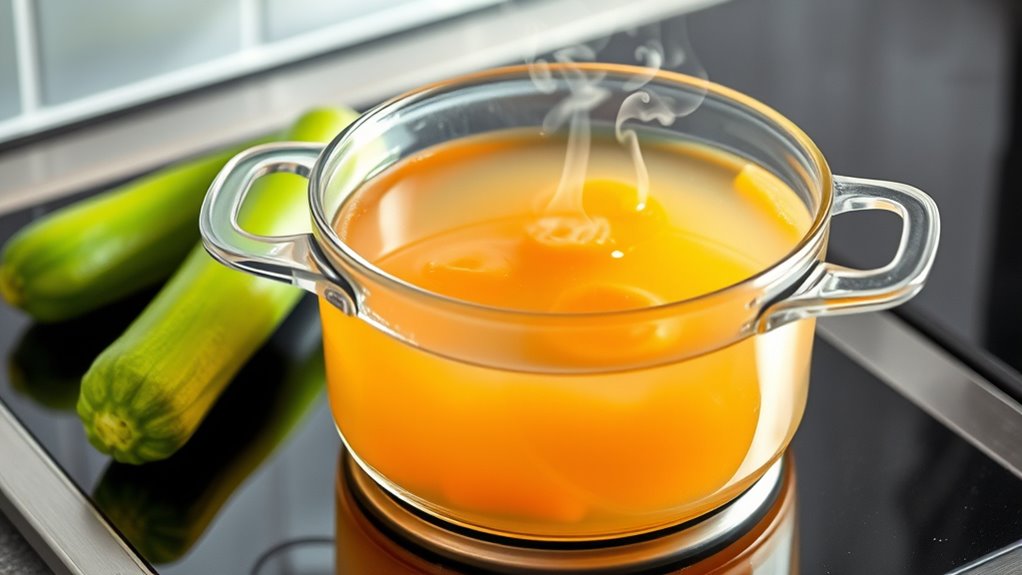
Have you ever wondered how water can transform simple ingredients into flavorful dishes? Using water-based cooking methods isn’t just a way to prepare food; it’s a smart approach to reducing fat without sacrificing taste. These techniques, like boiling, steaming, poaching, and simmering, rely on water as the primary cooking medium, which means you’re not adding extra oils or fats that can increase calorie content. One of the biggest advantages is improved health benefits, as cooking with water helps you cut down on unhealthy fats while still preserving essential nutrients in your food. Plus, these methods excel at maintaining flavor retention, ensuring your dishes taste rich and satisfying without the need for heavy sauces or added fats.
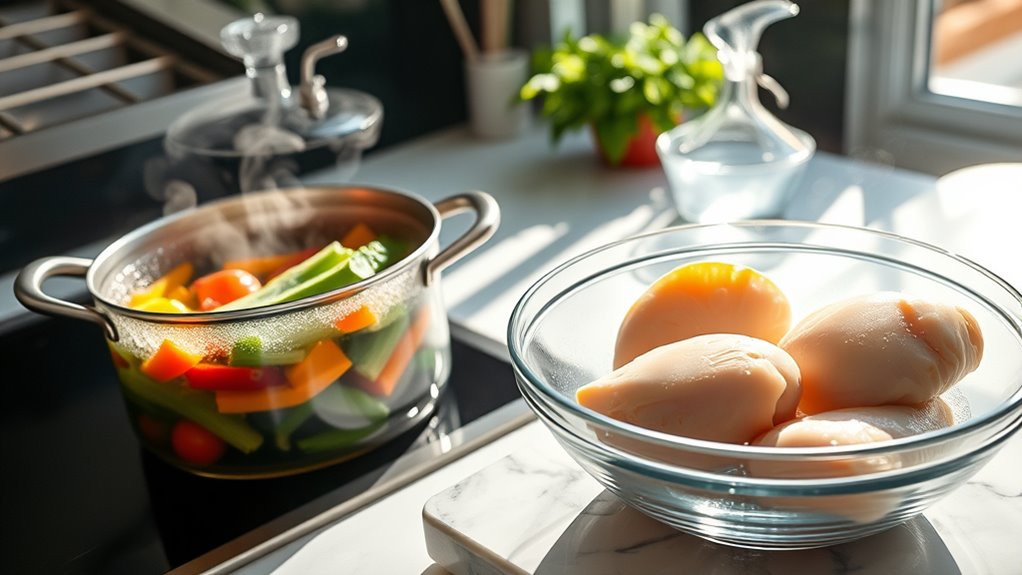
When you boil vegetables or grains, you’re cooking them in just enough water to soften them, which helps retain their natural flavors and nutrients. Unlike frying or sautéing, boiling doesn’t require oil, so you’re consuming fewer calories and less saturated fat. The key is to avoid overcooking, which can lead to nutrient loss, but when done properly, boiling preserves the vitamin and mineral content of your ingredients. Steaming takes this a step further, gently cooking your food with the steam from boiling water. This method is especially effective at flavor retention because it minimizes the leaching of water-soluble nutrients into cooking liquids, keeping your vegetables vibrant and nutritious. Incorporating proper cooking techniques can enhance both the healthfulness and flavor of your meals.
Poaching, which involves cooking delicate proteins like fish or eggs in simmering water or broth, offers another health benefit: it keeps the food moist and tender without added fats. This method is perfect when you want to enjoy the natural flavors of your ingredients without overpowering them with oils or sauces. Similarly, simmering—used for soups, stews, or braises—allows flavors to meld and develop over time, resulting in hearty dishes that are lower in fat but rich in taste. Since water-based methods rely on gentle heat, they prevent the breakdown of delicate nutrients, ensuring each bite is packed with health benefits.

Uproot Clean Pro Pet Hair Removal Tool - Multi-Fabric Edge, Carpet Rake
- Effective Hair and Fur Removal: Removes embedded pet hair easily
- Multi-Fabric Edge: Safe on all non-knit fabrics
- Reusable Design: No batteries or waste, eco-friendly
As an affiliate, we earn on qualifying purchases.
Frequently Asked Questions
Can Water-Based Cooking Methods Preserve Nutrients Better Than Frying?
Water-based cooking methods generally preserve nutrients better than frying because they involve less heat and oil, which can degrade vitamins and minerals. You’ll find that these methods improve nutrient retention and cooking efficiency, making your meals healthier. When you choose steaming, boiling, or poaching, you help keep the food’s natural nutrients intact while also reducing fat content, leading to more nutritious and flavorful dishes.
Are Water-Based Methods Suitable for All Types of Meats and Vegetables?
Water-based cooking methods work well for many vegetables, helping you achieve excellent vegetable tenderness without adding extra fat. For meats, they adapt well, especially for lean cuts that benefit from gentle cooking. However, some tougher or fattier meats might not be as suitable, as they may require different methods to enhance flavor and texture. Overall, these methods are versatile but may not suit every type of meat or vegetable perfectly.
How Does Water-Based Cooking Impact Flavor Compared to Oil-Based Methods?
Water-based cooking impacts flavor by providing gentle heat that enhances natural tastes without overpowering them, unlike oil-based methods. You’ll notice subtle flavor enhancement and cleaner notes. The textural differences are also notable—vegetables stay tender and moist, while meats remain juicy. This method allows you to enjoy the true essence of ingredients, making your dishes lighter and more vibrant, perfect for health-conscious cooking.
What Is the Best Way to Season Foods Cooked With Water Methods?
When seasoning foods cooked with water methods, you should focus on herb infusions and spice blending to maximize flavor. Add fresh herbs or whole spices early in cooking to allow their flavors to meld. For more vibrant tastes, sprinkle dried herbs or ground spices toward the end. Experiment with combinations to find your favorite blends, ensuring your dishes stay flavorful without added fat.
Can Water-Based Techniques Be Used to Prepare Desserts or Sweet Dishes?
You can definitely use water-based techniques for desserts like fruit desserts and sweet stewing. These methods involve simmering or poaching fruits in flavored liquids, allowing the flavors to meld and the fruit to become tender. Just as water-based cooking enhances savory dishes, it transforms desserts into healthier, moist, and flavorful treats. You get to enjoy the natural sweetness of fruits while controlling sugar and fat, making your desserts both delicious and nutritious.

Pet Hair Removal Glove for Dog & Cat, Reusable Electrostatic Pet Hair Glove
- Reusable and Easy to Clean: Washable, eco-friendly pet hair removal glove
- Larger Size and Enhanced Grip: 9.5" x 6.7" glove with secure five-finger design
- Electrostatic Hair Removal Technology: Lifts pet hair and lint effortlessly with static electricity
As an affiliate, we earn on qualifying purchases.
Conclusion
By choosing water-based cooking methods, you’re taking a smart step toward cutting fat without sacrificing flavor. These techniques help you cut corners on unhealthy fats while still enjoying delicious meals. Remember, sometimes it’s the simple things that make the biggest difference—like boiling, steaming, or poaching your way to healthier eating. So don’t overlook these methods; they’re your secret weapon in the battle for better health. After all, a little effort can go a long way.

ChomChom Roller Pet Hair Remover – Original Size Reusable Lint Roller for Cat & Dog Hair on Furniture, Couch, Carpet, Car, Rugs & Bedding – Portable, Eco-Friendly (Black)
- Effective Pet Hair Removal: Removes dog and cat hair efficiently
- Convenient for Various Surfaces: Couches, pillows, rugs, and cars
- Versatile Use: Suitable for both dog and cat hair
As an affiliate, we earn on qualifying purchases.

Pet Hair Remover, Dog and Cat Hair Remover, Carpet Rake, Carpet Scraper
- Versatile for Different Materials: Reusable pet hair removers for various fabrics
- Heavy Duty & Soft Fabric Options: Copper for thick items, plastic for soft fabrics
- Easy to Use: Quickly removes lint and fluff without damage
As an affiliate, we earn on qualifying purchases.
Baby shower & registry season Picks
baby registry must-haves
As an affiliate, we earn on qualifying purchases.