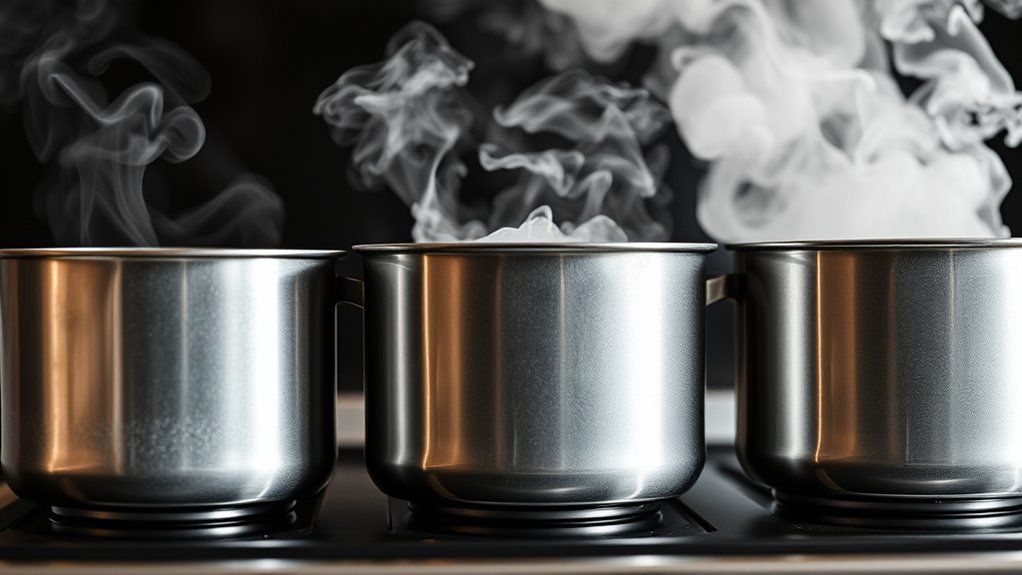

Understanding when to use low, medium, and high heat helps you cook with precision and achieve great results. Use low heat for gentle simmering and slow roasting, which prevents burning and keeps flavors tender. Medium heat is ideal for sautéing, frying, and even searing without rushing. High heat works best for quick searing, boiling, or caramelization. Mastering these adjustments lets you control texture and flavor perfectly—if you keep exploring, you’ll discover even more cooking success.
Key Takeaways
- Use low heat for gentle simmering, melting, and slow roasting to prevent burning and preserve delicate flavors.
- Apply medium heat for sautéing, frying, and searing to achieve even cooking and optimal browning.
- Opt for high heat when searing, boiling, or caramelizing to develop flavor quickly and create a crust.
- Adjust heat levels during cooking—start high for searing, then reduce for simmering—to control texture and doneness.
- Recognize visual and auditory cues—like bubbling or sizzling—to determine appropriate heat adjustments.
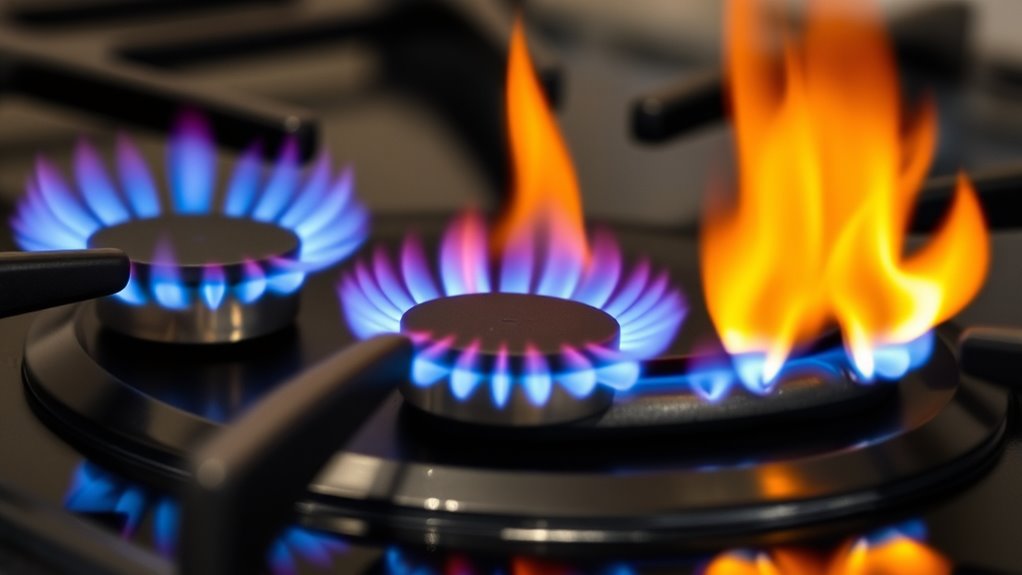
Have you ever wondered what heat really is? It’s more than just the warmth that keeps you comfortable or the flame that cooks your food. Heat is energy transfer, and understanding how to control it is vital for mastering cooking techniques. When you cook, you’re not just throwing ingredients into a pan; you’re managing how much heat reaches your food, which can make all the difference between a perfectly cooked meal and a burnt disaster.
Heat is energy transfer; controlling it transforms cooking from simple to masterful.
Temperature control is at the heart of good cooking. Using the right heat level for each task ensures your food develops the right texture, flavor, and appearance. When you start with low heat, it’s ideal for gentle cooking techniques like simmering sauces, melting butter, or slow-roasting delicate items. Low heat allows flavors to meld and prevents burning or overcooking. Medium heat, on the other hand, is more adaptable. It’s perfect for sautéing vegetables, frying eggs, or searing meats. It provides enough energy to cook evenly without rushing the process, giving you control over how quickly your food cooks and how much browning occurs. High heat is reserved for tasks that require quick, intense cooking. Think of searing steaks to develop a crust or boiling water for pasta. High temperatures quickly develop flavors through caramelization and Maillard reactions, but they can also burn food if not watched carefully.
Knowing when to switch between these heat levels comes down to understanding your ingredients and desired results. For example, starting a steak on high heat creates that beautiful sear, locking in juices, but finishing it on lower heat helps avoid charring. Similarly, simmering a stew on low heat ensures tender, flavorful results without drying out the ingredients. Adjusting temperature control as you cook is essential for achieving consistency and precision. Keep a close eye on your stove’s settings, and don’t be afraid to turn the heat down or up as needed. Additionally, understanding the concept of heat transfer can help you better manipulate cooking techniques for optimal results.
Mastering heat isn’t just about turning the stove knob; it’s about sharpening your intuition for what your food needs at each stage. As you gain experience, you’ll recognize the signs of the right heat level—like the sizzle of a good sear or the gentle simmer of a sauce—and you’ll improve your cooking techniques. Ultimately, understanding heat and managing temperature control empowers you to create better dishes, ensuring each meal is cooked just right.
Frequently Asked Questions
How Does Cookware Material Affect Heat Settings?
Cookware material directly influences heat settings because it affects cooking efficiency and heat retention. For example, cast iron retains heat well, so you should use lower or medium settings to prevent burning. Aluminum heats quickly, making high settings suitable for fast cooking. Knowing your cookware helps you choose the right heat, ensuring efficient cooking without wasting energy or risking uneven results. Adjust your heat based on the material for better control.
Can Using High Heat Damage Non-Stick Pans?
Using high heat on a non-stick pan can damage the non-stick coating, especially if it’s a seasoned pan. Excessive heat causes the coating to degrade faster, leading to peeling or flaking. To protect your non-stick cookware, avoid cranking the heat too high, and opt for medium or low when cooking delicate foods. Proper heat management prolongs your pan’s lifespan and keeps the non-stick surface effective.
What Are Signs of Overheating Food During Cooking?
When your food overheats during cooking, you’ll notice signs like burning smells, smoke, or food sticking to the pan, indicating the cooking temperature is too high. These signs threaten food safety by risking burns or undercooked sections. To prevent this, monitor your heat levels closely, adjust the temperature as needed, and make certain your food reaches safe internal temperatures. Proper heat control helps you cook safely and achieve delicious results.
How Do Altitude Changes Influence Heat Levels?
Altitude changes affect heat levels through altitude cooking, which alters boiling point variation. As you go higher, the boiling point drops, meaning water boils at a lower temperature. You need to modify your cooking methods, often increasing cooking time or temperature, to compensate. This ensures proper heat transfer and thorough cooking. So, when cooking at high altitudes, be mindful of these changes to prevent undercooked food and achieve the desired results.
Is It Safe to Leave Food Unattended on High Heat?
Leaving food unattended on high heat is like watching a pot boil over—dangerous and unpredictable. For food safety, you shouldn’t leave it unattended, especially on high, as it can lead to burning or even fire hazards. Always stay nearby when cooking on high heat to prevent accidents and make sure your food remains safe to eat. Your vigilance keeps your kitchen safe and your meals delicious.
Conclusion
Mastering heat control helps you cook perfectly every time. For example, when making a delicate sauce, using low heat prevents burning, while high heat is ideal for searing steaks. Think of it like tuning a guitar—you adjust the tension depending on the sound you want. By understanding when to use low, medium, or high heat, you’ll avoid mistakes and create better dishes, turning cooking into a confident, enjoyable experience.