
To blend nutrient-packed smoothies perfectly, start by choosing fresh, ripe fruits like berries and bananas, and add liquid first to keep the blades moving smoothly. Layer solids on top, and blend on low before increasing to high until smooth—about 30 seconds to a minute. Adjust texture by controlling liquids and incorporate ingredients like frozen fruits or avocado for creaminess. Master these techniques, and you’ll create delicious, healthful drinks every time—plus, there’s more to discover below.
Key Takeaways
- Start blending with liquids like water, milk, or yogurt to ensure smooth processing and prevent blade sticking.
- Add solid ingredients on top of liquids and blend gradually from low to high speed for even consistency.
- Use fresh, ripe fruits or frozen options to maximize flavor and nutrition; adjust based on desired smoothie thickness.
- Blend for 30 seconds to 1 minute, tasting and adjusting sweetness or liquid amount to achieve the perfect texture.
- Incorporate a variety of fruits and nutrients, and avoid over-blending to maintain smoothness without excess froth.
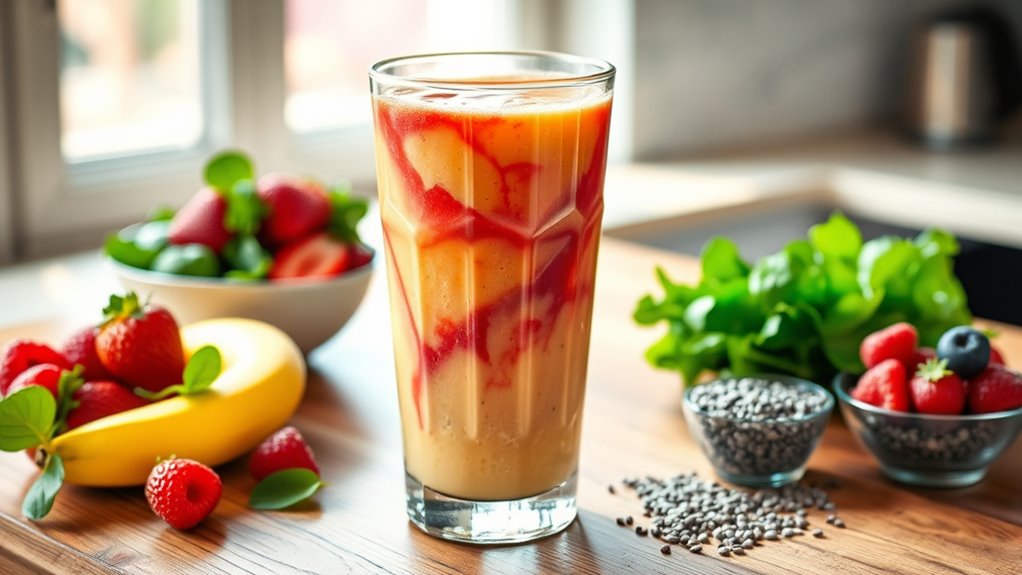
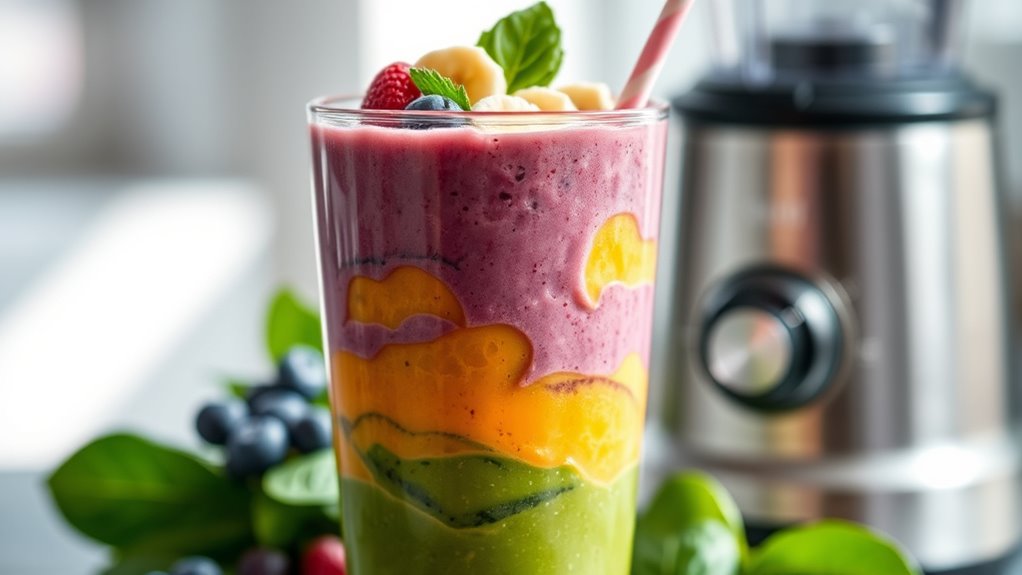
Have you ever wondered how to make a delicious, nutritious smoothie at home? It’s easier than you might think, and mastering the basics can turn you into a smoothie pro in no time. One of the key elements to creating a tasty and balanced drink is understanding fruit pairings. Combining fruits thoughtfully enhances flavor, texture, and nutritional value. For example, pairing sweet bananas with tangy berries creates a harmonious blend, while adding tropical fruits like mango and pineapple can give your smoothie a vibrant, invigorating kick. Experimenting with different fruit combinations allows you to discover new flavor profiles and keep your smoothies exciting. Keep in mind that selecting fresh, ripe fruits will boost the natural sweetness and overall quality of your drink. Frozen fruits also work great—they’re convenient, add thickness, and help keep your smoothie cold without watering it down. Incorporating HEPA filtration in your environment can also improve air quality, especially if you’re sensitive to pollen or dust that might settle on your fruits or in your kitchen.
Once you’ve chosen your fruit pairings, it’s vital to use proper blender techniques to achieve the perfect consistency. Start by adding liquids like water, milk, or yogurt to your blender first. This helps prevent the blades from sticking and ensures smoother blending. Next, add your solid ingredients—fruits, vegetables, or other add-ins—on top of the liquids. Avoid overpacking the blender; blending in smaller batches if necessary results in a more uniform mixture. When blending, start on a low speed to break down larger pieces, then gradually increase to high until everything is smooth and creamy. If you notice ingredients aren’t blending well or the texture is too thick, add a little more liquid and blend again. Using a tamper or pushing ingredients down with a spatula can also help ensure everything gets evenly processed.
Another blender technique worth mentioning is paying attention to blending time. Over-blending can introduce too much air, making your smoothie frothy and less desirable, while under-blending leaves chunks that disrupt the smooth texture. Aim for about 30 seconds to a minute, checking periodically. If you want a thicker smoothie, use less liquid or incorporate ingredients like frozen banana or avocado. For a thinner, more drinkable consistency, add more liquid gradually. Also, don’t forget to taste as you go—adjust sweetness with honey, agave, or other sweeteners if needed. Mastering these blender techniques and fruit pairings ensures you’ll create smoothies that are not only nutritious but also irresistibly delicious, perfect for breakfast, a snack, or post-workout refuel.
Frequently Asked Questions
What Are the Best Fruits for Smoothies?
You should choose fruits like bananas, berries, mangoes, and peaches for smoothies because they create great flavor combinations and blend smoothly. Pair bananas with berries for a sweet, tangy taste, or combine mangoes and peaches for a tropical vibe. These fruits not only taste delicious but also add natural sweetness and creaminess, making your smoothies both nutritious and satisfying. Experiment with different fruit pairings to find your favorite flavor combos.
How Can I Make Smoothies Dairy-Free?
Imagine your smoothie as a blank canvas—dairy-free options are the vibrant colors you can add. To make your smoothies dairy-free, swap out traditional milk with plant-based milks like almond, soy, or coconut milk. These dairy alternatives blend seamlessly, creating creamy textures and rich flavors without dairy. You’ll love how versatile and delicious your dairy-free smoothies turn out, giving you a nutritious treat that suits your dietary needs.
What Are Healthy Protein Options for Smoothies?
You can boost your smoothies with healthy protein options like protein powders and nut butters. Choose plant-based protein powders such as pea, hemp, or rice protein for a dairy-free boost. Nut butters like almond or peanut add creaminess and healthy fats while increasing protein content. Both options are easy to blend in and help keep you full longer, making your smoothies more nutritious and satisfying.
How Do I Prevent Smoothies From Separating?
To prevent your smoothies from separating, use effective emulsion techniques like blending for at least 30 seconds to create a uniform mixture. Storage tips include keeping your smoothies in an airtight container and refrigerating promptly if you’re not drinking it right away. Adding ingredients like bananas or avocado helps stabilize the blend naturally. Shake or stir your smoothie before drinking if separation occurs, ensuring a smooth, consistent texture every time.
Can Smoothies Replace a Full Meal?
Think of your smoothie as a colorful canvas—while it can be filling, it shouldn’t substitute a full meal every time. You can use it for portion control and to boost calorie content if needed, but it may lack certain nutrients found in solid foods. Relying solely on smoothies might leave you hungry sooner, so balance them with other meals to ensure you get all essential nutrients and sustained energy throughout the day.
Conclusion
Now that you know the basics, you can whip up delicious, nutrient-packed smoothies anytime. Did you know that over 50% of Americans struggle to eat enough fruits and vegetables daily? Smoothies are a simple way to boost your intake effortlessly. So grab your blender, choose your favorite ingredients, and enjoy a tasty, healthy drink that fuels your day. With these tips, making nutritious smoothies becomes easy and enjoyable—start blending your way to better health today!