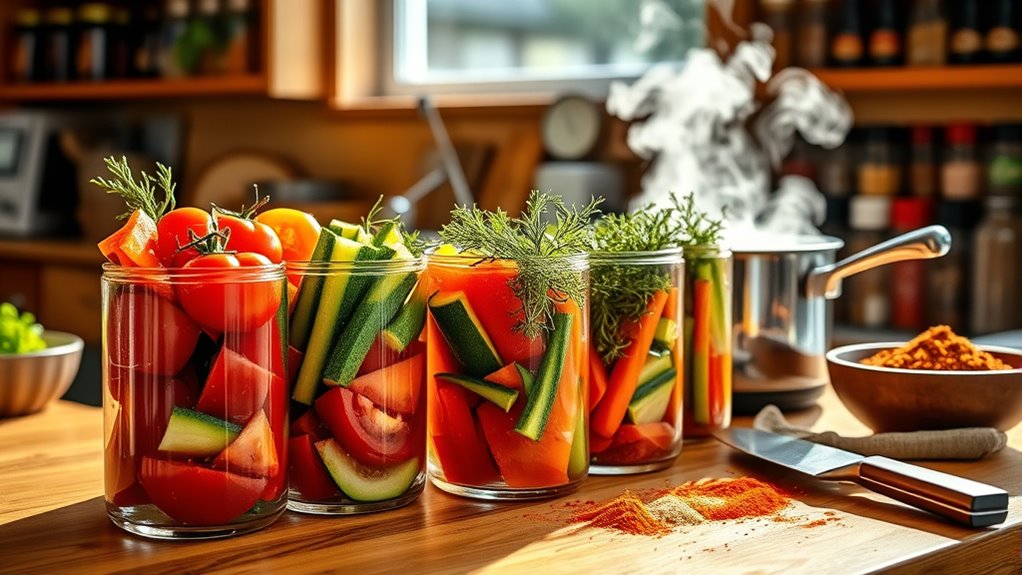

To avoid bland batch-cooked meals, focus on flavor layering by adding spices at different cooking stages to build depth. Experiment with smart spice combinations like smoked paprika or curry powders, and incorporate contrasting textures such as crunchy nuts or creamy yogurt. Enhance dishes with fresh herbs or lemon to brighten flavors. Personalize by adjusting seasonings to suit taste preferences, ensuring each meal is vibrant and satisfying. Keep exploring these techniques for more delicious secrets that turn simple meals into exciting dishes.
Key Takeaways
- Incorporate multiple seasoning stages, adding dried spices during sautéing and fresh herbs at the end for layered depth.
- Use a variety of spices and global blends to create complex, multi-dimensional flavors beyond basic salt and pepper.
- Add contrasting textures like crunchy toppings or creamy elements to enhance overall flavor perception.
- Marinate proteins beforehand and finish with fresh herbs or citrus for vibrant, fresh flavor boosts.
- Experiment with flavor combinations tailored to preferences, ensuring each batch feels personalized and satisfying.
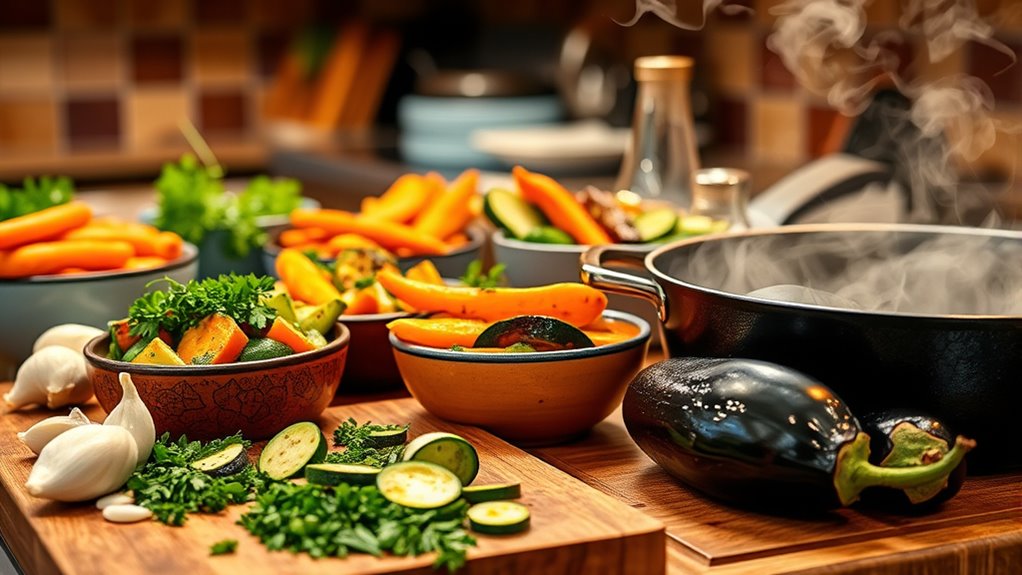
Batch-cooking is a great way to save time and guarantee you always have healthy meals ready, but it can sometimes lead to bland, uninspiring dishes. If you’ve ever found yourself eating the same tired flavors week after week, it’s time to rethink your approach. One of the easiest ways to elevate your batch-cooked meals is by mastering the art of flavor layering, starting with smart spice combinations and adding texture contrasts.
First, focus on spice combinations that awaken your palate. Instead of sticking to basic salt and pepper, experiment with blends that add depth and complexity. Think about combining cumin, coriander, and smoked paprika for a smoky, warm flavor, or blend turmeric, cinnamon, and cayenne for a vibrant, earthy kick. By mixing spices thoughtfully, you create a foundation that transforms simple ingredients into exciting dishes. Don’t be afraid to explore global cuisines—curry powders, Za’atar, or Italian herbs can all bring new life to your meals. The key is to balance the spices so they complement each other, enhancing the main ingredients without overpowering them.
Experiment with spice blends like cumin, smoked paprika, turmeric, and cinnamon to elevate your batch-cooked meals.
In addition to spices, pay attention to texture contrasts. When you prepare your batch meals, consider ways to add crunch, creaminess, or chewiness to each dish. For example, if you’re making a rice and vegetable medley, toss some toasted nuts or seeds on top before serving. These little additions provide a satisfying crunch that contrasts beautifully with softer ingredients. Alternatively, include a dollop of Greek yogurt or a splash of tahini to add creaminess and moisture without making the dish heavy. Incorporating different textures not only keeps each bite interesting but also elevates the overall dining experience, making your meals feel more thoughtfully crafted.
To really boost flavor, layer your seasonings at different stages of cooking. Start with dried spices during the initial sautéing to develop their aroma, then finish with fresh herbs or a squeeze of lemon to bring brightness. This strategy ensures that each element in your dish has its moment, creating a harmonious blend of flavors and textures. Also, consider marinating proteins ahead of time with spice blends—this infuses them with flavor before they hit the pan or oven, making your batch-cooked dishes more vibrant and satisfying.
Additionally, understanding the 16PF traits can help you tailor your flavor layering approach to suit different preferences or personality types, making your meals more appealing to a variety of tastes. In essence, avoiding blandness in batch-cooked meals boils down to smart spice combinations and intentional texture contrasts. With a little experimentation, you can turn simple ingredients into flavorful, multi-dimensional dishes that stay exciting from the first bite to the last.
Frequently Asked Questions
Can Flavor Layering Be Adapted for Vegetarian or Vegan Batch Meals?
You can definitely adapt flavor layering for vegetarian or vegan batch meals. Focus on adding plant-based flavor by using fresh herbs, spices, and aromatics to build depth. Incorporate vegan seasoning like soy sauce, miso, or nutritional yeast to enhance savory notes. Layering flavors through different ingredients guarantees your meal isn’t bland, making every bite rich and satisfying. With this approach, your plant-based dishes will be as flavorful as their non-veg counterparts.
What Are the Best Storage Tips to Preserve Flavor in Batch-Cooked Dishes?
Imagine your flavors as a delicate melody that can fade over time. To keep it vibrant, store your dishes in airtight containers, sealing in every note. When reheating, follow simple tips like gentle heat and stirring to revive those layers of flavor. This way, your batch-cooked meals stay as lively and delicious as the day you made them, turning every bite into a symphony of taste.
How Do I Balance Prep Time With Complex Flavor Layering?
Balancing meal prep efficiency with flavor complexity means planning ahead to streamline your process. You can do this by prepping versatile ingredients that layer well, like roasted vegetables and seasoned proteins, which save time while adding depth. Use quick flavor boosts like fresh herbs, spices, or a splash of acid at the end. This way, you enjoy efficient meal prep without sacrificing the rich, layered flavors that make your dishes stand out.
Are There Specific Spices That Work Best for Flavor Layering?
Imagine your spices as a painter’s palette, each hue adding depth to your masterpiece. Herbs and spices like cumin, smoked paprika, or coriander work beautifully for flavor layering, creating complex, inviting dishes. Experiment with bold combinations like thyme and garlic or cinnamon and chili for warmth and depth. These spices bring harmony and surprise, transforming simple ingredients into flavorful, satisfying meals without extra prep time.
How Can I Customize Flavor Layers for Dietary Restrictions or Preferences?
When customizing flavor layers for dietary restrictions or preferences, you can make herb substitutions and spice adjustments to suit your needs. For example, swap fresh herbs like basil for cilantro if you’re avoiding certain ingredients, or reduce salt and add more aromatic spices like cumin or turmeric for flavor without allergens. Experimenting with these adjustments helps you create delicious, personalized meals that respect your dietary choices while maintaining rich flavor layers.
Conclusion
Think of your batch-cooked meals as a canvas—each layer of flavor adds a splash of color, transforming the blank slate into a vibrant masterpiece. By mastering the art of flavor layering, you become the artist, turning simple ingredients into a symphony of tastes. With every meal, your kitchen becomes a gallery of bold, exciting dishes—proof that even the most routine can be elevated. Embrace the palette of possibilities, and let your cooking tell a story worth savoring.